
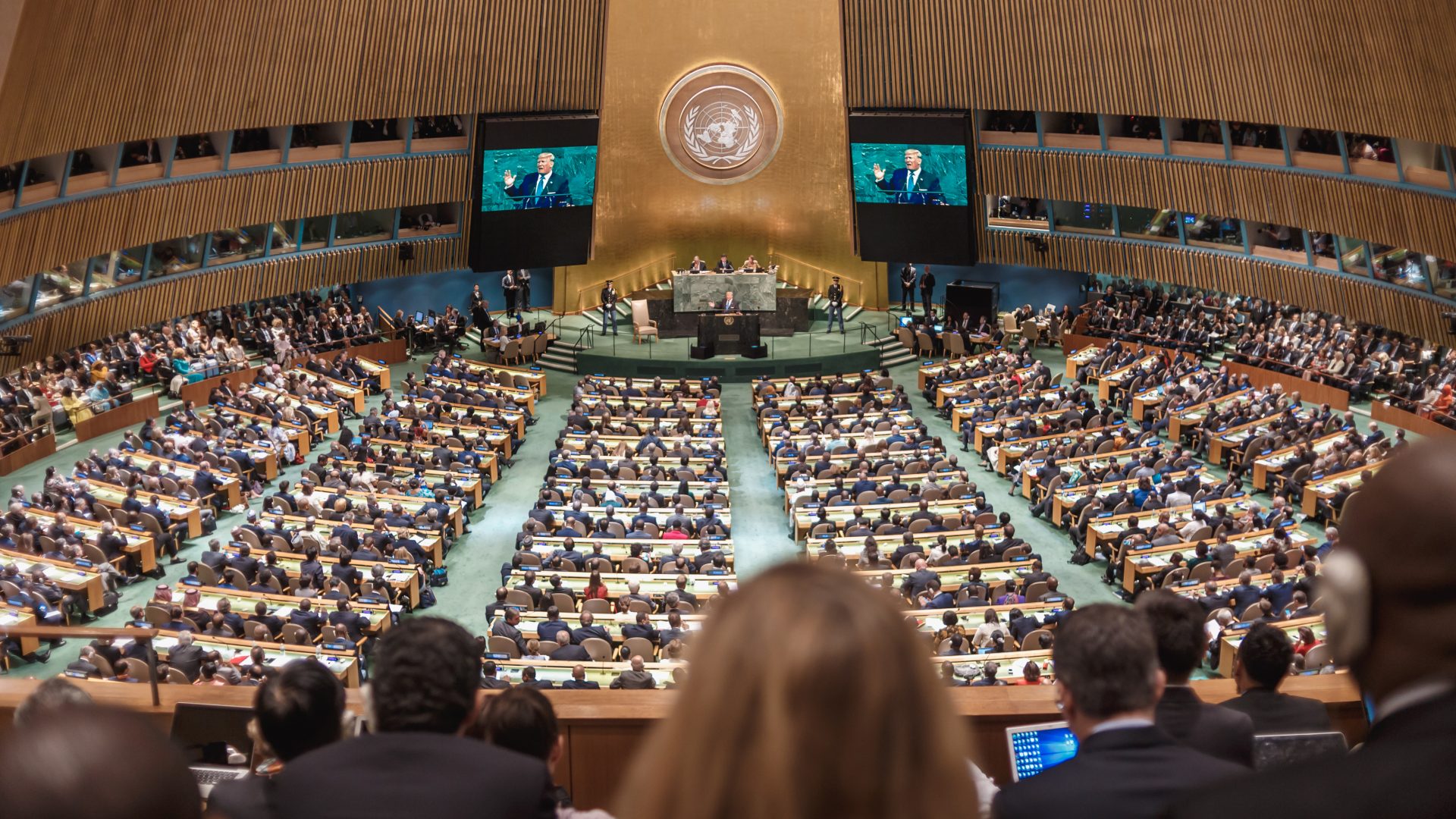
The post-Cold War settlement, in which Africa was largely a recipient of rules written elsewhere, is visibly dismantling. A new geopolitical architecture is being assembled, and the question before us is whether Africa will help design it or merely inherit it. So, the burden of this moment is not just analysis, it is commitment to action that changes the terms of engagement.
Understanding the turning point
Three convergent forces are reshaping the global order in ways that create genuine leverage for Africa — if we choose to use it.
First, the return of strategic competition. The West — Europe and North America — no longer operates in a unipolar comfort zone. China’s rise, Russia’s revisionism, the assertiveness of the Global South: these have reminded Western capitals that Africa’s 54 nations, 1.4 billion people, and disproportionate share of the world’s minerals are not a charity case but a strategic asset. That shift in perception matters. It means Africa now has suitors, not just donors.
Second, the resource reality. The green energy transition has placed Africa at the centre of the global economy in ways the extractive economy of the 20th century never did. Cobalt, lithium, manganese, coltan, copper; the raw materials of the clean energy future are largely concentrated on this continent. Third, and perhaps most consequentially is Africa’s demographic weight. By 2050, one in four people on Earth will be African. The continent’s working-age population will exceed that of China and India combined. In an ageing world, Africa is the growth engine.
The honest reckoning: what the West has gotten wrong
For too long, Africa-Europe/West relations have been organised around a paternalistic logic: development aid as generosity, conditionalities as wisdom, and African instability as a justification for continued tutelage. The frameworks have been built in Washington, Brussels, and London — and Africa has been expected to comply rather than co-design.
There are genuine partners in Europe who understand this and want a different relationship. Only last November, at the European Union (EU)-Africa Summit held in Luanda, Angola, Europe reaffirmed its commitment to Africa as a strategic partner. At the annual conference of EU ambassadors in Brussels, Commission President, Ursula van Den Leyen agreed that Europe can no longer be a custodian for the old-world order and opined that radical changes are inevitable. But good intentions within a flawed architecture produce flawed outcomes. That is why structural reform, not incremental goodwill, must be the goal of any serious reset.
Africa’s non-negotiables
As we approach any new bargain, Africa must be clear about what is non-negotiable. The first is value addition and beneficiation. Africa should no longer accept arrangements in which our resources leave our shores as raw commodities and return to us as expensive imports. Any new partnership framework must be anchored on industrialisation, local processing, and technology transfer. Our own Global Gateway must now recognise the place of an African Minerals Consortium, primarily modelled on the global south hydrocarbons consortium such as the Organisation of the Petroleum Exporting Countries (OPEC), and aimed at preserving the rights of mineral endowed countries to harness their endowments for inclusive growth. This includes enabling fair pricing negotiations, unlocking investment in exploration, promoting local community participation and ensuring supply security on a fair and equitable basis. This is not anti-Western sentiment; it is basic economic logic that the West itself applied during its own development.
Africa should no longer accept arrangements in which our resources leave our shores as raw commodities and return to us as expensive imports. Any new partnership framework must be anchored on industrialisation, local processing, and technology transfer
Tweet
The second is sovereign debt restructuring and a fair cost of capital. The current credit rating system penalises African countries in ways that are empirically unjustified. Africa is not capital starved; Africa is capital trapped. On illicit financial flows alone, over $88 billion was trapped in 2024. And yet, when the Africa Group at the United Nations (UN) took the Mbeki report on illicit financial flows and capital flight to the UN in pursuit of the global tax reform agenda, it was European countries alongside the United States that opposed the reform of the global financial architecture. We need a fundamental reform of the Bretton Woods credit architecture, new mechanisms for development finance, and an end to the punishing premiums that make it cheaper to borrow in Paris than in Lagos.
We need a fundamental reform of the Bretton Woods credit architecture, new mechanisms for development finance, and an end to the punishing premiums that make it cheaper to borrow in Paris than in Lagos
Tweet
The third is genuine technology partnership. Artificial intelligence (AI), digital infrastructure, and the platform economy are already reshaping global productivity. Africa cannot be a passive consumer of technology built elsewhere and governed by rules written without us. We must replace the extractive capitalism masquerading as untrammelled artificial intelligence with data sovereignty, capacity for digital industrialisation, and a voice in the governance frameworks that will define the next technological epoch.
The fourth revolves around labour migration. True, Africa as a continent is experiencing a significant shift in migration flows, both within our continent and towards Europe. Evidently, well managed migration holds a substantial positive impact both for countries of origin as well as significant benefits to destination countries, and more importantly for global stability and security. The EU and African Union (AU) need an honest conversation and a coordinated plan on population flows and labour dynamics considering the evolving geopolitical dynamics in the world.
The fifth, and most foundational, is the right to determine our own development pathways. Africa is not asking to be left alone. We are asking to be treated as equals in designing the frameworks that govern our participation in the global economy. Development conditionalities that make aid contingent on policy choices Africa has not made must give way to genuine partnership in which African institutions lead African solutions, one that is focused on domestic resource mobilisation and not overseas development assistance.
What Africa must change
The truth is that Africa’s negotiating weakness is partly self-inflicted. We arrive at global tables divided, speaking in fifty-four competing voices, making it easy for partners to play us against each other. The African Continental Free Trade Area is an extraordinary achievement on paper, but its implementation is still slow, and intra-African trade remains embarrassingly low as a share of our total trade. We cannot demand to be treated as a bloc if we do not act as one.
Our institutional capacity for strategic economic negotiation is inadequate. The EU arrives at trade talks with battalions of economists, lawyers, and technical experts. Many African delegations are outgunned before negotiations begin. Building that institutional depth, the analytical capacity, the negotiating expertise and, the legal architecture is not optional. It is the precondition for sovereign agency.
And we must address governance. Weak rule of law, and institutional fragility are not just moral failings, they are economic costs that our people bear and that undermine our credibility at the negotiating table. The new bargain with the West is inseparable from the new bargain we must strike with our own citizens.
The architecture of a New Bargain
What would a genuinely new bargain look like in practice?
On trade, it means a fundamental renegotiation of Economic Partnership Agreements, moving from market access frameworks that entrench Africa’s commodity dependence to industrial partnership agreements that incentivise manufacturing, value addition and skills transfer. Europe should welcome African processed goods, not just raw materials. Europe should reform lopsided partnership agreements such as the ones signed by many coastal states that deplete our oceans, marine life, and community livelihoods, compounding the migration crisis. Europe should accept reforms to global tax rules. That is the test of genuine partnership.
On finance, it means a reformed development finance architecture in which African-led institutions like the African Finance Corporation and the African Development Bank have greater capitalisation and mandate, in which sovereign debt carries risk-adjusted pricing that reflects reality rather than perception, and in which climate finance arrives as grants and concessional lending, not additional debt for countries that contributed least to the problem.
On security, it means an end to arrangements in which African countries pay for security cooperation with political compliance. Security partnerships must be transparent, mutually accountable, and consistent with African sovereignty and the decisions of the AU.
On governance of the global commons including AI, digital infrastructure, climate rules, and pandemic response, it means Africa having a genuine seat at the design table, not just the implementation table. The G20, International Monetary Fund (IMF) and World Trade Orgainsation (WTO): all of these must be reformed to reflect the actual weight of the Global South in the 21st century world and Europe must support reforms to the UN Security Council to ensure greater African representation.
And on restoration of dignity, Europe must acknowledge historical atrocities against the African continent and agree on reparations, including the return of looted African assets and artefacts and genuine rebates on African diaspora remittances.
Conclusion: from dialogue to compact
The turning point we face is not a gift from the changing global order. Turning points only become transformations when they are seized.
Africa has the resources. Africa has the population. Africa has, at long last, the geopolitical leverage and the critical mineral advantage. What we need now is the strategic coherence to convert that leverage into a new bargain: one in which partnership replaces patronage, co-creation replaces conditionality, and African agency is not a talking point but a lived reality.
J. ‘Kayode Fayemi, is a visiting Professor, King’s College, London, UK, the former Governor of Ekiti State, Nigeria and the former Minister of Mines and Minerals Resources Development, Nigeria.
This article is an extract from a presentation delivered by J. ‘Kayode Fayemi at the Closed High-level Dialogue of African Leaders and Africa-Europe Strategic Diaolgue hosted by ACCORD on 13-14 March 2026, in Johannesburg, South Africa.
