
The landscape of global engagement with Africa is shifting. President John Dramani Mahama has declared that Africa must ‘pull itself up by its own bootstraps’ and shape the emerging global order rather than remain trapped in what he termed a ‘triple dependency’ on foreign security, donor aid and raw materials. These are not mere words, they showcase a profound geopolitical shift.
Many countries in the West are cutting development assistance to the rest of the world, and the post-World War II multilateral system is fracturing, with a new world order yet to be consolidated. For a continent that has long relied on external partnerships, this moment demands a fundamental rethinking of how Africa secures itself, without hollowing out the democratic gains of recent decades. To borrow the words of Winston Churchill, ‘never let a good crisis go to waste’, and as such, Africa must not be allowed to waste this one. The decisions taken by African leaders now will largely define what seat at the table Africa will occupy.
There is no doubt that the African continent has become the global epicentre of instability. The 2025 Global Peace Index locates three of the world’s ten least peaceful countries on the African continent, namely Sudan, the Democratic Republic of the Congo and South Sudan. The Sahel region, alone, now accounts for half of all terrorist-related fatalities globally, earning its designation as the new global epicentre of extremism, large part due to the migration of terrorist organisations from the Middle East to North Africa.
In 2024, international partners financed approximately seventy per cent of the African Union’s (AU’s) total budget of around $650 million, a fundamental contradiction to the goal of autonomy and self-agency. Political fragmentation among the fifty-five member states impedes cohesive action, with diverging national interests often resulting in diluted collective responses. One can only wonder if remarks by Kenyan President Ruto at the AU Summit, where he advanced the development of a ‘draft African Foreign Policy Framework rooted in the shared values of Pan-Africanism, solidarity, shared prosperity, and collective security, grounded in the AU Constitutive Act, and aimed at enhancing Africa’s agency in international relations, including global multilateral contexts’, will ever be attained.
Critically, as noted by Jakkie Cillers, during the 2026 Munich Security Conference, the nature of the threats that plague African states are predominantly internal, as opposed to interstate. African militaries face asymmetrical challenges in the form of terrorist insurgencies, armed rebellions, organised crime and the proliferation of non-state actors. When one African country falters, the ripple effect transcends borders, impacting livelihoods, economies and development prospects. Internal issues can quickly become regional, demanding collaborative responses, at time when regional economic communities (RECs) can only offer minor support.
The roadmap for securing Africa’s future and place in the global order must no doubt take a trans and multidisciplinary nature, as no single state can effectively mitigate threats alone. This reality demands a fundamental reorientation of African armed forces. First, African militaries must transition from a conventional warfare posture to addressing asymmetrical threats, most notably the linkages between climate-induced conflict and underdevelopment. This compels the need to invest in intelligence capabilities, understanding local conflict dynamics and development of doctrines appropriate for counterinsurgency and civilian protection.
African militaries must transition from a conventional warfare posture to addressing asymmetrical threats, most notably the linkages between climate-induced conflict and underdevelopment
Tweet
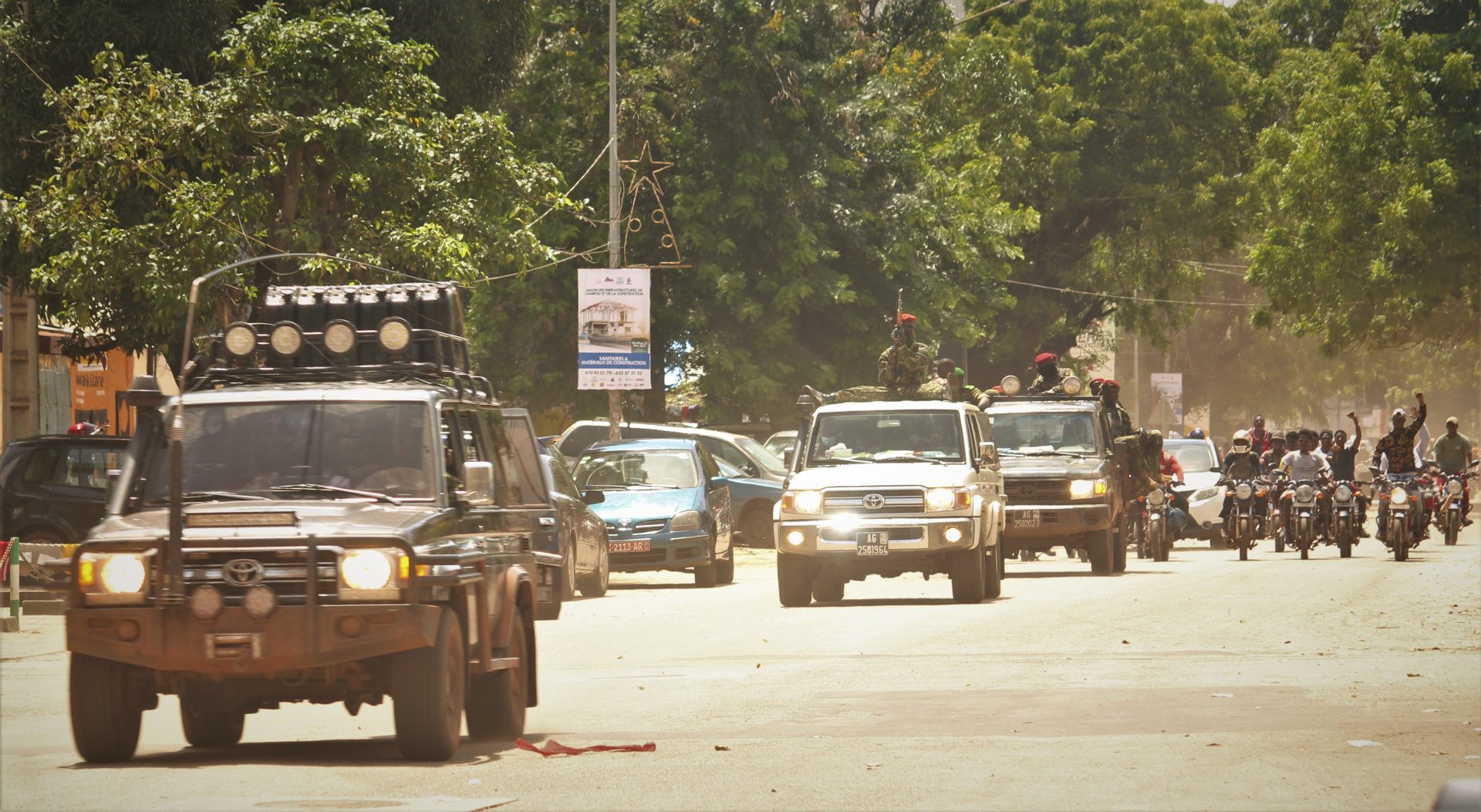
Most critically, African militaries must operate under robust civilian oversight and within constitutional frameworks. The answer to insecurity cannot be the militarisation of governance. The AU’s transitional justice policy offers guidance, prioritising inclusive processes that engage youth and women in addressing legacies of conflict and human rights violations. Additionally, the pathway to sustainable security must also never lie in abandoning democracy, but rather in deepening it. This requires a fundamental shift from state-centric, militarised responses to a model centred on human security, inclusive governance and institutional resilience.
Most critically, African militaries must operate under robust civilian oversight and within constitutional frameworks. The answer to insecurity cannot be the militarisation of governance
Tweet
The age of large multinational peacekeeping missions has diminished. Africa has entered into a new era of peacekeeping, one where ad-hoc military coalitions, such the Southern African Development Community (SADC) mission in Mozambique against insurgents in Cabo Delgado, and private actors play greater roles in maintaining peace and order. This prompts the need for a redesign of the African Security Architecture, guided by the realisation that Africa’s security will, and must, no longer be guaranteed by external actors.
Additionally, while the AU Peace Fund has accumulated approximately $400 million, peacekeeping operations typically require billions, hence, the necessity for African states and RECs to enhance domestic resource mobilisation. Investing in the capacity of fragile states to mobilise their own revenue to support peace and state building is therefore critical, as it reduces dependence on aid and helps finance human development and recovery. At the same time, it strengthens the contract between the state and its citizens, fortify intra-society relationships.
African leaders need to act quickly to take advantage of this opportunity. The choice is no longer between different partners but between dependency and self-determination. With a new emerging global Africa must carve out its own place. Ultimately, the resilience of African institutions and their ability to prove that security and democracy are mutually reinforcing, not mutually exclusive, is what will bring about a developed and stable African continent.
Shaun Kinnes is a researcher at the Parliament of the Republic of South Africa.
