
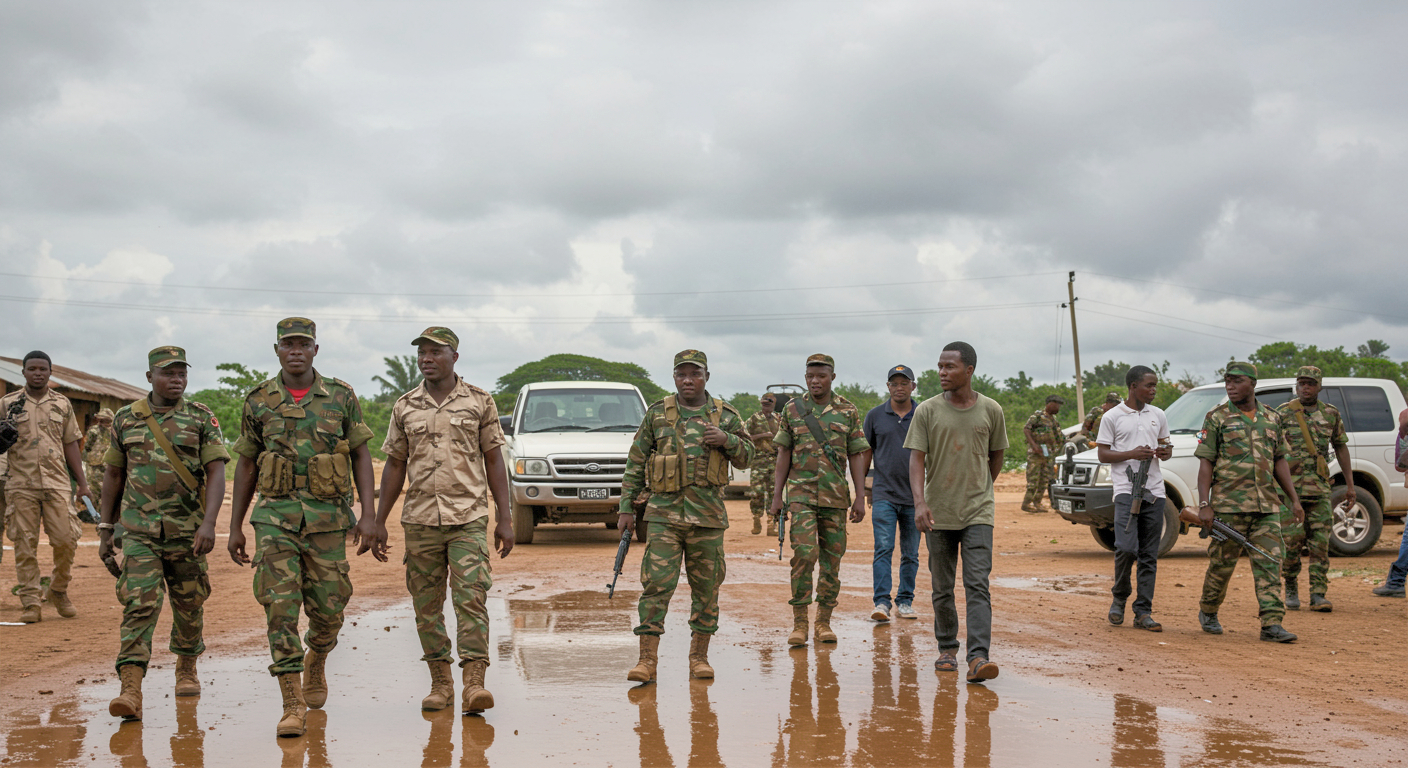
Recent border tensions involving Guinea, Liberia and Sierra Leone highlight enduring structural weaknesses in border governance not only within the Mano River basin but across many West African boundaries. This comes on the heels of the protracted maritime boundary dispute between Ghana and Togo, where attempts at resolution have been escalated to judicial arbitration. These incidents and clashes point to a recurring pattern in which contested boundaries often rooted in colonial-era demarcations interact with limited cross-border coordination, localised economic pressures, fragile institutional frameworks and climate change induced movements. Rather than describe these confrontations as mere isolated flashpoints, tensions generated from these occurrences reflect systemic deep rooted governance deficits that continue to challenge state capacity and regional security architectures.
On 23 February, Guinean and Sierra Leonean forces clashed along their shared border, another in what is becoming a frequent and predictable occurrence of events. A concurrent dispute in Liberia’s Sorlumba area of Foya district escalated when Guinean soldiers reportedly crossed into Liberian territory and removed the Liberian flag, prompting local resistance and reports of gunfire. These events coincided with lingering strains between Guinea and Sierra Leone, after Guinean authorities detained Sierra Leonean troops in another contested area. In response, Guinea president, Mamady Doumbouya deployed additional troops to the borders in March 2026. Though framed as defensive, the deployments increased the risk of escalation.
To address rising tensions, regional leaders met in Conakry on 16 March 2026 under the Mano River Union (MRU), committing to dialogue and peaceful resolution. The summit, welcomed by the African Union (AU), signalled renewed political will toward cooperation and stability. However, the persistence of such dispute’s points to deeper structural challenges: ambiguous colonial boundaries, weak coordination mechanisms, resource competition and limited trust among border communities. These factors expose the limits of reactive diplomacy.
Context and emerging risks
The MRU was established in 1973 to promote economic cooperation between Liberia and Sierra Leone and later expanded to include Guinea and Côte d’Ivoire. Despite progress in peacebuilding, the region continues to face deep structural vulnerabilities. All four countries have emerged from civil conflicts, yet peace remains fragile due to weak border governance, contested territorial claims and shifting political transitions such as the 2021 coup in Guinea. High cross border mobility, interconnected communities and limited state presence in border areas create conditions for recurring disputes over land, natural resources and security responsibilities. These incidents are symptoms of broader governance gaps including unclear demarcation, limited joint monitoring and competing interests. Political dynamics and capacity constraints further limit the effectiveness of existing MRU mechanisms, leaving the region vulnerable to sudden escalations.
The recent crisis in Sorlumba, in Liberia’s Foya district, illustrates these risks. A sand mining operation by BK Enterprise drew intervention from Guinean security forces who seized equipment and allegedly crossed into Liberian territory to remove the national flag, sparking local unrest with confrontations shared widely on social media. Warning shots and mutual accusations followed, echoing earlier disputes such as the Yenga incident between Guinea and Sierra Leone. Economic stakes, including mineral deposits in the Makona corridor, heighten tensions and complicate local dynamics. Responses from the Economic Community of West African States (ECOWAS) and the MRU, including technical assessments and tripartite engagements, highlight the need for preventive and coordinated governance strategies that combine diplomacy, community engagement and institutional cooperation to sustain regional stability.
Pathways to peaceful resolution
Recent steps toward de-escalation, including the initial withdrawal of Guinean troops from sensitive border areas, represent a positive shift and demonstrates that sustained diplomatic engagement can produce tangible results. However, this progress remains fragile, and the Conakry summit presents a critical opportunity to move beyond reactive crisis management toward a structured, preventive approach. Maintaining trust and reducing the risk of miscalculation will require sustained high-level political dialogue, supported by credible third-party facilitation where necessary. Practical measures such as joint fact-finding missions, direct communication channels between military commanders and short-term confidence-building initiatives including buffer zones, advance notification of troop movements and coordinated patrol schedules can help stabilise the border environment and prevent the rapid escalation of local incidents. These tools reinforce the principle that proactive cooperation is preferable to ad hoc, reactive responses.
Recent steps toward de-escalation, including the initial withdrawal of Guinean troops from sensitive border areas, represent a positive shift and demonstrates that sustained diplomatic engagement can produce tangible results
Tweet
Yet, troop withdrawals and confidence-building measures alone will not address the deeper structural drivers of recurrent border tensions. Long-term stability demands accelerated boundary demarcation, legally codified frameworks and technical mapping processes that depoliticise disputes and provide durable clarity for all parties. Equally critical is the empowerment of border communities through cross-border dialogue platforms, engagement with traditional authorities and strengthened local conflict resolution mechanisms that address grievances before they escalate. Regional bodies such as the MRU and ECOWAS must provide oversight, early warning support and continuity beyond national political cycles to ensure that progress is sustained. Only through a coordinated combination of political commitment, technical solutions and community engagement can the region transform fragile borders into zones of cooperation rather than recurring confrontation.
Inclusive dialogue platforms, engagement with traditional authorities and the integration of local actors into national prevention strategies ensure that those closest to the tensions become partners in stability
Tweet
Strategic policy priorities and recommendations
Strengthening border governance in the Mano River Basin requires a shift from fragmented, reactive responses toward coordinated and institutionalised mechanisms. Establishing permanent joint border commissions, conducting coordinated patrols and accelerating boundary clarification through technical demarcation and interim arrangements are essential first steps. These measures would reduce ambiguity, improve operational coordination and provide a structured basis for managing disputes. At the same time, early warning systems must be fully operationalised by integrating community-level reporting with national and regional mechanisms, supported by stronger data collection and analysis capacities. This will allow governments to detect emerging tensions before they escalate and respond with precision rather than force.
Effective de-escalation also depends on clear operational protocols and confidence-building measures. Standardising rules of engagement for border forces, creating direct communication channels and promoting advance notification of troop movements can significantly reduce the risk of miscalculation. Empowering border communities is equally critical. Inclusive dialogue platforms, engagement with traditional authorities and the integration of local actors into national prevention strategies ensure that those closest to the tensions become partners in stability. Addressing underlying socio-economic drivers through cross-border development initiatives, improved infrastructure and better service delivery helps reduce competition over scarce resources and strengthens community resilience.
Ultimately, the recurring nature of border tensions underscores the limitations of crisis-driven diplomacy. Preventive governance requires aligning political commitment with institutional capacity and community engagement. This means building systems that can anticipate and manage tensions, fostering trust among states and grounding policies in the lived realities of border populations. While the recent withdrawal of Guinean troops is a welcome step, it must be followed by sustained political dialogue, technical cooperation and regional oversight to ensure that progress is not temporary. Transforming fragile borders into zones of cooperation will depend on consistent implementation, shared responsibility and a long-term commitment to peace.
Options to consider going forward
To consolidate recent gains and prevent future escalation, policymakers may consider the following five strategic options. Together, they offer a balanced mix of political, technical and community-level interventions capable of transforming fragile borders into cooperative spaces.
Option one: establish a trilateral border stabilisation framework
Guinea, Liberia and Sierra Leone could formalise a joint framework to coordinate patrols, share intelligence and harmonise operational responses. Such a mechanism would create a standing platform for regular dialogue, joint planning and rapid de-escalation. By institutionalising cooperation, the three states can reduce reliance on crisis-driven diplomacy and strengthen mutual accountability.
Option two: deploy neutral monitoring and accelerate boundary clarification
A temporary MRU or ECOWAS border observation mission would help monitor sensitive areas, verify troop withdrawals and provide impartial reporting, an essential step in rebuilding trust. In parallel, a multi-year boundary demarcation programme, supported by international technical partners and modern geospatial tools, would clarify contested zones and reduce the ambiguity that fuels recurring disputes.
Option three: strengthen communication and operational protocols
Establishing a standing trilateral hotline linking military commanders and foreign ministries would enable rapid clarification of incidents and troop movements. Complementary measures such as annual joint training for border forces on de-escalation, human security and standardised rules of engagement would build trust and promote a shared operational culture across borders.
Option four: promote cross-border development and community engagement
Pilot cross-border development zones, featuring shared markets, trade corridors and joint infrastructure, can reduce economic grievances and foster cooperation. At the same time, establishing community-based early warning networks and supporting inclusive dialogue platforms involving traditional leaders, youth and civil society ensures that local actors become active partners in prevention and stability.
Option five: enhance regional oversight and resource mobilisation
Strengthening the MRU’s mandate and resources would enable it to coordinate cross-border initiatives, track implementation of agreements and convene regular review meetings. ECOWAS can complement these efforts by providing political backing, technical expertise and early warning support ensuring continuity beyond national political cycles and reinforcing collective responsibility.
Conclusion
The current tensions between Guinea, Liberia and Sierra Leone are not isolated incidents but part of a broader pattern of unresolved governance challenges. The convergence of military deployments, political sensitivities and local vulnerabilities creates a volatile environment with significant risks. The Conakry summit offers a critical opportunity not only to de-escalate immediate tensions but to lay the foundation for more sustainable and institutionalised approaches to border management. By combining political dialogue, technical solutions and community engagement, regional actors can transform recurring disputes into opportunities for deeper cooperation. The test going forward will be whether commitments made at the political level are translated into practical, coordinated and sustained action on the ground.
Dr. Fiifi Edu-Afful is a Senior Researcher at UNIDIR’s Conventional Arms and Ammunition Programme, where he leads research on preventing armed conflict and armed violence.
Emmanuel Wekem Kotia, PhD, is a retired Major General of the Ghana Armed Forces and a defence and security expert with over four decades of experience in military leadership, peace operations and security governance.

