
Climate change has proven itself to be one of the most complex and interconnected challenges humanity will have to grapple with in the 21st century. Far-reaching consequences of climate change may entail vast environmental impacts such as increasing temperatures, extreme weather events, rising sea levels and altered ecosystems. In May 2022, the Group of 7 (G7) acknowledged the existence of a vicious cycle connecting the impacts of climate change with increased risks to peace and security.
Although climate change and biodiversity loss are caused by entirely lawful human means and activity, organised crime aggravates climate change. Criminal activity often involves practices damaging to the environment, as well as frustrating the ability of societies to withstand and respond to the impacts of climate change due to the degradation of governance and the decreased resilience of local and indigenous communities.
While there is no direct linkage between organised crime fuelling the proliferation of climate change, it remains an understudied arena, which may present with it an array of consequences. At the same time, climate change is an indirect driver of crime owing to its impact on social control and its ability to create new opportunities for criminal actors. Its effects put pressure on local economies and communities, which in turn result in instability and facilitate the creation of new illicit markets. As climate stresses take hold, such factors weaken governance systems and state capacity, leading to the redirection of law enforcement resources and thus increasing vulnerability to organised criminal activity.
While there is no direct linkage between organised crime fuelling the proliferation of climate change, it remains an understudied arena, which may present with it an array of consequences
Tweet
As highlighted at the Sharm el-Sheikh Climate Change Conference in Egypt in 2022, regions vulnerable to climate change, such as Southeast Asia and Africa, tend also to have high levels of organised criminality.
There remains a plethora of pathways in which crime can fuel climate change. Crime types can be split into three categories: those where the relationship between the crime and climate change is direct, those where it is indirect, and those where the crime facilitates other crime types that affect climate change.
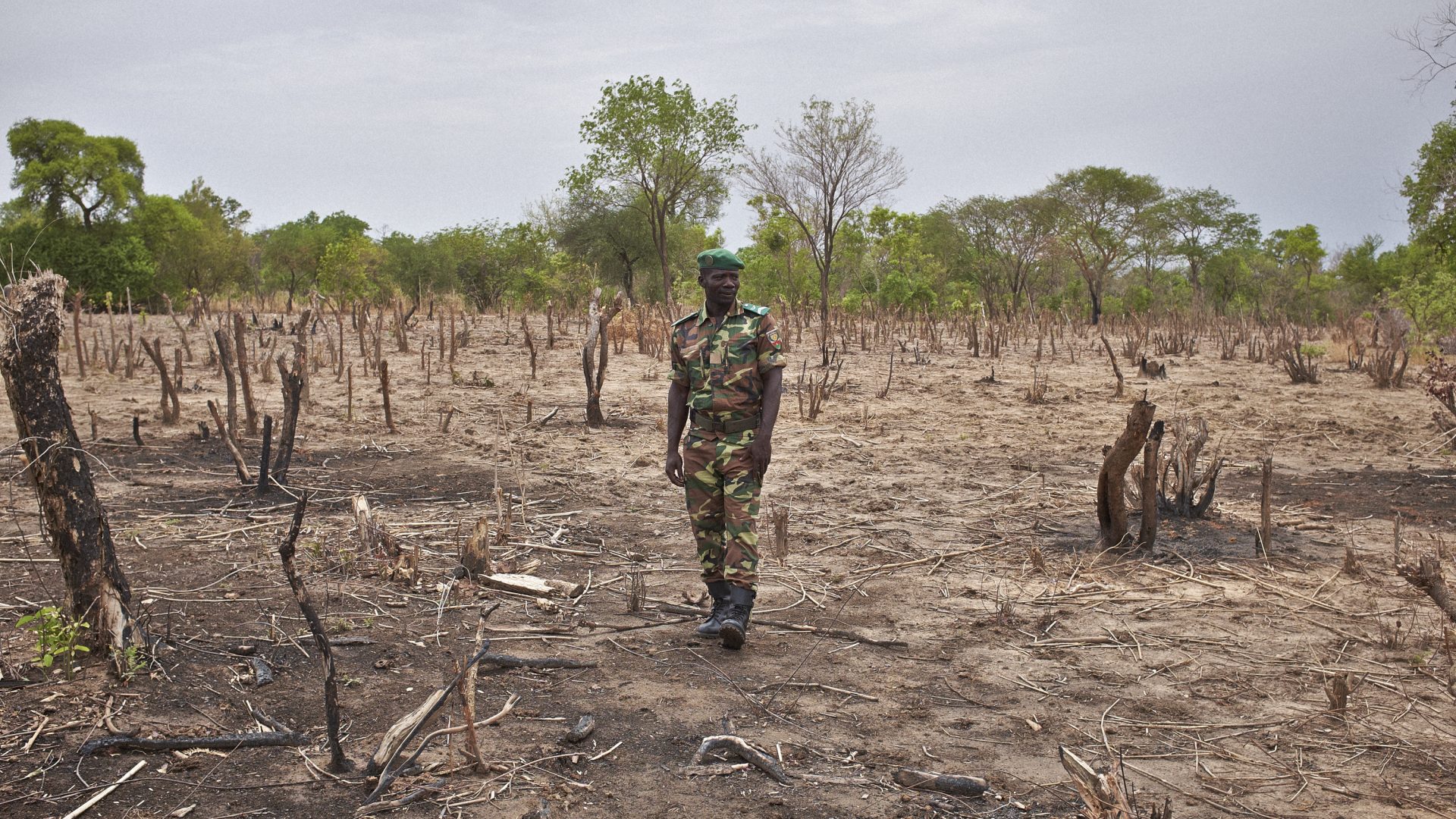
Rainforests in the Central African Republic perform the vital tasks of acting as carbon sinks and mitigating against the increase of ever-rising temperatures. Yet, reports indicate that the Russian Wagner Group/Africorps have been responsible for large-scale deforestation through illegal logging, as the demand for foreign capital derived from the sale of timber and redwood gradually fuels this crime.
Research undertaken by ENACT argues that the Wagner Group and its business partners could be using this approach to generate potential revenue of US$890 million in international markets (assuming that 30% of the concession is exploited). As such, wood exports would be a profitable business for the Wagner Group and a pathway to channel cash back into a sanctioned Russia, according to ENACT. Similarly, illegal gold mining in the Amazon results in the proliferation of deforestation and mercury pollution, poisoning rivers and exacerbating climate vulnerability.
With climate change being an indirect driver of crime owing to its impact on social control and its ability to create new opportunities for criminal actors, one such example is the Lake Chad Basin, where rising temperatures have decimated fish stocks. Here, Boko Haram offers cash loans to desperate fishermen, winning public legitimacy while expanding its illicit activities. This model is replicated by groups like Al-Shabaab in Somalia, which funds its insurgency by taxing the illegal charcoal trade and extorting communities devastated by drought.
Francois Engelbrecht argues that by 2030, as a result of the City of Johannesburg’s poor water storage capacity, failing water infrastructure networks, and climate change, the city should prepare for the real possibility of a “Day Zero.” At present, Johannesburg has 98 water reservoirs. Twenty-one are in urgent need of repair. Almost half the water Joburg buys from Rand Water is lost through leaks and illegal connections because much of the 12 364km of distribution pipes providing water across the city need replacing. In the last financial year, the city managed to replace only 17km of water pipeline. As a result, several water tanker mafia groups have emerged that have essentially weaponised the right to water while holding both government and communities at ransom by controlling access to water provision while profiting off this crisis.
The intertwining of climate change and organised crime presents a ‘threat multiplier’ that demands a similarly integrated multi-sectoral response. Siloed approaches, where environmental agencies, police forces, and development partners work in isolation, are no longer fit for purpose. The future of global security hinges on our ability to see environmental protection as a core component of crime prevention and conflict resolution. As the world mobilises millions for climate adaptation, we must be vigilant that these very funds do not become a new, lucrative target for the criminal networks exploiting climate vulnerabilities.
The intertwining of climate change and organised crime presents a ‘threat multiplier’ that demands a similarly integrated multi-sectoral response. Siloed approaches, where environmental agencies, police forces, and development partners work in isolation, are no longer fit for purpose.
Tweet
Shaun Kinnes is a researcher at the Parliament of the Republic of South Africa.
