
For much of the 20th century, the currency of strategic advantage was simple: oil, steel and an arsenal of nuclear weapons. However, the tectonic plates of national power have shifted. We no longer inhabit a global or political arena where territorial contiguity or the size of a navy dictates the next superpower. Instead, three distinct technological families, advanced computing, biotechnology (biotech) and clean energy, are converging into a single, volatile trinity. Mastery over these domains will not merely determine economic prosperity; it will redefine the nature of warfare, the logic of sanctions and the very architecture of sovereignty. To treat these as mere industrial sectors would be a dangerous error. They are, in fact, the new theatres of conflict; the United States and China understand this all too well.
Jake Sullivan, a prominent American foreign policy expert and attorney who served as United States National Security Advisor from 2021 to 2025, argued that computing-related technologies, biotech and clean energy have become three technological families that will be of particular importance over the coming decade, making American leadership in each of them a national security imperative.
Computing’s role in statecraft is frequently misread, despite being the most familiar of the three. Computer chips are no longer just a component; it is leverage. When a state controls the supply chain of leading-edge semiconductors, from the lithography machines in the Netherlands to the substrate factories in Taiwan, it holds leverage over an adversary’s entire military and civilian modernisation.
Artificial intelligence (AI), the software offspring of this hardware, accelerates the issue. AI models now dictate targeting logistics and financial surveillance, including misinformation and disinformation campaigns. Consequently, export controls over graphics processing units (GPUs) has become the 21st century’s naval blockade, slower and quieter, but often more precise in their strangulation. Washington’s curbs on chip equipment exports to China is not merely trade policy, but a pre-emptive strike in a war fought with nanometres instead of napalm.
Biotech, however, presents a subtler, arguably more insidious front. Unlike computing’s binary logic of zeroes and ones, biotech traffics in the messy, adaptive code of life. This family of technologies, from mRNA platforms to gene drives and synthetic biology, blurs the line between pandemic defence and biological weaponry, between medical diplomacy and espionage. A nation that patents the synthesis of a rare vaccine also acquires the capacity to engineer its pathogen counterpart. More importantly, biotech redefines self-sufficiency. During the COVID-19 pandemic, states without domestic mRNA capacity discovered that their sovereignty ended at the border of a shipping container. Looking ahead, the ability to produce lab-grown proteins, biofuels from engineered algae or even drought-resistant seeds will determine whether a country faces famine or feasts under climate duress. Economic warfare here will take the form of patent encirclement and cold-chain choke points. To control the bioreactor is to dictate the terms of life itself.
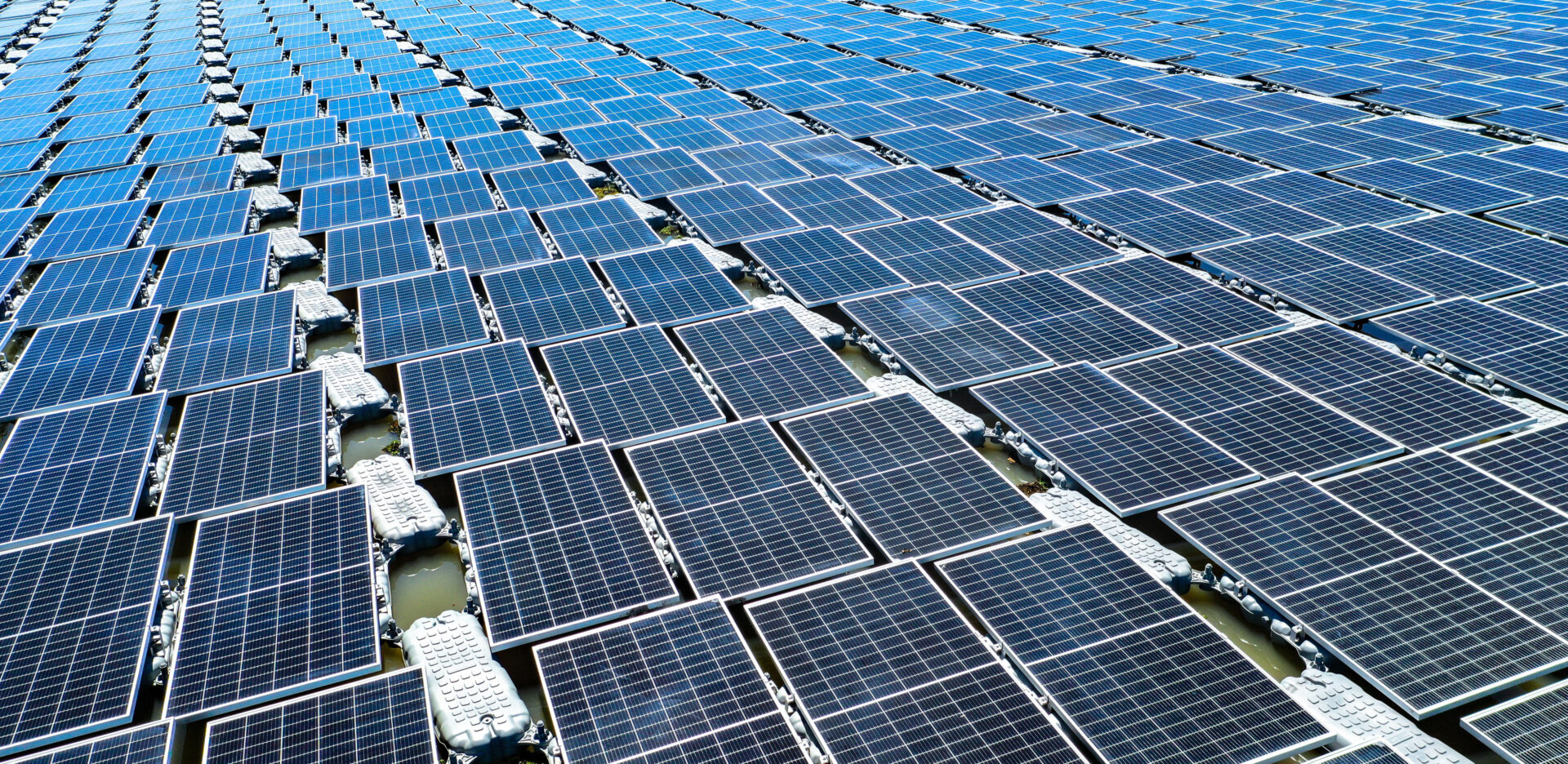
The global shift toward climate adaptation and mitigation has largely accelerated the push toward clean energy. The transition away from hydrocarbons is often framed as a moral imperative, but this reading misses the power shift beneath it. Fossil fuels are geographically unpredictable; renewables are ecologically democratic but industrially concentrated. The nation that masters the refining of rare earth elements, the chemistry of solid-state batteries, and the grid-scale storage of offshore wind will inherit the role that Saudi Arabia and many other Middle Eastern states once claimed due to their oil reserves. However, unlike oil, which flows through predictable pipelines and tanker routes, clean energy’s minerals are more dispersed and therefore more vulnerable.
The global shift toward climate adaptation and mitigation has largely accelerated the push toward clean energy. The transition away from hydrocarbons is often framed as a moral imperative, but this reading misses the power shift beneath it.
Tweet
Critical minerals like cobalt and lithium are not uniformly distributed; they lie in the Democratic Republic of Congo, Australia and Chile. Economic warfare will thus pivot to ‘critical material’ cartels and recycling monopolies. A country that cannot secure its supply of neodymium for wind turbines or silicon for inverters loses not just its climate targets, but also its industrial pulse.
The real danger and the source of future miscalculation lies in how these three families interact. A breakthrough in quantum computing accelerates the simulation of protein folding, which in turn enables a novel biofuel. A clean-energy grid powered by AI-optimised demand management becomes a target for biotech-coded malware that crashes the turbines. These are not separate chessboards but rather one hyper-dimensional game. This demands a corresponding evolution in national security doctrine. Traditional export controls and military alliances are too slow and linear. What this coming age requires is a form of ‘techno-diplomatic triage’. The ability to map vulnerabilities across all three domains simultaneously and respond with policy instruments as agile as the technologies themselves.
The trade-offs that states will have to make span the realms of economic interdependence, economic security and geopolitical competition; however, as Edward Fishman argues in his book Chokepoints, only two of these can coexist, never all three.
The recently released Chinese White Paper on global governance and the June 2026 G7 leaders’ Declaration present a perfect example of divergent approaches to these key issues. China calls for the formation of a global AI Cooperation Organisation, while the G7 views AI as a strategic technology to achieve economic and military advancement, and both emphasise the need for measures to control the rapid sophistication of AI and associated technologies.
Ultimately, China and the G7 approach AI, clean energy and computing through different strategic lenses. Beijing frames its engagement as a benevolent provider of global public goods, championing United Nations-centred governance and sharing its renewable energy technologies with the developing world, while the G7, preoccupied with economic security, prioritises supply chain resilience, export controls and reducing critical mineral dependencies to under sixty per cent. In AI, China pushes for inclusive, people-centred governance, whereas the G7 emphasises risk containment and selective partnership models. Computing becomes a proxy for broader geopolitical competition; China seeks to shape international norms, while the G7 fortifies its technological advantage. These competing visions, one rooted in inclusion and the other in protection, will define the coming decade’s global governance landscape.
China calls for the formation of a global AI Cooperation Organisation, while the G7 views AI as a strategic technology to achieve economic and military advancement, and both emphasise the need for measures to control the rapid sophistication of AI and associated technologies
Tweet
For those who study the grammar of geopolitics, the lesson is uncomfortable but unavoidable. The state that excels in only one of these families will find itself asymmetrically exposed, while the state that masters all three will write the rules of the coming age. Japan’s focus on precision manufacturing, Israel’s fusion of biotech with cyber, and the European Union’s pursuit of battery autonomy each offer fragments of the playbook. No single model holds the answer.
Shaun Kinnes is a researcher at the Parliament of the Republic of South Africa.
