
In our modern society, it is difficult to imagine going a day without a smartphone or internet access. From what we eat and buy to how we learn, work and manage our healthcare, we are immersed in a digital environment. According to the International Telecommunication Union (ITU) Facts and Figures 2022 report, internet use is significantly higher among youth than among the rest of the global population, with seventy-five per cent of young people online compared to sixty-five per cent of the rest of the population. This gap is even more pronounced in Africa, where fifty-five per cent of youth use the internet compared to only thirty-six per cent of the rest of the population.
Moreover, the gender gap is not only about access, but also about how and under whose control digital technologies are used. According to the GSM Association’s Mobile Gender Gap Report 2025, mobile ownership among women in low- and middle-income countries (LMICs) increased from seventy-one per cent in 2017 to eighty-three per cent in 2024. At the same time, the gender gap in mobile ownership narrowed from ten per cent to eight per cent, reducing the number of women without mobile phones from 615 million to 400 million. Despite this progress, significant disparities remain in how women use mobile technologies. In Africa, for example, women are far less likely than men to use mobile internet for economic activities. In Egypt, eighteen per cent of men use mobile internet to search for jobs or business information, compared to only seven per cent of women, while in Ethiopia, the figures are eighteen per cent for men and just four per cent for women. Similar gaps exist in the use of financial services: nineteen per cent of men in Ethiopia use online banking or mobile money, compared to only six per cent of women. Women are also more likely to face constraints in access and autonomy.
Despite these developments, digital access remains unequal, and these inequalities become even more severe in conflict-affected environments. In such contexts, digital infrastructure is often damaged, unreliable or completely unavailable. As a result, refugees, internally displaced people and asylum seekers may lose access to the internet. This not only means losing contact with families and communities but also losing access to information, services and opportunities that shape daily life. For people living in these conditions, access to the internet or even basic communication tools cannot be taken for granted. This is particularly relevant for refugees and asylum seekers who have been forced to leave their homes. In refugee camps or camp-like settings in Sub-Saharan Africa, access to digital technologies is often limited, shared or too expensive. While some refugees in urban areas may have better connectivity, those living in camps usually face more restrictions. In these settings, mobile phones play an important role. They are used not only for communication but also to access information on food distribution, health services and safety conditions. They can also support small income-generating activities and help people stay informed about developments in their home countries. Still, access to mobile phones is far from equal.
Studies in refugee settings in East Africa show clear differences between men and women. In Nyarugusu refugee camp in Tanzania, for example, sixty-two per cent of men reported owning a mobile phone, compared to only thirty-six per cent of women. Similar patterns appear in places such as Bidi Bidi in Uganda and Kiziba camp in Rwanda. In many cases, women do not own their own phones and instead rely on borrowing or sharing devices. This limits both how often they can use them and what they can use them for. When we look more closely at refugee girls, these challenges become even more visible.
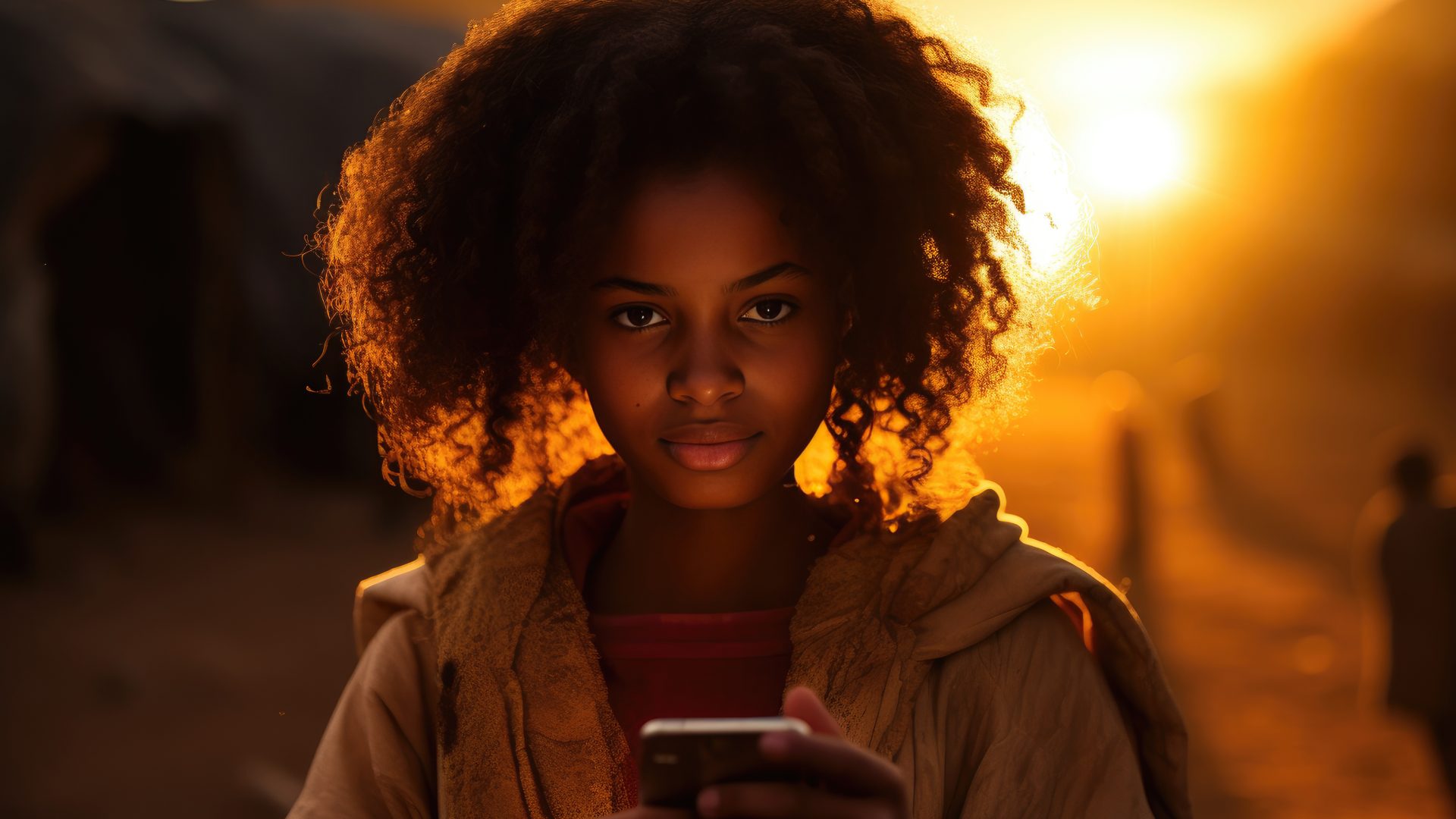
Based on the research from Avanesian et al. (2024), girls often face restrictions not only because of limited resources, but also because of expectations within families and communities. Compared to boys, they are less likely to have independent access to phones or the internet. In practice, this means that boys tend to use digital devices more freely, while girls often need permission or are expected to prioritise other responsibilities. Safety is another important factor. Refugee girls often face risks of harassment or violence both within their communities and in public spaces such as schools. In some cases, a lack of proper facilities, such as clean water or private sanitation, can discourage regular attendance. These challenges can have long-term effects on their education and future opportunities. These inequalities are closely linked to digital access. In many households, mobile phones and digital devices are controlled by male family members. As a result, girls often lack direct access and instead rely on others, usually fathers or brothers, to share information with them, which leads to refugee girls receiving information indirectly, which can be incomplete, delayed or filtered.
In many households, mobile phones and digital devices are controlled by male family members. As a result, girls often lack direct access and instead rely on others, usually fathers or brothers, to share information with them, which leads to refugee girls receiving information indirectly, which can be incomplete, delayed or filtered.
Tweet
This highlights an important point: digital access is not only about having a device or an internet connection, but also about who controls access to information. When girls depend on others for information, their decision-making ability is limited. In already difficult environments, this can increase their vulnerability. Digital exclusion also affects participation. Many organisations now use digital platforms to communicate with communities, share information and provide services. However, when refugee girls cannot access these platforms, their voices are often missing. Addressing this issue, therefore, requires more than simply expanding access to technology. It also means paying attention to the social and cultural conditions that shape how technology is used. Supporting refugee girls to have safer and more independent access to digital tools can make a meaningful difference in their lives.
In the end, digital access is not just about being connected; it is about power. It shapes who can access information, who can make decisions and whose voices are heard. Without addressing these inequalities, efforts to support refugees and build more inclusive communities will remain incomplete. Improving digital access and education for girls is not only necessary but essential for ensuring dignity, agency and more equal opportunities.
In the end, digital access is not just about being connected; it is about power. It shapes who can access information, who can make decisions and whose voices are heard. Without addressing these inequalities, efforts to support refugees and build more inclusive communities will remain incomplete
Tweet
Junhee Seo is a Research Fellow at ACCORD.
