
Hybrid threats in Africa encompass a complex interplay of conventional and unconventional security challenges that exploit the continent’s vulnerabilities. These threats, often orchestrated by both state and non-state actors, combine cyber warfare, disinformation campaigns, economic coercion, and insurgent activities to undermine governance, destabilise societies, and weaken regional integration efforts. Unlike traditional military conflicts, hybrid threats operate in the grey zone between war and peace, making them difficult to detect and counter. The multidimensional nature of these threats exacerbates existing structural weaknesses in many African states, where governance deficits, socio-economic inequalities, and fragile institutions provide fertile ground for exploitation.
One prominent example of hybrid threats in Africa is the increasing use of cyber warfare and disinformation campaigns to influence political outcomes. In recent years, foreign and domestic actors have manipulated digital platforms to spread false narratives and fuel ethnic divisions. For instance, during Nigeria’s 2019 elections, coordinated disinformation campaigns were launched across social media platforms to discredit political opponents and influence voter behaviour. Similarly, in Ethiopia, during the Tigray conflict, misinformation and digital propaganda exacerbated tensions, fuelling violence, and deepening ethnic polarisation. Cyber-enabled hybrid threats are particularly effective in Africa due to limited digital literacy, weak cyber regulations, and the rapid expansion of internet access without corresponding safeguards.
The rise of violent extremist organisations (VEOs) in Africa further illustrates the hybrid nature of modern security threats. Groups such as Boko Haram, al-Shabaab, and the Islamic State in the Greater Sahara (ISGS) have combined asymmetric warfare with sophisticated information operations to expand their influence. These groups exploit local grievances, including poverty, marginalisation, and weak state presence, to recruit fighters and undermine state authority. In Mozambique’s Cabo Delgado province, for example, insurgents linked to ISGS have not only conducted brutal attacks but have also engaged in economic sabotage, disrupting liquefied natural gas projects that are crucial for the country’s economic development. This combination of physical violence, economic disruption, and information warfare represents a hallmark of hybrid threats, making it increasingly difficult for governments to respond using conventional military means alone.
The role of regional security mechanisms
Regional security mechanisms in Africa play a crucial role in addressing conflicts, terrorism, and political instability, but their effectiveness is often constrained by structural weaknesses, political dynamics, and external influences. The African Union (AU) and regional economic communities (RECs) such as the Economic Community of West African States (ECOWAS), the Southern African Development Community (SADC), and the Intergovernmental Authority on Development (IGAD) have developed frameworks to prevent and respond to security threats. These mechanisms rely on diplomatic mediation, peacekeeping missions, early warning systems, and counterterrorism initiatives to maintain regional stability. However, while their mandates are well-articulated on paper, their practical implementation often faces serious limitations due to funding shortages, lack of coordination, and geopolitical interests.
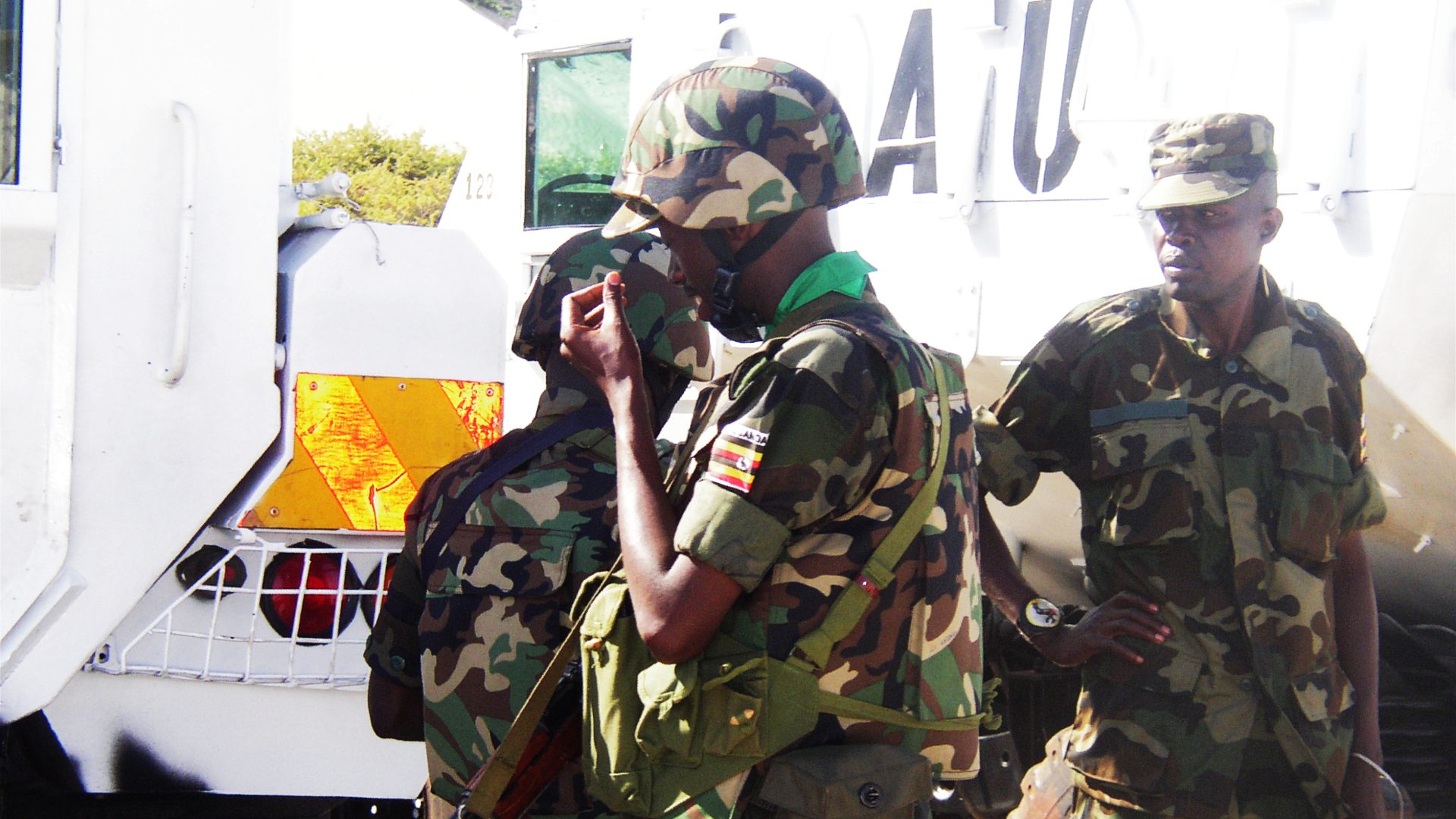
The AU has also attempted to position itself as a continental security guarantor through initiatives such as the African Standby Force (ASF) and the Peace and Security Council (PSC). The ASF, designed as a rapid response force for crises, has yet to become fully operational due to logistical, financial, and political constraints. Instead, the AU has relied on external actors such as the United Nations (UN) and the European Union (EU) to fund its peacekeeping missions, leading to questions about the continent’s security autonomy. The AU Mission in Somalia (AMISOM), which played a crucial role in weakening the al-Shabaab insurgency, was heavily dependent on external financing, primarily from the EU. While AMISOM achieved some military successes, its inability to establish long-term governance structures in Somalia highlights the broader challenge of transitioning from military stabilisation to sustainable peace.
The AU has relied on external actors such as the UN and the EU to fund its peacekeeping missions, leading to questions about the continent’s security autonomy.
Tweet
Challenges and the way forward
African regional security mechanisms face significant challenges that undermine their effectiveness in addressing conflicts, terrorism, and political instability. One of the primary obstacles is the chronic lack of funding and logistical capacity. Most regional security operations, whether under the AU or RECs, rely heavily on external financial and material support. The ASF, envisioned as a rapid deployment force, remains non-operational due to inadequate resources and political inertia. The AU Transition Mission in Somalia (ATMIS), previously known as AMISOM, while successful in weakening al-Shabaab, was overwhelmingly financed by the EU. When funding cuts were imposed, operational capacity declined, raising concerns about the sustainability of African-led security interventions. The reliance on external donors not only limits strategic autonomy but also exposes security mechanisms to geopolitical influence, as donors often attach conditions to their support.
Another major challenge is the political fragmentation among African states, which hampers collective security efforts. The lack of political will to implement regional security frameworks often results in slow or ineffective responses to crises. ECOWAS has demonstrated both effectiveness and limitations in this regard. While it successfully intervened in The Gambia in 2017 to uphold electoral democracy, its response to recent military coups in Burkina Faso, Mali, and Niger has been inconsistent. ECOWAS imposed economic sanctions and threatened military intervention, but regional divisions and a lack of consensus weakened its ability to enforce decisions. Countries with military-led governments, such as Guinea and Chad, have resisted pressure from regional bodies, exposing the fragility of collective security arrangements. The inability to present a united front in enforcing democratic norms and security commitments limits the credibility of regional organisations.
Coordination and intelligence-sharing remain critical weaknesses within Africa’s security framework. Many regional bodies operate in silos, leading to duplication of efforts and gaps in response mechanisms. The overlap of responsibilities between the AU and RECs often creates bureaucratic inefficiencies. For instance, in the fight against terrorism in Sahel, the AU, ECOWAS, and the G5 Sahel Joint Force have struggled to coordinate effectively. While the G5 Sahel was formed to combat extremist groups such as Jama’at Nasr al-Islam wal Muslimin (JNIM) and the ISGS, its operations have been hindered by logistical constraints and inconsistent political support from member states. The withdrawal of Mali from the G5 Sahel in 2022, and Burkina Faso and Niger in 2023 further weakened the initiative, demonstrating the fragility of regional military cooperation. Without a more cohesive intelligence-sharing system and streamlined command structures, regional security mechanisms will continue to struggle against transnational threats.
Despite these challenges, there are opportunities to strengthen Africa’s regional security mechanisms. One critical step is reducing dependency on external funding by establishing sustainable financing models. The AU Peace Fund, designed to provide African-led funding for peace operations, has yet to reach its full potential due to limited contributions from member states. Increasing financial commitments through mandatory contributions or regional security levies could enhance the continent’s ability to fund its security operations independently. Additionally, stronger investment in local defence industries could reduce reliance on foreign military aid and enhance operational sustainability.
The AU Peace Fund, designed to provide African-led funding for peace operations, has yet to reach its full potential due to limited contributions from member states. Increasing financial commitments through mandatory contributions or regional security levies could enhance the continent’s ability to fund its security operations independently.
Tweet
Africa’s ability to address security challenges will depend on its commitment to regional cooperation, self-reliance, and strategic adaptability. By enhancing funding mechanisms, fostering political unity, and strengthening coordination, African regional security organisations can move beyond reactive crisis management and adopt a more initiative-taking and sustainable approach to peace and stability. Without these reforms, the continent will continue to face recurring conflicts, making long-term development and integration efforts increasingly difficult to achieve.
Abraham Ename Minko is a Senior Researcher and Policy Analyst in Peace, Security, and Conflict Resolution.
