
It is not often that one encounters a life in which professional excellence and human decency are so closely intertwined that they become indistinguishable. The passing of Nicholas ‘Fink’ Haysom invites reflection not only on a distinguished career, but on the quiet and enduring power of integrity in public service.
I first met Fink in 2003 in Nairobi, at the Silver Springs Hotel, during negotiations leading to the Sudanese Comprehensive Peace Agreement (CPA). At the time, I was a junior officer at the African Union Commission (AUC), working with the AU Special Envoy, Ambassador Baba Gana Kingibe. What began as a professional interaction evolved into a sustained connection, shaped by shared experiences across some of Africa’s most complex peace processes.
For many, Fink was more than a diplomat or senior United Nations (UN) official. He was a principled individual whose work was grounded in a belief in human dignity and the possibility of peace, even in fragile contexts. During the CPA negotiations, it was clear that the Kenyan Chief Mediator, General Lazarus Sumbeyiwo, relied heavily on the counsel of both Fink and Dr Susan Page. Fink’s role was far from performative. He worked quietly, often late into the night, moving between parties and helping to bridge differences. His influence was steady, deliberate and effective.
The CPA process was shaped by decades of conflict between the Government of Sudan and the Sudan People’s Liberation Movement/Army (SPLM/A). Navigating this complexity required more than technical skill. Trained as a lawyer, Fink brought experience from South Africa’s constitutional transition from apartheid – an experience that informed his lifelong commitment to institution-building and inclusive political processes. This foundation was evident not only in Sudan, but also in his work in South Sudan, Afghanistan, and Somalia.
As fate would have it, our paths diverged when Fink joined the UN in 2005. They converged once again in 2016, when he was appointed UN Special Envoy for Sudan and South Sudan. At this point he also reconnected with former President Thabo Mbeki, a fellow South African liberation icon, who led the African Union High Level Panel on Sudan and South Sudan. During this period, I introduced him to senior AU officials, including Ambassador Ismail Chergui, who quickly appreciated his depth and commitment. Fink often emphasised the strategic importance of the Horn of Africa, cautioning that instability in the region could erode broader continental gains.
In 2021, upon his appointment as Special Representative of the Secretary-General and Head of the United Nations Mission in South Sudan (UNMISS), Fink recruited me to join his team. For him, this marked our return to unfinished business. As one of the architects of the CPA, he did not view South Sudan as a failed project, but as one still in formation. Its challenges, he believed, were serious but surmountable.
He often reminded colleagues that the success of UNMISS would ultimately be measured by its exit. ‘We must work ourselves out of a job,’ he would say. While sometimes misunderstood, this reflected a principled belief that peace operations should not become permanent. In a context marked by protracted conflict, competing interests, and immense human suffering, he maintained a consistent approach: patience, clarity, and an unwavering commitment to dialogue. This was especially evident in his carefully crafted statements to the UN Security Council – grounded in evidence, measured in tone, and often quietly challenging the status quo.
What distinguished Fink was not only his expertise, but his temperament. At a time when diplomacy can become transactional or performative, he embodied a quieter model of engagement. He listened carefully, sought to understand before persuading and remained attentive to the human consequences of political decisions. This perspective shaped his approach in South Sudan, particularly during moments of crisis. During the 2022 floods in Bentiu, for example, his focus remained firmly on affected communities, ensuring that humanitarian realities were not overshadowed by political considerations.
What distinguished Fink was not only his expertise, but his temperament. At a time when diplomacy can become transactional or performative, he embodied a quieter model of engagement
Tweet
Colleagues frequently noted his humility. Despite holding senior roles, he carried himself without pretence. Titles were secondary; the work mattered. This approach extended beyond formal settings. In Juba, he would often sit quietly in his garden at sunset, reflecting on how his experience of solitary confinement during apartheid-era South Africa had shaped his worldview. It deepened his appreciation of freedom, he would say, and reinforced his respect for the dignity of others.
His tenure in South Sudan reflected this approach. Navigating a volatile political landscape, he worked to support peace agreement implementation while maintaining the credibility of the United Nations as an impartial actor. This required both diplomatic skill and resilience. Progress was uneven, setbacks frequent, and pressures constant. Yet he remained steady, guided by the belief that even incremental gains mattered.
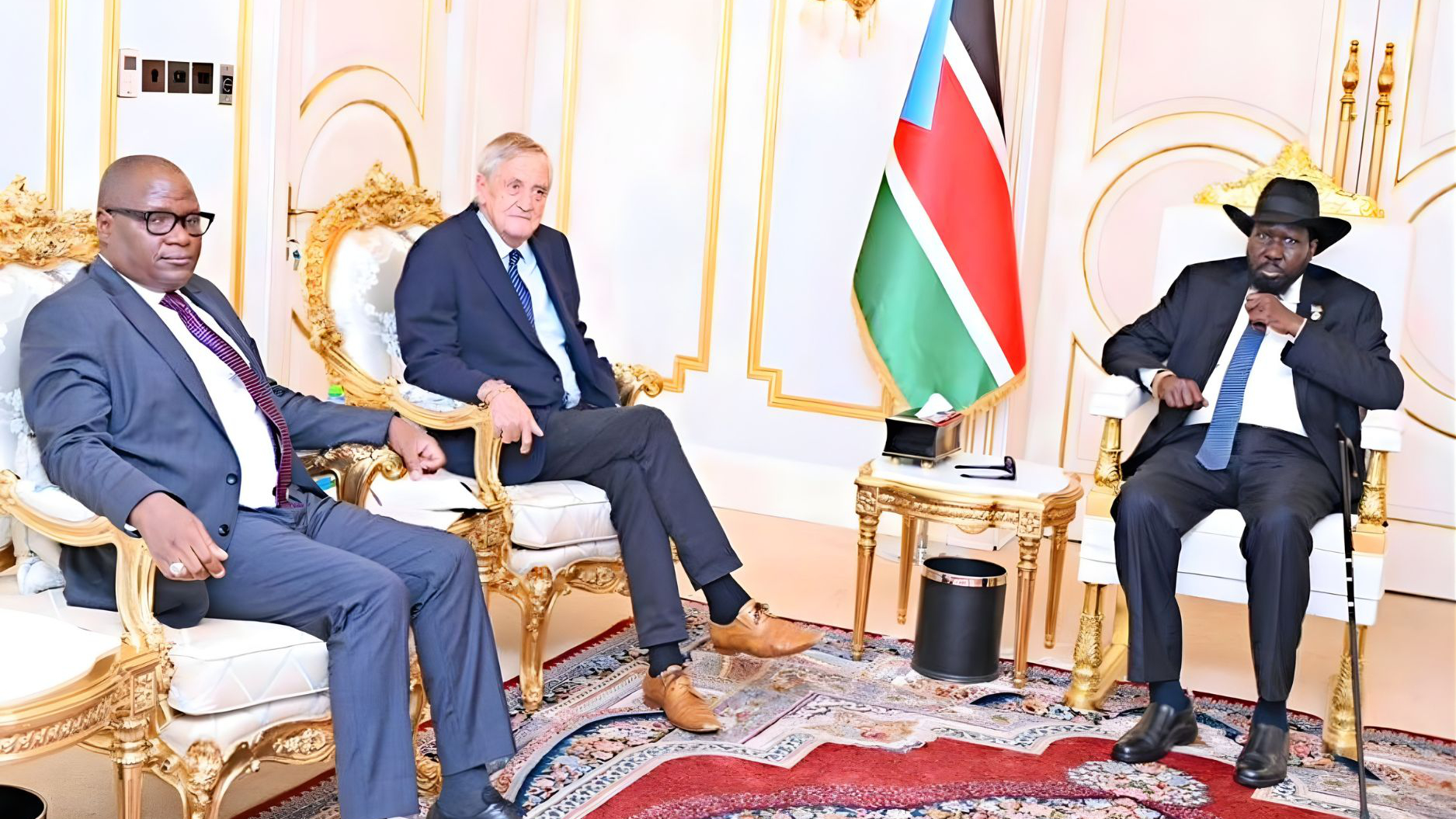
His relationship with President Salva Kiir Mayardit reflected a careful balance of candour and respect. Having first engaged during the CPA period, Fink maintained a rapport that allowed for direct and, at times, difficult conversations. He often recalled travelling across all ten states of South Sudan with General Sumbeyiwo prior to the CPA’s signing – experiences that shaped his understanding of the country and its leadership. In meetings, President Kiir would greet him simply as ‘Nicholas,’ a familiarity Fink accepted with quiet amusement. This relationship allowed him to speak frankly, including when UN reporting to the Security Council was critical of the government. His message remained consistent: the path forward lay in honouring the peace agreements.
Beyond formal roles, Fink’s legacy is reflected in the relationships he built. He connected across divides – engaging heads of state, civil society actors, and colleagues, at all levels, with equal ease. This was central to his understanding of leadership.
Fink represented a tradition of public service that is very rare today, yet essential. It is grounded in ethical conviction, intellectual rigour and a strong sense of responsibility to others. At a time when multilateralism faces challenges, his example serves as both reminder and challenge: that effective conflict resolution requires commitment, patience, inclusivity and respect for human dignity.
Fink represented a tradition of public service that is very rare today, yet essential. It is grounded in ethical conviction, intellectual rigour and a strong sense of responsibility to others
Tweet
For those who knew him, the loss is deeply personal. But it also carries responsibility – the responsibility to carry forward the principles he embodied. His legacy endures not only in the agreements he shaped or institutions he strengthened, but in the standards he set.
When human decency passes, one is left to wonder how the world continues. Perhaps the answer lies in the lives touched, the quiet influence exerted and the examples left behind. In that sense, Nicholas ‘Fink’ Haysom’s legacy does not end. It continues in the work of those of us who remain committed to building a more peaceful and just world.
Boitshoko Mokgatlhe is a peace and security practitioner with over two decades of experience advancing stability, governance, and conflict resolution across Africa. He is currently the Executive Director of The Democracy Foundation in Botswana.
