
Abstract
This paper considers how community-led peace initiatives become drivers of economic development, infrastructure improvement and service delivery that are critical to peace and stability. It examines how grassroots peacebuilding, particularly through Local Peace Committees (LPCs) established by the Ecumenical Church Leaders Forum (ECLF), has contributed to post-conflict development and social stability in the Matabeleland region of Zimbabwe. The role of LPCs in facilitating community projects, restoring trust in leadership and promoting inclusive participation in development planning is assessed with the aim of contributing to the broader African debates on how locally driven development can anchor sustainable peace and stability, especially in the absence of strong state intervention. The paper draws on interviews with ECLF staff and community members from Matabeleland to assess how these efforts are creating tangible peace dividends and helping to stabilise a region marked by a history of unresolved conflict following the Gukurahundi atrocities and where a sense of neglect by central government is alive and well. The results show that LPCs are effective community structures that facilitate development by promoting social cohesion and that the strength of the LPCs lies in the fact that they are community-driven initiatives.
1. Introduction
The quest for sustainable peace in societies emerging from conflict has increasingly emphasised the role of development as a right and as a strategic driver of stability. In Africa, where legacies of political violence and structural inequality persist, the link between peacebuilding and development has received renewed attention. Nowhere is this relationship more important than in the Matabeleland region of Zimbabwe, which is still grappling with the long-lasting consequences of the Gukurahundi massacres of the 1980s. These state-sponsored atrocities claimed an estimated 3,750 civilian lives, shattered community trust and entrenched a sense of social and economic marginalisation among the region’s inhabitants (CCJP and LRF, 1997:157). Today’s Matabeleland is a region in Zimbabwe comprising three provinces: Matabeleland North, Matabeleland South and Bulawayo. The region is located in the western and south-western parts of the country and takes its name from the Ndebele people, the main inhabitants. The Zimbabwean government has not officially recognised or addressed the dark chapter, leaving communities in Matabeleland with no meaningful opportunities for redress, healing or equitable development.
In this vacuum, non-state actors have emerged to promote reconciliation and bottom-up development. Among them, the Ecumenical Church Leaders Forum (ECLF), a faith-based organisation, has emerged as a key player that has initiated grassroots peacebuilding initiatives focused on Local Peace Committees (LPCs). This paper examines how these LPCs, led by the ECLF, have contributed to economic development, improved infrastructure and increased social stability in selected communities in Matabeleland. The paper argues that in contexts where formal, state-led reconciliation is absent or politicised, bottom-up, faith-based peacebuilding can act as a dual mechanism: addressing past trauma while promoting development as a peace dividend. The central question underlying this paper is how the ECLF-led LPCs have contributed to economic development, infrastructure improvement and social stability in communities following the Gukurahundi conflict in Matabeleland. In addressing this question, the paper also examines the effectiveness of LPCs as agents of development and the political challenges they navigate in Zimbabwe’s constrained civic space.
2. Definition of key terms
Right to development, peace dividends and LPCs are key terms that are necessary to define. These terms are central to this study, as they provide the analytical basis for understanding how grassroots peacebuilding interventions, particularly those implemented by non-state actors such as the ECLF can contribute to post-conflict recovery in Matabeleland. First, the right to development is not only cited as one that is essential to pay particular attention to in the African Union (AU) African Charter on Human and Peoples’ Rights (ACHPR), but it is also deemed necessary for the enjoyment of economic, social and cultural rights (AU, 1981). In the African context, the ACHPR thus forms the legal basis from which the right to development is derived. It is noteworthy that Article 22 of the ACHPR emphasises that African states are responsible for ensuring that their citizens enjoy this right (AU, 1981). Although this right is not directly defined in the ACHPR, its link to economic, social and cultural rights can be interpreted to mean a situation where the state of affairs allows all citizens to have stable economic, social and cultural statuses. This interpretation aligns well with one of the common definitions of the right to development in international law, as captured in the United Nations (UN) Declaration on the Right to Development, which states that development means comprehensive economic, social, cultural and political processes intended to improve the well-being of human beings (OHCHR, 1986:1). The basis for analysis regarding the right to development then stems from the two cited crucial documents. The need for a population to exercise their right to development is indisputable. In the Matabeleland region where there is a history of violence and torture, peace has to prevail for economic, social, cultural and political processes to take place. As understood in the African context guided by the ACHPR, the Zimbabwean government has the primary responsibility to foster a context in which inhabitants of the Matabeleland region enjoy the right to development. Lack of this right not only compromises the citizens’ right to development but creates a gap in which economic, social, cultural and political rights are not fully enjoyed.
Second, the term peace dividends can have different meanings in different contexts. In general, however, it refers to the economic, social and political benefits that a country or region can reap after a period of peace following the end of a conflict (Pkalya, 2011). The concept of peace dividends gained prominence in international relations discourse in the 1990s, particularly in the post-Cold War period, where it referred to the expected economic and social benefits resulting from the redistribution of resources previously used for military expenditure. The underlying assumption was that a reduction in defence spending would free up public resources for investment in development-oriented sectors such as education, health, infrastructure and social welfare, thereby promoting peace and stability. In the context of Matabeleland, a region that was severely affected by the Gukurahundi atrocities in the 1980s, peace dividends take on a more specific and urgent meaning. Here they can be understood as economic, social and cultural interventions aimed at consolidating peace, rebuilding trust and preventing the recurrence of state-sponsored violence. Crucially, the notion of peace dividends cannot be separated from the right to development, which is both a legal obligation and a moral imperative. When post-conflict initiatives include the building of schools, clinics, roads or the promotion of livelihood projects, these are not just efforts of goodwill, but the realisation of a fundamental right that citizens are entitled to, especially those in historically marginalised or aggrieved communities. The peace dividends are, therefore, not only an outcome of peace, but also a tool to achieve transformative justice and address structural inequalities. Fundamentally, the responsibility for delivering these dividends lies with the state, as it bears the primary responsibility for the fulfilment of the right to development. In the case of Zimbabwe, it is the responsibility of the central government to lead the reconstruction and development efforts in Matabeleland.
Finally, LPCs are studied as an infrastructure for building peace from below, and their understanding is based more on practice. According to the United Nations Development Programme (UNDP), LPCs are a forum composed of various representatives of society that deals with issues related to emerging conflicts affecting a community, polarisation and the threat of violence (Odendaal 2010:2–3). The recourse to LPCs is highly influenced by John Paul Lederach’s pyramid of peacebuilding, in which LPCs are part of the grassroots level of peacebuilding at the broad base of the pyramid (Paffenholz and Spurk, 2006:23). At this level, LPCs – referred to as local peace commissions in the pyramid – act as a catalyst for the realisation of peace as part of peacebuilding at grassroots level. According to Lederach, they create the conditions for peace by promoting agreements to end violent conflicts and implementing policies that would have been adopted by policymakers at the top of the pyramid (Wright, 2004:492). In practice, however, LPCs can also work to influence policy, while promoting harmony and peace agreements with those at the top of the pyramid to determine how peace can be achieved. In addition, LPCs are an important infrastructure for grassroots peacebuilding that can fill the development vacuum where there is no national government initiative.
3. Methodology
The findings presented in this paper are drawn from a recent qualitative case study analysing the grassroots peacebuilding initiatives implemented by the ECLF and their reception in the Matabeleland region of Zimbabwe. In particular, the study analysed how the community-level structures established by the ECLF, especially the LPCs, have contributed to economic development, infrastructure improvement and social stability in the aftermath of the Gukurahundi atrocities. A qualitative approach was deemed most appropriate, as it can capture the complex lived experiences of communities struggling with historical trauma and the nuanced socio-political environment in which peacebuilding is conducted.
3.1 Data collection methods
Data collection focused primarily on semi-structured and unstructured interviews with ECLF staff, including programme managers, community facilitators and gender and justice officers. Thirteen key participants comprising four ECLF staff members and nine community facilitators were purposively selected based on their active role in designing, implementing and monitoring grassroots peacebuilding and development programmes. The sample included seven men and six women. The interviews explored key themes such as the role of LPCs in promoting inclusive community dialogue, initiating development projects, restoring social trust and overcoming conflict-related trauma.
To broaden and triangulate these perspectives, five focus group discussions (FGDs) were conducted in purposively selected districts of Matabeleland where the ECLF operates: Beitbridge, Nkayi, Gwanda, Matobo and Tsholotsho. The FGDs were held between May and August 2025. Each FGD consisted of 10 to 15 participants, forming heterogeneous groups to capture a range of community viewpoints. Participants included traditional leaders, local council representatives, members of the LPCs, youth representatives and ordinary community members of different ages and genders. This composition ensured the inclusion of both implementers and beneficiaries of ECLF initiatives. More so, this broadened the perspective to include both implementers and beneficiaries, allowing for a more informed understanding of the scope, relevance and limitations of ECLF initiatives from the perspective of different stakeholders. Discussion guides for both interviews and FGDs focused on key themes such as the perceived role of LPCs in fostering dialogue, initiating development projects, restoring social trust, and navigating the sensitive legacy of past conflict. The research also involved analysing documents, including internal ECLF reports, workshop materials, policy papers and strategy documents. This enabled the contextualisation of interview data, provided insight into the institutional development of ECLF programmes and provided evidence of emerging themes.
3.2. Data analysis
The data were analysed using thematic analysis, a method well suited to the exploratory and context-rich nature of this study (Braun and Clarke, 2006:86). This approach enabled the systematic identification and examination of recurring patterns and nuanced links at the critical intersection of peacebuilding and community development. To structure this inquiry, a primarily deductive coding approach was employed, guided by the study’s core research questions concerning the role and reception of ECLF initiatives. This informed the development of four coherent, evidence-based themes: LPCs as development catalysts; restored trust; social cohesion and livelihood opportunities; and ongoing challenges in politically sensitive environments.
The primary advantage of thematic analysis is its capacity to organise complex qualitative data into meaningful analytical categories without sacrificing depth or context (Nowell et al., 2017:2). By using a deductive lens informed by the study’s framework, the analysis remained focused on the research objectives while still allowing for the emergence of nuanced insights within each predefined theme. This combination of structure and flexibility ensured that the findings were rigorously derived from the data and directly responsive to the research objectives, providing a clear thematic narrative that elucidates how community-led structures function in a post-conflict setting.
3.3 Ethical considerations
The study proactively addressed the inherent challenges of interviews and FGDs, particularly through a rigorous ethical protocol. Creating emotionally safe spaces, obtaining informed consent, and ensuring confidentiality directly addressed the management of sensitive topics and potential participant distress. Furthermore, triangulating interviews and focus groups with document analysis mitigated the limitations of individual methods, enhancing the validity and contextual depth of the findings.
Given the sensitivity of the Gukurahundi legacy, ethical considerations were prioritised throughout the research process. All interviews and discussions were conducted with informed consent, and participants were assured of confidentiality and anonymity. Participants who preferred anonymity were given pseudonyms in the presentation of findings to protect their identities. Efforts were made to create emotionally safe spaces, particularly when dealing with survivors of past violence or politically sensitive topics. Research was formally authorised by ECLF management, which facilitated access to key informants and ensured institutional accountability. By situating the study in a historically marginalised and conflict-affected region and focusing on community-led, faith-based peacebuilding, this methodology provided a rich and nuanced understanding of how the right to development functions not only as a moral and legal imperative, but also as a strategic impetus for sustainable peace and stability in post-conflict African contexts.
4. Gukurahundi legacy and the marginalisation of Matabeleland region
Between January 1983 and December 1987, under the government of President Robert Mugabe, the Zimbabwe Fifth Brigade, a militia trained by North Korea (Cameron, 2018:1), carried out a brutal counter-insurgency campaign in Matabeleland North, Matabeleland South and the Midlands, targeting mostly Ndebele civilians under the pretext of eliminating dissidents amid tensions between two major political parties, the Zimbabwe African National Union (ZANU) and the Zimbabwe African People’s Union (ZAPU). Survivor testimonies and historical records document forced confessions, public executions, the burning of houses and the dumping of bodies in disused mine shafts such as Bhalagwe and Antelope Mine, with some victims buried up to their necks and shot dead (CCJP and LRF, 1997:156). The campaign devastated rural households, economic activity came to a standstill, and many lost breadwinners, including farmers, traders and teachers, resulting in child‑headed families, disrupted livelihoods and emigration to safety (CCJP and LRF, 1997:145). Numerous schools in Matabeleland were destroyed or had to be closed, teachers were killed, expelled or fled the region. In December 1987, ZAPU and ZANU were formally united with the signing of the Unity Accord and the open violence ceased. Nevertheless, the effects are still being felt. Although comprehensive economic data is scarce, both local activists and post-conflict literature consistently link Matabeleland’s systemic underdevelopment characterised by poor infrastructure, inadequate health services and low investment to the long-term socio-economic disruption caused by Gukurahundi. The atrocities had not only destroyed livelihoods, but also led to ongoing cultural marginalisation. An example of this is the appointment of Shona-speaking teachers in Ndebele communities, which undermines the preservation of language and cultural identity. In addition, survivors continue to suffer from deep psychological trauma, much of which has been passed on to subsequent generations, fuelling deep-rooted mistrust and a desire for revenge (Ngwenya and Harris, 2015:39).
Once a thriving industrial centre, particularly in Bulawayo, the region experienced a drastic economic downturn after 2008. Numerous factories were closed and no significant efforts were made to reindustrialise under the government’s subsequent economic programmes, reflecting a failure to invest in local productive capacity (Gumbo, 2020). The decentralisation of the administration remains largely nominal. Many government offices in Matabeleland function merely as liaison or “postal” points of contact, with key decisions being referred to the central bureaucracy in the capital, Harare, undermining local autonomy and disempowering regional government structures (Mkandla, 2017:6). The management of natural resources further reflects this imbalance. While Matabeleland has significant mineral resources, particularly gold and coal deposits, the benefits disproportionately accrue to actors outside the region, while local communities receive minimal or no benefits (2017:26). Further neglect of infrastructural development exacerbates this pattern. The road infrastructure linking the region’s capital, Bulawayo, to the rest of the region remains in poor condition and many rural communities continue to lack reliable telecommunications and basic connectivity, severely limiting development (Nkala, 2021).
In addition, most cabinet ministers from the Matabeleland region spend most of their time in Harare after taking office, where most government business is conducted, limiting their engagement with constituencies and dampening advocacy for regional priorities. At the same time, key leadership positions in local government, education and health are often held by people from outside the region, confirming the perception of marginalisation and limited community ownership (Mkandla, 2017:133–134). Public investment is unevenly distributed. Numerous capital projects in Matabeleland have either stalled or been postponed indefinitely. The protracted postponement of the Zambezi water project in Matabeleland, for example, has come to symbolise this neglect. These patterns of marginalisation amount to what peacebuilding scholars refer to as structural violence: the systematic denial of socio-economic opportunities, infrastructure development and political empowerment (Vorobej, 2008:84–89). To achieve lasting peace in Zimbabwe, it is therefore necessary to address such deep-rooted regional inequalities and redress historical injustices through inclusive, development-oriented governance frameworks.
5. Overview of ECLF’s emergence and role
Following the ongoing political and economic crisis in Zimbabwe, characterised by a series of acts of violence, including the Gukurahundi massacres and the violent run-off in the 2008 presidential elections, church leaders felt compelled to act under the banner of the Zimbabwe Heads of Christian Denominations. The active response of church actors to the socio-political crises in Zimbabwe culminated in the establishment of the ECLF in 2009, which was officially registered as a trust in 2010. This initiative brought together the main Christian denominations committed to healing, reconciliation and peacebuilding to jointly address the deepening political and social fractures in the country. The formation of ECLF was partly influenced by the groundbreaking 2006 document “The Zimbabwe We Want”, which called for inclusive national dialogue, democratic reform and social justice (Joergalt, 2006). In the immediate aftermath of the 2008 political and economic crisis, ECLF responded to food insecurity with coordinated, church-led relief efforts while engaging in national processes such as the constitution-making initiative (ECLF, 2025).
These efforts were supported by regional and international partners, including the Lutheran Communion in Southern Africa, Bread for the World and the Evangelical Lutheran Church in America. Building on this early work, ECLF developed a sustainable mission focused on peacebuilding within both church and community structures. A key component of this mission is the training of clergy and lay leaders in Conflict Prevention, Management, Resolution and Transformation (CPMRT). Recognising the ongoing psychological, spiritual and communal wounds caused by decades of violence, including the Gukurahundi atrocities and political polarisation, ECLF later evolved this model into the Conflict Prevention, Management, Resolution, Transformation and Healing (CPMRTH) and explicitly integrated healing as a core component of its peacebuilding framework. By embedding these practices into existing church and grassroots structures, ECLF has promoted a sustainable, community-based approach to reconciliation that empowers both churches and local institutions to take ownership of the peace process (ECLF, 2018). This model has made ECLF a key player in promoting healing, social cohesion and inclusive development across Zimbabwe, particularly in historically marginalised regions such as Matabeleland.
6. Introduction to LPCs and their objectives
As ECLF’s CPMRTH programme evolved, communities, particularly in Nkayi, recognised the need for sustainable, locally driven peacebuilding structures that could sustain momentum beyond ECLF’s intervention (Zhou, interview, 17 May 2025).1 This did not happen in isolation but reflected an ongoing evolution in ECLF’s engagement with communities. This led to the conceptualisation and introduction of LPCs in 2010 as community-based mechanisms for conflict prevention, management, resolution, and transformation through participatory and indigenous approaches operating at village, ward and district levels, depending on context (ECLF, 2025). LPCs emerged organically following community sensitisation processes and are composed of up to 40 (often 25–40) non-partisan, trusted and respected local community members elected by community consensus from diverse groups, including but not limited to women, men, youth, people with disabilities and churches. They are mandated to sustain inclusive dialogue, mediate local disputes and promote community reconciliation and cohesion through non-violent, culturally sensitive and locally legitimate peacebuilding practices.
These committees are not reactive or temporary initiatives but serve as inclusive peacebuilding structures that emphasise representation of diverse community voices, local ownership and coordination with traditional and formal governance structures (Chivasa, 2017:7). As important links between grassroots communities and formal government structures, LPCs contribute to integrating local knowledge into broader peacebuilding efforts. They represent a shift from externally driven interventions to embedded, community-led peacebuilding that strengthens local ownership and long-term conflict transformation. Furthermore, driven by the local context and dynamics, these LPCs, after further refresher or capacity development training, begin to play a critical role in governance, development, livelihoods, and the climate action agenda (Thaka, interview, 20 May 2025).2 They become the essential catalyst that motivates communities to address their socio-economic challenges, which are often drivers of conflict. The peace dividend then becomes their ability to bring together conflicting parties to collaborate on specific community projects, such as repairing a bridge, clinic or school.
7. Findings: Peacebuilding as a driver of development
7.1. Local Peace Committees as development catalysts
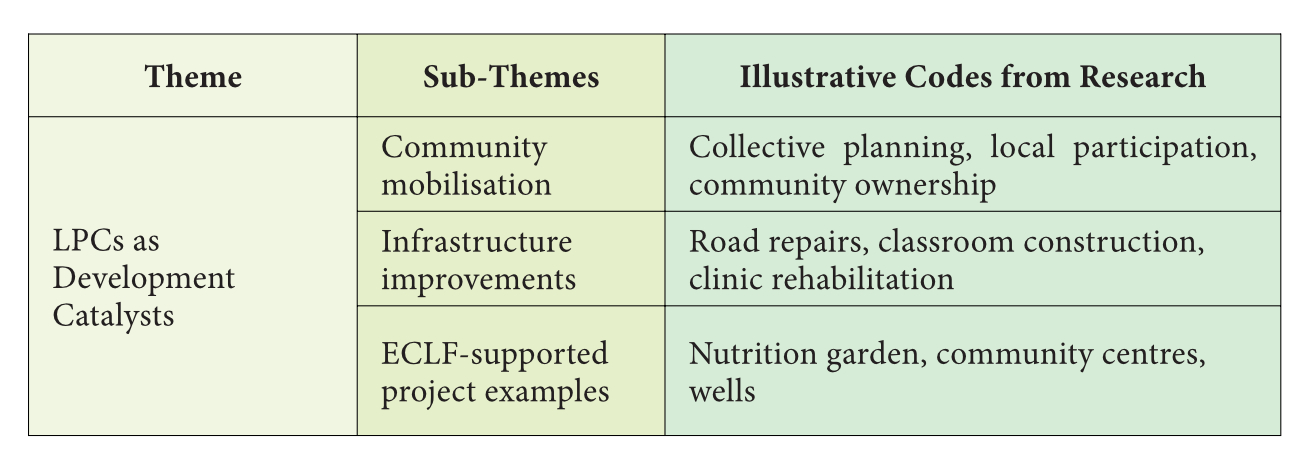
ECLF has implemented sustainable peacebuilding activities in the entire Matabeleland region, and LPCs have gradually emerged as important actors not only in conflict resolution but also in grassroots development. Originally established to manage local conflicts and promote cohesion, LPCs have expanded their role to mobilise communities for collective development action. Their evolution into locally rooted structures capable of guiding community priorities shows that peacebuilding is maturing into development promotion in a broader sense. During and after the ECLF intervention, LPCs develop a life of their own and maintain their relevance by tailoring their peacebuilding work to the urgent needs of the community, as noted by Participant A (interview, 09 June 2025). In Shabwe, Ward 5 of Beitbridge District, for example, the LPC encouraged community members to construct a new early childhood development (ECD) building, a toilet – after the previous one fell into disrepair – and later supported the renovation of the classroom roof at Nuli Primary School. This LPC is currently mobilising resources for the construction of a police base in the community (Zhou, interview, 17 May 2025). A notable outcome of the LPC’s work is the growing link between peace and development, reinforcing the idea that there can be no development without peace and no peace without development.
In addition, LPCs enable communities to deal constructively with local disputes and encourage residents to contribute to solving common challenges through joint infrastructure projects. In Mateme, Ward 1 of Nkayi District, for example, the LPC is mobilising resources to initiate the construction of a clinic within walking distance for residents and has successfully brought together politically divided community members for development purposes (Participant A, interview, 09 June 2025). The Garanyemba LPC in Ward 3 of Gwanda District has also advocated for the rehabilitation of roads, which is currently underway as of July 2025, by engaging the ward councillor and member of parliament. As stated by Participant B (interview, 13 June 2025), who is a member of an LPC, “We had to pressure the local authorities to embark on road rehabilitation”. In addition, the LPC has revived a bridge proposal that had been shelved since 1980 and is currently working with community members, including those in the diaspora, to move the project forward. More so, the committee has been instrumental in combating deforestation caused by the drying of mopane worms by working with the United Nations Development Programme (UNDP) to support the installation of a solar dryer for sustainable harvesting (Zhou, interview, 17 May 2025). These examples from research participants illustrate that LPCs not only act as peacemakers but also as practical development catalysts whose authority and trust rooted in the community have enabled them to coordinate stakeholders, influence local governance and support collective constructive action.
7.2. Restored trust
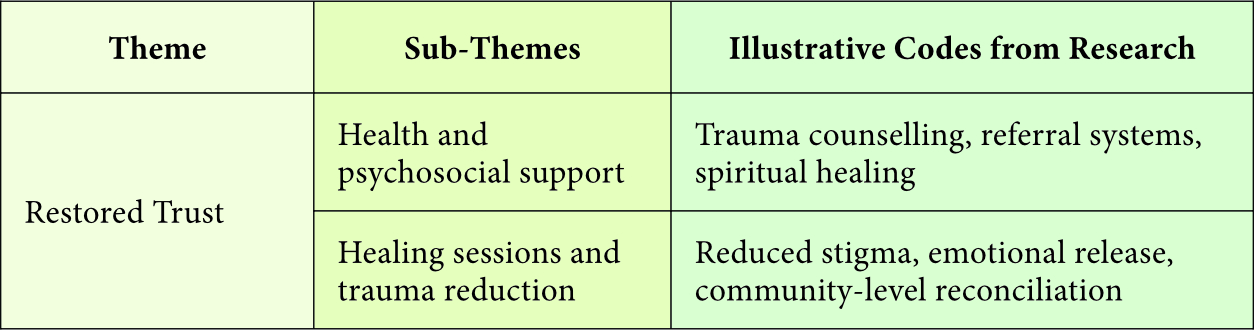
Without peace, sustainable development remains elusive. In Matabeleland, where the scars of the Gukurahundi atrocities still characterise the dynamics of the community, the work of the LPCs has served as a crucial bridge between healing and development. Research findings suggest that ECLF-supported LPCs not only act as a catalyst for local development projects, but also provide important social services, particularly in the form of counselling, trauma healing and psychosocial support. These services have played a critical role in addressing the deep-seated emotional wounds carried by survivors and their families, many of whom have lived in silence and fear for decades. These community-based healing sessions, often led by trained community facilitators, created safe spaces for dialogue and emotional release. As Participant C (focus group, 14 June 2025) explained in a focus group discussion, “People started opening up after the trauma healing sessions” and could speak openly about painful experiences without fear of judgement or political repercussions. In this way, these platforms have helped to gradually rebuild social trust both among community members and between citizens and local leaders. The trust that was once eroded by political violence, government neglect and inter-group mistrust is slowly being rebuilt through these sustained interpersonal and community activities.
Furthermore, the revival of trust has proven to be essential to mobilise collective action for development goals. To the extent that people experienced emotional relief and community solidarity through LPC-led healing initiatives, they were more willing to engage in cooperative ventures such as income-generating projects, school renovations and health programmes. Reflecting on the impact of LPC-led healing initiatives, Participant D (interview, 11 July 2025) noted, “People felt safe to talk for the first time in years”, thereby finding it possible to work together. In this way, social services provided through peacebuilding structures have served as both a form of restorative justice and a catalyst for development. The re-emergence of social cohesion and mutual trust has allowed communities once divided by trauma and mistrust to regain a shared sense of purpose and agency. This integration of trauma-informed services into peacebuilding has shown that peace is not just the absence of violence, but the presence of structures and relationships that allow communities to heal, thrive and rebuild together. By anchoring development in emotional and social recovery, LPCs in Matabeleland have developed a holistic approach to post-conflict recovery that closely aligns with the right to development and emphasises the inseparability of psychological well-being, trust and sustainable peace.
7.3. Enhanced social cohesion and livelihood opportunities
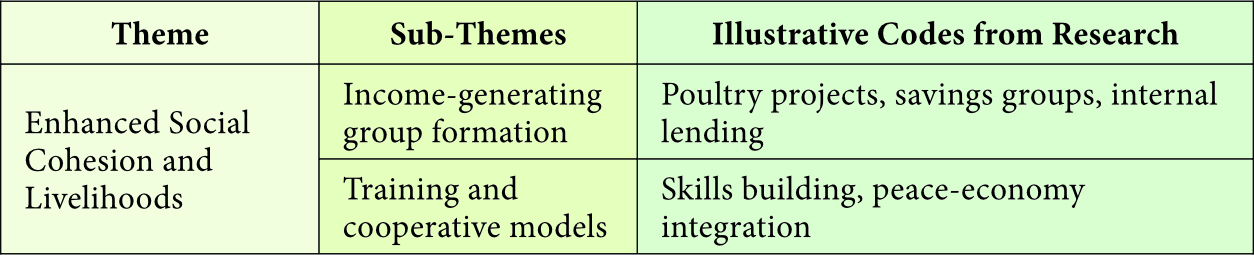
The communication and internalisation of peace values within the communities, facilitated by the work of the LPCs, have contributed significantly to the strengthening of social cohesion in Matabeleland. The results of the study show that the LPCs have created inclusive platforms where community members from different backgrounds can engage in open dialogue, jointly identify local challenges and pursue development goals. In support of this, Participant E (focus group, 21 June 2025) stated, “The LPC made us realise we can work together to improve our welfare.” The spaces created by the work of LPCs have not only strengthened interpersonal and inter-group relationships but have also cultivated a culture of shared responsibility in which peacebuilding is seen as a collective rather than an individual or partisan endeavour. Given Matabeleland’s deeply divided past, characterised by ethnic mistrust between the Ndebele and the Shona and the politicisation of community structures, such progress represents a significant change in the social fabric of the region.
Prior to the intervention of ECLF and the establishment of the LPCs, mistrust based on tribal identity and political affiliation had often hindered cooperation on even basic community initiatives (Participant A, interview, 09 June 2025). The lingering trauma of the Gukurahundi massacres, coupled with decades of neglect and exclusion from national development programmes, had reinforced feelings of alienation and mistrust. However, the LPCs’ deliberately non-partisan and culturally sensitive approaches have enabled people to set aside their differences and work towards common goals, such as rehabilitating schools, maintaining roads and empowering youth. This was corroborated by one participant in a focus group discussion who noted, “They [LPCs] trained us on how to run a project together peacefully.” Thaka (interview, 20 May 2025) cited examples where formerly feuding community members began to work together through peace dialogues and cooperative economic projects, which was a sign of rebuilding social trust. For example, in Mdengelele, Ward 26 of Nkayi District, one of the districts most affected by Gukurahundi, the LPC spearheaded the construction of a clinic, advocated for a school programme to build user-friendly toilets for children with disabilities and managed conflicts over water use. The LPC accomplished this through fair planning for household and livestock needs so that residents could contribute to solving common problems through joint infrastructure projects (Thaka, interview, 20 May 2025).
In addition, the emphasis on inclusivity, ensuring the participation of women, youth, traditional leaders and minority voices, has strengthened social cohesion by legitimising the peacebuilding process in the eyes of the wider community. This grassroots, community-driven approach contrasts sharply with government-led programmes, which are often viewed with scepticism or rejected outright due to their political nature, as indicated by the overall results of this research. In this sense, the LPCs have not only mitigated past divisions, but also created a foundation for sustainable peace based on local ownership, mutual respect and collective action.
7.4. Challenges and limitations
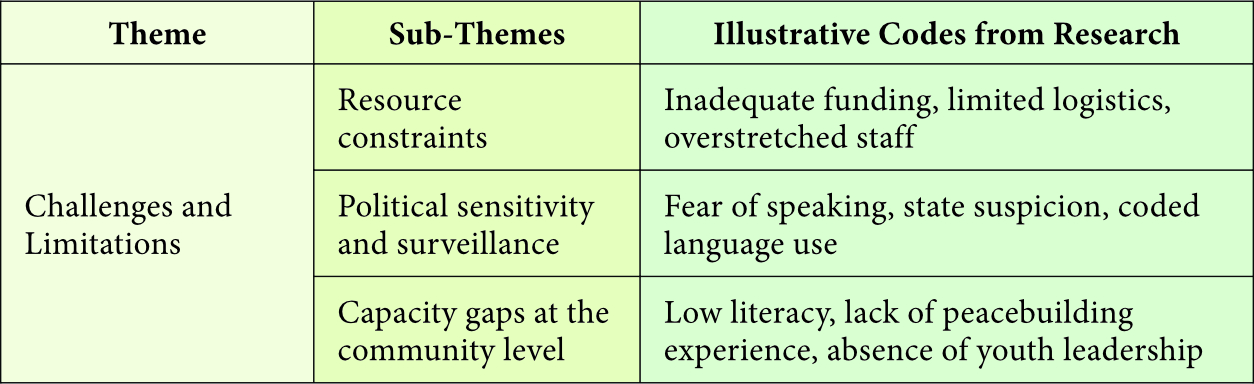
Despite the positive impact and observable results of LPCs in Matabeleland, the research found that these grassroots peacebuilding structures continue to face a number of challenges that limit their effectiveness and scalability. Among the most commonly cited problems are resource constraints that affect the ability of LPCs to expand their reach, sustain their programmes and respond adequately to the diverse needs of affected communities. Zhou (interview, 17 May 2025) indicated that limited financial and material resources hinder follow-up activities, community outreach, and the provision of important social services such as trauma counselling and dialogue facilitation. This was also confirmed by Participant F (interview, 11 August 2025), who is one of ECLF’s community focal persons: “We lack funding to follow up with all communities.” In some cases, LPCs even lacked basic logistical support, such as transport, communication tools or stipends for volunteer facilitators.
In addition to the scarcity of resources, structural challenges have also proven to be a major obstacle. LPCs often operate without formal recognition or integration into broader government and development frameworks, making coordination with local authorities or state institutions inconsistent or ad hoc. This structural gap leads to institutional isolation, where LPCs are valued by communities but lack the political influence or administrative support to drive systemic change. Furthermore, the research noted that the politicised environment in which these committees operate, particularly in light of the unresolved legacy of Gukurahundi, creates constraints on what can be openly discussed, limiting the scope of their interventions and ability to fully address the root causes of the conflict. Confirming this observation, Participant G (interview, 14 June 2025) expressed hesitation about talking about Gukurahundi, stating, “We avoid saying ‘Gukurahundi’ openly in meetings.”
Another issue that came up repeatedly is the limited technical and personnel capacities of the LPCs. While many committee members are passionate and respected in their communities, they have no formal training in conflict resolution, trauma healing or project management. Some committees struggle with report writing and mobilisation (Participant B, interview, 13 June 2025). This affects the quality and consistency of their interventions and increases their dependence on external support from organisations such as ECLF. In some areas, voluntary participation in the LPC also leads to burnout or attrition, further weakening institutional continuity.
These challenges emphasise the need for long-term investment, institutional support and capacity-building strategies to strengthen LPCs as durable peacebuilding agents. If these constraints are not addressed, there remains a risk that current progress on trust, cohesion and local development will stagnate or even decline, especially in politically volatile times. It is therefore crucial that both state and non-state actors recognise the potential of LPCs and work together to integrate them into national peace and development structures, while respecting their legitimacy at the grassroots level and community ownership.
8. Discussion
The findings confirm that development is not just a by-product of peace, but a critical tool for sustaining it, especially in politically difficult environments such as the Matabeleland region of Zimbabwe. This is in line with the concept of the development–peace nexus, whereby development needs peace, just as peace needs development (Wolff et al., 2020:28). Following the Gukurahundi atrocities, the absence of state reconciliation or reparations created a deep void characterised by mistrust, underdevelopment and lingering trauma. In this vacuum, grassroots initiatives, especially those driven by the ECLF through its LPCs, have proven to be a means of healing and development. Community-based interventions, ranging from trauma recovery to infrastructure reconstruction and income-generating activities, have collectively fostered a sense of shared responsibility, restoration of trust and participatory development.
8.1. Development as peacebuilding in politically constrained settings
In contexts where the open confrontation with past atrocities is politically sensitive or actively suppressed, development offers an indirect but effective starting point for peacebuilding. The work of the ECLF in Matabeleland demonstrates how tangible, community-led projects can function as non-confrontational ways of addressing historical wounds. Rather than focusing solely on justice or reparations, which the government has rejected in the past, LPCs promote reconciliation through collective problem-solving, infrastructure restoration and psychosocial support. While these “peace dividends” do not replace formal transitional justice mechanisms, they serve as pragmatic ways to restore trust in the community, rebuild livelihoods and promote social cohesion. Importantly, the non-partisan and inclusive nature of ECLF’s peacebuilding approach allows it to work in politically constrained environments without directly engaging with state actors. By positioning development as a neutral good, LPCs have gained community legitimacy and avoided the political pitfalls that often accompany human rights or justice-oriented interventions. In this way, development serves as a protected sphere through which peace can be pursued, even under restrictive political conditions. Communities would benefit more from stronger partnerships between government and civil society for local development, with governments recognising and formally supporting the work of LPCs and other community-based initiatives and integrating them into national peace and development strategies. Such partnerships can promote trust, increase policy responsiveness, and bridge the gap between top-down planning and local realities.
8.2. Development as both imperative and impetus
The findings also illustrate the dual role of development in post-conflict peacebuilding as a moral/legal obligation (imperative) and as a strategic tool (impetus) to achieve and maintain peace. As a right, development is an inalienable human right that should be universally accessible and promoted by the state (OHCHR, 1986:2). Especially in historically marginalised regions such as Matabeleland, development is a top priority. In the wake of Gukurahundi, development is not only a response to poverty, but also a form of restorative justice, a means of redressing the socio-economic injustices and structural violence that underpinned the conflict. At the same time, development acts as an impetus for peace by creating visible incentives for cooperation and reinforcing the value of coexistence. Without development, post-conflict peacebuilding becomes difficult as communities can easily fall back into conflict (Atwood, 2002). Community members who participate in ECLF-facilitated projects not only benefit economically and socially, but also experience that peace is a tangible, lived reality. This is especially important in regions where the abstract promise of peace carries little weight without measurable improvements in daily life. The rehabilitation of schools, the establishment of income cooperatives and trauma treatment together contribute to a model of “living peace”, where development is both a means and an outcome of local reconciliation.
8.3. Limits of development without transitional justice
While the ECLF’s approach demonstrates the potential of development to promote reconciliation, this paper also reveals the inherent limitations of development without transitional justice. Communities in Matabeleland continue to express a need for truth-telling, acknowledgement, and official apology; needs that development projects alone cannot satisfy. Healing the trauma and economic improvement can co-exist, but without formal recognition of past wrongs, healing remains incomplete. There is, therefore, a danger that development is “instrumentalised” as a substitute for justice rather than a complement to it. Furthermore, without clear government support or integration into national policy frameworks, grassroots development initiatives run the risk of being isolated and under-resourced, as evidenced by the challenges faced by LPCs in terms of capacity, funding and political recognition. This discrepancy emphasises the need to link community-based development to a broader national peace and justice agenda. At its most comprehensive, the right to development must include accountability, institutional reform and inclusive governance.
To summarise, the ECLF experience in Matabeleland provides important lessons on how development, when based on local participation and cultural sensitivity, can serve as both a bridge to peace and a platform for justice, but not as a substitute for it. The extension of this model to other marginalised or post-conflict regions should be considered, as the grassroots peacebuilding model implemented in Matabeleland offers lessons for post-conflict recovery in Zimbabwe and across Africa. Scaling up this approach and adapting it to local contexts can promote inclusive, decentralised peacebuilding based on the right to development. Future peacebuilding efforts in Zimbabwe and across Africa must therefore consider development not only as a strategic driver for peace, but also as a rights-based framework that ensures dignity, justice and long-term stability.
9. Conclusion
The paper concludes that in the absence of meaningful state-led reconciliation, LPCs have emerged as community-driven structures capable of fostering social cohesion, restoring trust and delivering peace dividends through developmental interventions. First, LPCs have become development catalysts that have initiated community-driven projects such as school rehabilitation and cooperative economic activities. Second, the provision of trauma healing and psychosocial support has not only treated individual emotional wounds but also promoted collective recovery and confidence building. Third, peacebuilding has contributed to greater social cohesion and bridged divides across tribal, generational and political boundaries. Despite these successes, LPCs face major challenges, including limited resources, political constraints and a lack of institutional support.
These findings reinforce the central argument of this paper: development and peace can be mutually reinforcing, especially in politically constrained post-conflict situations where the state has failed to bring about meaningful reconciliation. ECLF’s initiatives illustrate how peace can be built from below, with communities taking an active role in their own healing and reconstruction. This model shows that it is possible to link the right to development with grassroots peacebuilding. It offers a path to sustainable peace that is both morally sound and strategically effective. However, the Zimbabwean government’s longstanding silence on Gukurahundi and its failure to implement a comprehensive reconciliation or development policy in Matabeleland have left a critical gap. In this vacuum, civil society actors such as ECLF have emerged, not to replace the state, but to fulfil important tasks that the state has neglected. The successes of LPCs are a compelling example of how a community-led peace dividend can be participatory, locally relevant and responsive to real needs, even when state involvement is minimal or politicised. Further research is needed to explore how the community-led peace dividend model can be scaled or formally integrated into state policy without losing its grassroots authenticity and responsiveness. Another important area is longitudinal study of the intergenerational transmission of healing in communities where official reconciliation remains absent, to assess the enduring impact of psychosocial interventions.
Endnotes
1 Refer to the list of participants at the end of the article
2 Refer to the list of participants at the end of the article
References
African Union (AU) (1981) African Charter on Human and Peoples’ Rights. African Union [Internet]. Available from: <https://au.int/en/treaties/african-charter-human-and-peoples-rights> [Accessed 4 July 2025].
Atwood, J.B. (2002) The development imperative: creating the preconditions for peace. Journal of International Affairs, 55 (2), pp. 333–349.
Braun, V. and Clarke, V. (2006) Using thematic analysis in psychology. Qualitative Research in Psychology, 3 (2), pp. 77–101.
Cameron, H. (2018) The Matabeleland massacres: Britain’s wilful blindness. The International History Review, 40 (1), pp. 1–19.
Catholic Commission for Justice and Peace (CCJP) in Zimbabwe and Legal Resources Foundation (LRF) (1997) Breaking the silence, building true peace: a report on the disturbances in Matabeleland and the Midlands 1980–1988. Harare, CCJP and LRF.
Chivasa, N. (2017) Efficacy of informal peace committees to peacebuilding: evidence from Seke District, Zimbabwe. African Evaluation Journal, 5 (2), pp. a241
Ecumenical Church Leaders Forum (ECLF) (2018) Peace Insight. ECLF [Internet]. Available from: <https://www.peaceinsight.org/en/organisations/ecumenical-church-leaders-forum-eclf/?location=zimbabwe&theme> [Accessed 15 March 2026].
Ecumenical Church Leaders Forum (ECLF) (2025) About us. ECLF [Internet]. Available from: <https://eclfz.org/EcumenicalChurchLeadersForum/about-us/> [Accessed 15 March 2026].
Gumbo, C.F. (2020) Gukurahundi: four decades of seeking justice. Zimbabwe Briefing [Internet]. Available from: <https://media537.wixsite.com/zimbabwebriefing/single-post/2020/04/18/gukurahundi-massacre-four-decades-of-seeking-justice> [Accessed 12 July 2025].
Joergalt (2006) The Zimbabwe we want: towards a national vision for Zimbabwe. Joergalt [Internet]. Available from: <https://www.joergalt.de/fileadmin/Dateien/Joerg_Alt/Advocacy/ZIM/06_The_Simbabwe_we_want.pdf> [Accessed 12 July 2025].
Mkandla, M. (2017) Pastoral care in a context of political, cultural, and socio‑economic injustice: the case of Matabeleland. PhD Thesis, University of Pretoria [Internet]. Available from: <https://repository.up.ac.za/items/60ccbdaa-f3de-4059-a17c-3e52feffb955> [Accessed 27 June 2025].
Ngwenya, D. and Harris, G. (2015) The consequences of not healing: evidence from the Gukurahundi violence in Zimbabwe. African Journal on Conflict Resolution, 15 (2), pp. 35–55.
Nkala, S. (2021) Matabeleland marginalisation. Zimbabwe Situation [Internet], 24 September. Available from: <https://www.zimbabwesituation.com/news/matabeleland-marginalisation/> [Accessed 2 July 2025].
Nowell, L.S. et al. (2017) Thematic analysis: striving to meet the trustworthiness criteria. International Journal of Qualitative Methods, 16 (1), pp. 1–13.
Odendaal, A. (2010) An architecture for building peace at the local level: a comparative study of local peace committees. A summary for practitioners. United Nations Development Programme (UNDP) [Internet], December. Available from: <https://www.un.org/en/land-natural-resources-conflict/pdfs/UNDP_Local%20Peace%20Committees_Summary_2011.pdf> [Accessed 22 June 2025]
Office of the High Commissioner for Human Rights (OHCHR). (1986) Declaration on the right to development. United Nations OHCHR [Internet]. Available from: <https://www.ohchr.org/en/instruments-mechanisms/instruments/declaration-right-development> [Accessed 4 July 2025].
Paffenholz, T. and Spurk, C. (2006) Civil society, civic engagement, and peacebuilding. ResearchGate[Internet], November. Available from: <https://www.researchgate.net/publication/228658197_Civil_Society_Civic_Engagement_and_Peacebuilding> [Accessed 27 June 2025].
Pkalya, R. (2011) Peace dividends: consolidating peace in Northern Kenya through peace dividend projects. Amani Papers, UNDP Kenya [Internet], 5 May. Available from: <https://www.nscpeace.go.ke/resources/item/5-amani-papers-peace-dividends> [Accessed 4 July 2025].
Vorobej, M. (2008) Structural violence. Peace Research, 40 (2), pp. 84–98.
Wolff, J. et al. (2020) The development–peace nexus: experiences and findings. In Peace and Development 2020: An analysis of recent [i]experiences and findings. Peace Research Institute, Frankfurt [Internet]. Available from: <http://www.jstor.org/stable/resrep24494.6> [Accessed 2 July 2025].
Wright, W.A. (2004) Review of Building peace: sustainable reconciliation in divided societies, by J.P. Lederach, 1997. Armed Forces & Society, 30 (3), pp. 491–495.
PARTICIPANTS*
Participant A: Interview with first author on 09 June 2025.
Participant B: Interview with first author on 13 June 2025.
Participant C: Focus group discussion held on 14 June 2025.
Participant D: Interview with first author on 11 July 2025.
Participant E: Focus group discussion held on 21 June 2025.
Participant F: Interview with first author on 11 August 2025.
Thaka P.: Interview with first author on 20 May 2025.
Zhou N.: Interview with first author on 17 May 2025.
* The authors are in possession of all the recordings.