
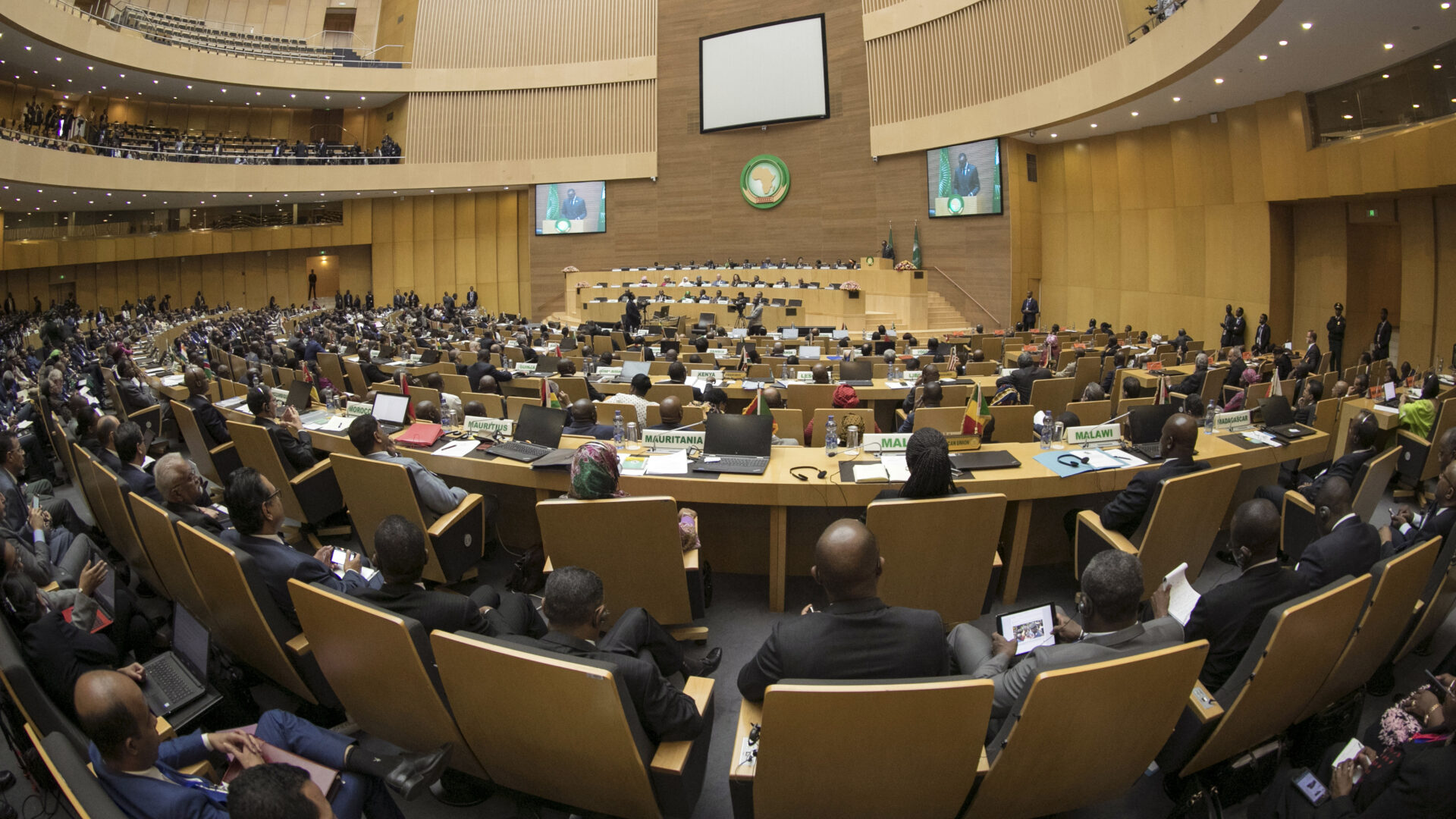
On 1–2 August 2026, Heads of State will gather in Luanda, Angola for an Extraordinary Summit of the African Union (AU) on Strengthening Mechanisms for Conflict Prevention and Resolution in Africa. The convening is itself a signal – a formal acknowledgement by African leaders that the continent’s peace and security architecture has not delivered the level of prevention that Africa urgently needs. As recently noted by El Ghassim Wane in his briefing to the Peace and Security Council (PSC), on the continent ‘we are witnessing the persistence – and in some cases escalation – of conflicts and tensions across Africa.’ Peace support operations are deployed after displacement has begun. Ceasefires are brokered after civilians have been killed. Transitional justice frameworks are designed after institutions have collapsed. The AU’s Peace and Security Architecture (APSA) is sophisticated and increasingly capable, but it remains disproportionately oriented toward managing crises rather than preventing them.
This, however, is not due to a failure of ambition. The global normative case for nationally led prevention strategies has grown stronger than ever, thanks in part to the 2016 twin Sustaining Peace resolutions and Sustainable Development Goal 16.1, the 2025 United Nations (UN) Peacebuilding Architecture Review resolutions, and the UN Secretary-General’s New Agenda for Peace and Pact for the Future. At a continental level, the same orientation runs through the APSA’s founding instruments: the AU’s Peace and Security Protocols, Continental Early Warning System, Panel of the Wise, mediation architecture, Silencing the Guns agenda and Agenda 2063.
However, vision without structural investment in upstream prevention – the social, political, and community-level work that addresses the conditions of conflict before violence takes hold – leaves the continent perpetually in catch-up mode. Upstream prevention is not a new idea, but in the African context, it has yet to be operationalised in a way that connects continental institutions to the grassroots networks doing the most consequential prevention work to mitigate risk factors and reduce the likelihood of escalation or the outbreak of violence.
Downstream vs upstream prevention: the difference matters
Downstream prevention – crisis management, mediation, peacekeeping – is largely externally driven and it addresses conflict once it is already organised and visible. Upstream prevention intervenes earlier; in the political grievances, exclusionary governance structures, inter-communal tensions and resource competition that, if left unaddressed, become the architecture for war.
Upstream prevention is, by nature, locally and nationally driven. It happens in the space between a drought and an ethnic clash, between a contested election and the formation of a militia, between a displaced family and a community that receives them. It requires presence, trust and sustained relationships, which are difficult to manufacture at scale, and is something multinational institutions often lack. Multinational institutions should recognise, resource, and protect the actors already in possession of these relationships and work alongside them.
Across the continent, community-based protection networks, local peace committees, women’s coalitions, religious councils and civil society organisations are doing upstream prevention work every day, often in the most fragile and contested environments. This work identifies the risk and protective factors at a community and personal level.
Across the continent, community-based protection networks, local peace committees, women’s coalitions, religious councils and civil society organisations are doing upstream prevention work every day, often in the most fragile and contested environments
Tweet
Sudan: what upstream prevention looks like under fire
In Darfur and South Kordofan, community-based organisations have maintained a protective presence across active conflict zones through successive phases of displacement and escalation. Community early warning systems, grounded in local indicators including hunger weaponised as a conflict tool, internet blackouts and restrictions on movement, were instrumental in the mass relocation of civilians out of El Fasher ahead of its fall in mid-2025. This is upstream prevention at its most immediate; not waiting for the guns to fire but reading the signs that they will.
When shelling began at the Zamzam camp in April 2025, women’s protection networks did not wait for external instruction. They dug trenches, coordinated the evacuation of children and elderly relatives and organised a three-day journey on foot to Tawila. Most were widows and heads of household, moving without outside support. On arrival, the same networks gathered separated children, reunited them with families, while some members returned to El Fasher to warn and assist those who remained.
In Tawila’s displacement settlements, Community Protection Teams (CPTs) – predominantly women and young people embedded in the communities they serve – receive displaced people, provide psychosocial support, facilitate child protection referrals and actively built social cohesion in the context of forced displacement. When a number of house fires broke out as families cooked outside on open fires, the same women’s networks convened community security forums, organised safe cooking awareness campaigns, helped affected families rebuild and documented patterns of sexual exploitation at aid distribution points. People’s Reconciliation Committees (PRCs) conduct shuttle diplomacy across conflict lines, engaging longstanding tensions between communities in South Kordofan.
None of this is recognised within any AU or regional framework. The early warning indicators that enabled civilian relocation ahead of El Fasher’s fall were not connected to any continental analysis or response mechanism. The CPTs did not receive resourcing or protection from continental institutions, while the PRCs conducting local ceasefire diplomacy are invisible to APSA.
The gap in continental architecture
The argument here is not that the AU needs to adopt new policies. The architecture already exists. What is missing is the connective tissue between continental institutions and the community-level actors doing prevention work at the grassroots. The dominant framework for thinking about AU prevention work remains one of high-level diplomacy, electoral observation and institutional mediation. This work is important but insufficiently connected to communities carrying the cost of the conflict. Connections work between downstream prevention processes (high profile mediation, operational engagement, short-term preventative diplomacy, formal tools and response mechanism) and upstream prevention. By doing this, the continent would be able to better respond to, and mitigate, risk factors, thus increasing its conflict prevention engagement.
To move this forward, three recommendations could be undertaken:
First, the continental and regional early warning systems need to become participatory. Community-based networks generate real-time, locally grounded information such as protection indicators, movement patterns and signs of inter-communal tension. The Continental Early Warning System was designed to aggregate data and provide strategic warning to the PSC, but its ability to reach community-level information networks remains weak. Formalising pathways for this information in order to feed into continental analysis would improve both the quality of warnings and the speed of response.
Second, community protection actors should be treated as legitimate partners, not peripheral beneficiaries. The CPTs established in Tawila are currently doing protection work that the formal security actor in Sudan is not in a positioned to do. The AU’s full prevention toolbox – the Chairperson of the Commission, Panel of the Wise, ‘Framework Communiques’, high level ad-hoc mechanisms and international contact groups – cannot function in isolation from the grassroots networks absorbing the consequences of conflict. Silencing the Guns will not be advanced by treating those networks as add-ons.
Third, AU financing discussions need to focus more on upstream prevention. Peace operations are expensive and the AU alone cannot fund them entirely. New financing instruments for conflict prevention should include dedicated streams for community-level risk analysis and response work. As one member of the community protection network in Tawila observed: ‘Training is sustainable in a way that outside help is not. Outside help can eventually leave but what we build in our own communities stays.’ This is the case for investment in upstream prevention.
What is missing is the connective tissue between continental institutions and the community-level actors doing prevention work at the grassroots
Tweet
The test for Luanda: a continent that prevents, not just responds
Silencing guns that are already firing is an expensive and painful way to achieve peace. The networks preventing those guns from being lifted in the first place – the community elders negotiating cattle raid disputes, the women’s groups flagging recruitment patterns, the civilian protection teams maintaining presence where the state is absent – are doing the work to de-escalate and prevent further violence. These networks are doing so under extreme resource constraint where the state is absent, without formal protection and disconnected from continental institutions.
As the Heads of State gather in Luanda, they must consider how to respond to the plethora of conflict dynamics on the continent. A concrete outcome would be to connect upstream prevention work that already exists at community level to the architecture that already exists at continental level. It requires a deliberate choice to take what is happening at the grassroots seriously, and to treat the people doing that work as strategic partners, not the last consideration in a long chain of escalation management.
Lesley Connolly is the Regional Policy and Advocacy Manager at Nonviolent Peaceforce.
