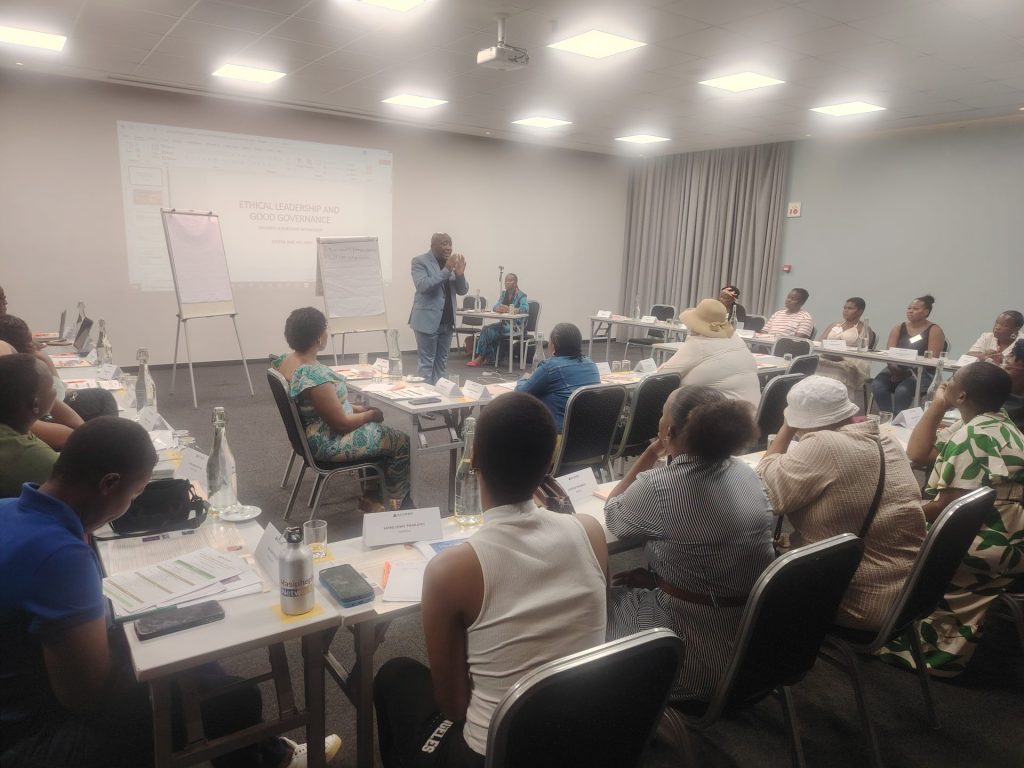
From 26 – 29 August 2025, ACCORD held a virtual Advanced Conflict Analysis Training session with 30 participants selected from the ACCORD Network (ACCNET) platform. This training followed the Introduction to Conflict Analysis Training that took place from 16 – 19 December 2024. The objective of the Advanced Training was to deepen participants’ understanding of conflict analysis and to enhance their capacity for peacebuilding. This initiative aligns with ACCORD’s strategic goal of improving the ability of various stakeholders to effectively respond to complex conflicts.
On the first day of the training, the focus was on establishing a strong learning foundation. Participants were introduced to the programme’s objectives, developed shared group norms, and clarified expectations and participant roles. Using interactive tools like Padlet, participants reflected on their values and how these influenced their peacebuilding efforts. Key concepts of conflict and conflict escalation were introduced, along with an overview of conflict analysis tools, including the conflict pyramid, force field analysis, issue and context analysis, and stakeholder mapping. These tools helped participants understand where conflicts occur, how they evolve, and who is involved.
The second day shifted focus to how conflict analysis informs intervention techniques. Participants reflected on their learning from Day One before delving deeper into the process of conflict escalation through videos, discussions, and applied exercises. They practiced applying conflict analysis tools to real-life situations through case studies, which strengthened their ability to interpret conflict dynamics and identify points for intervention. The introduction of principled negotiation further enhanced participants’ capacity to consider how disputes can be constructively addressed within complex conflict systems. Learning was reinforced through quizzes and structured homework.
On the third and final day of the training, the focus shifted from analysis to peacebuilding practice. Participants were introduced to the Dimensions of Change framework and the Five Peacebuilding Operating Principles. They continued to apply conflict analysis tools to case studies but with an increased focus on understanding how change occurs within societies and how peacebuilding interventions can influence these processes. Participants reviewed the Dimensions of Change and peacebuilding principles before applying analytical tools directly to develop conflict-sensitive programs. This ensured that the learning was not only theoretical but could also be translated into practical peacebuilding initiatives.
The workshop concluded with a review of key concepts and tools, a reflection on learning highlights, and the awarding of certificates to participants, marking the successful completion of the training.