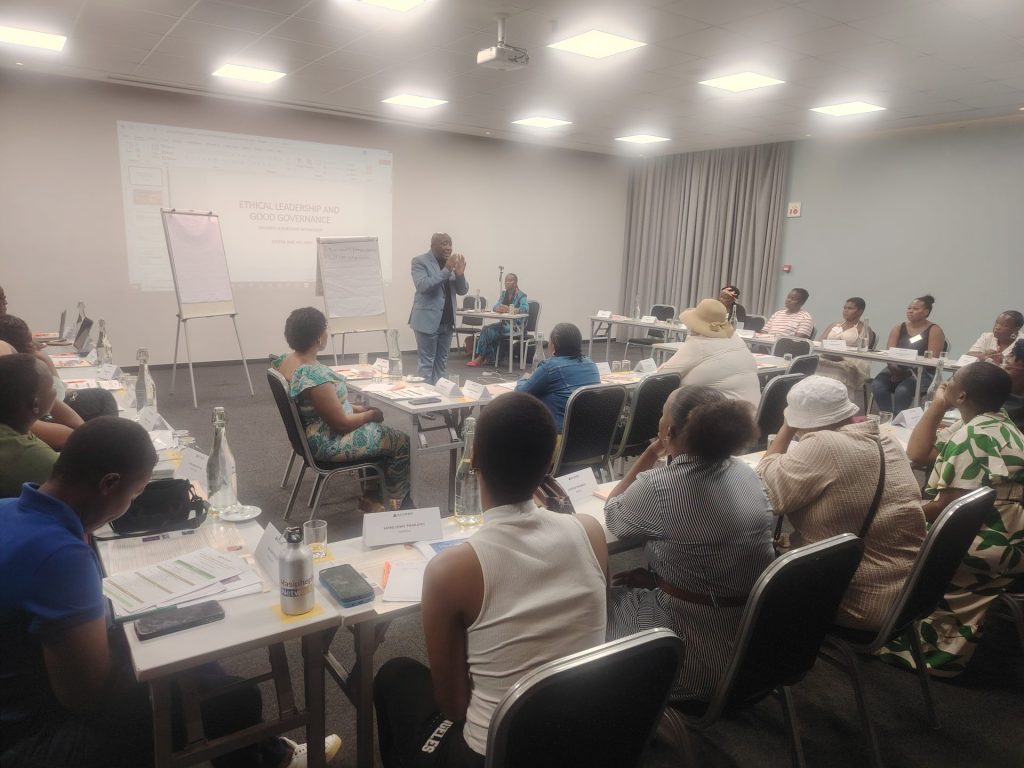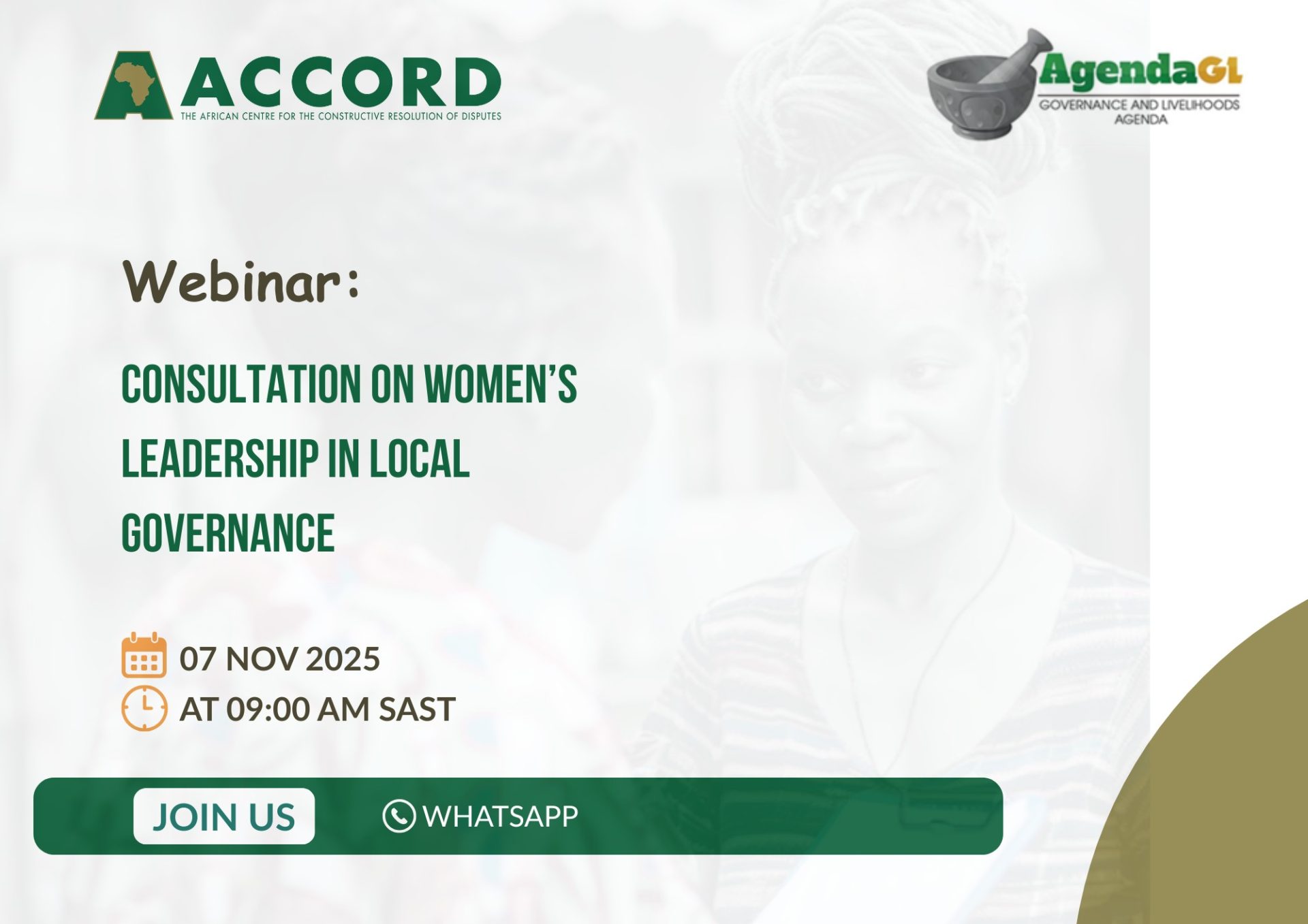
Women leaders from across local government and community structures gathered virtually on 7 November 2025 for a dynamic consultation examining the challenges and opportunities facing women in leadership at community level. The session brought together ward councillors, political representatives, youth leaders, peacebuilding practitioners and religious leaders, all sharing personal experiences and common concerns affecting their work.
The dialogue revealed a strong commitment among women leaders to community development with many spearheading initiatives such as communal gardens, baking projects and youth programmes. However, participants noted that a lack of financial support remains one of the biggest obstacles to sustaining these efforts. Another recurring issue was the politicisation of community activities. Several leaders shared that their work is often misconstrued as politically driven, leading to tension and discouraging genuine grassroots development. Peacebuilding team representatives echoed this concern, noting that confusion about political alignment often complicates their work to foster social cohesion.
Youth leaders highlighted weak communication among young people as a barrier to collaboration while others pointed to deeper social challenges affecting communities. Religious leaders underscored the impact of poverty on women’s well-being, noting that financial dependence often traps women in abusive relationships. They also raised concerns about family disputes particularly around inheritance and the family home, which continue to threaten household stability.
Participants further discussed gaps in participation across different racial groups in some areas, citing reluctance from certain communities to engage in development forums. Women from various regions noted that internal divisions among women themselves also remain a major hindrance to progress, with a lack of unity and mutual support frequently sabotaging good ideas.
Service delivery delays from government departments were also flagged as a significant challenge, slowing down community projects and creating frustration on the ground. Substance abuse especially among young women who struggle to prioritise long-term development was identified as another area of concern.
The consultation also delved into gender norms and cultural beliefs that reinforce male dominance in leadership spaces. Participants agreed that many women have internalised these beliefs, affecting their confidence and limiting their participation in governance structures. Limited educational opportunities further restrict access to leadership positions and specialised roles.
Despite these challenges, the session ended on a hopeful note. Women leaders expressed a strong willingness to grow, seek information and develop new skills to strengthen their leadership capabilities. They emphasised the urgent need for structured capacity-building programmes that can equip women to better navigate power dynamics and influence decision-making at local level. The consultation reaffirmed the importance of investing in women’s leadership, not only to strengthen local governance but also to deepen social cohesion and community development across South Africa.