
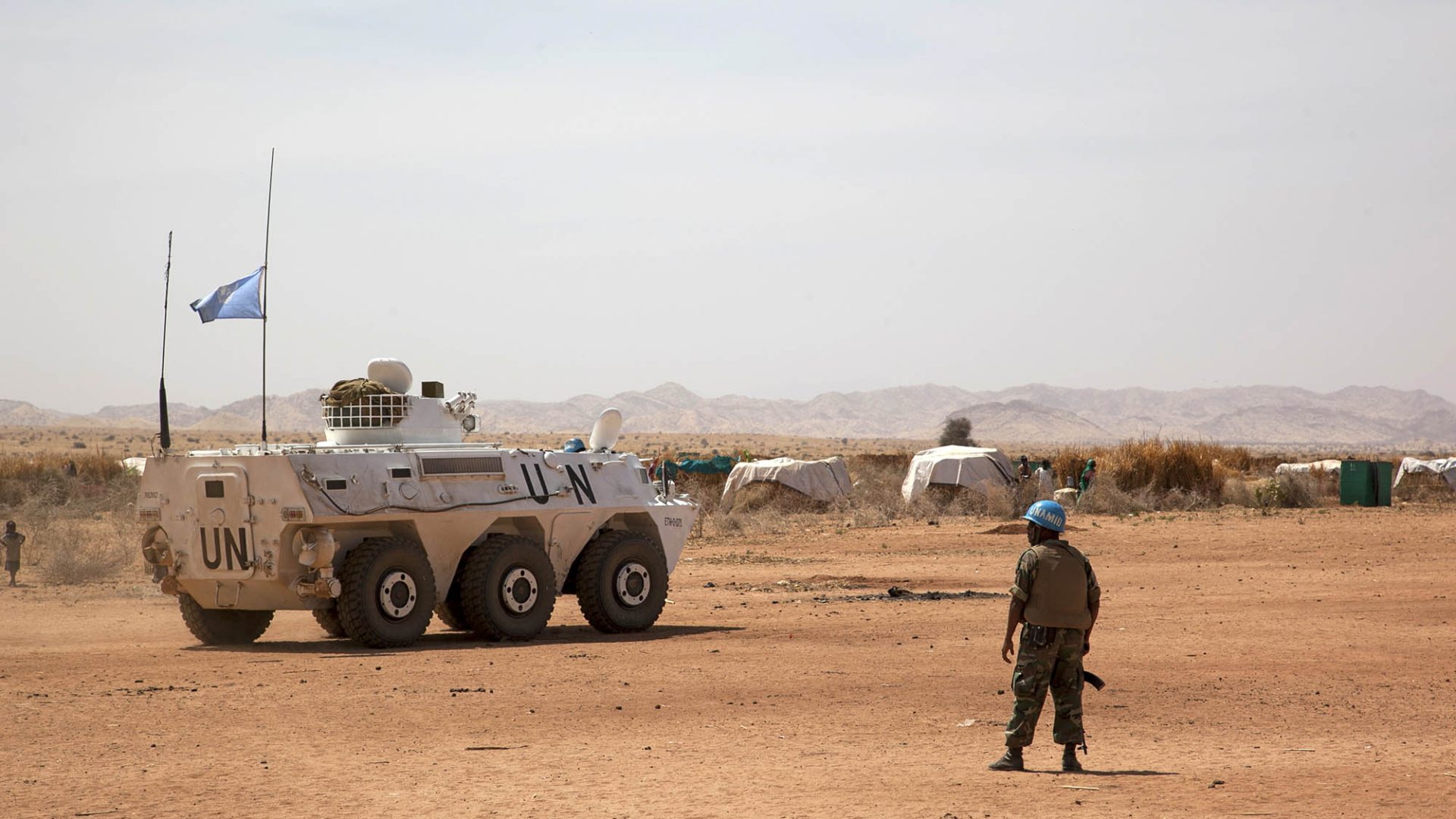
Sudan has become the epicentre of one of the world’s deadliest conflicts and worst humanitarian crises. Since 2023, an estimated 150,000 people have died; nearly 10 million are internally displaced; 4.3 million have fled as refugees; and more than 30 million (two-thirds of the population) require humanitarian assistance. The battle for El-Fasher and the reports that followed have revived the memories of an earlier tragedy: the Darfur scorched-earth campaign of the early 2000s. The fear is now stark: what happened there could happen again elsewhere.
This was not the future Sudanese envisioned in April 2019. Their revolution ended three decades of National Congress Party rule, capturing attention in Africa and beyond. Today, as the country unravels, questions about why this hope was derailed matter, but they belong to another moment. The immediate priority is to stop the violence and give the Sudanese people respite.
To chart a way forward, it is useful to revisit the October 2009 report of the African Union (AU) High-Level Panel on Darfur (AUPD): Darfur – The Quest for Peace, Justice and Reconciliation. The Panel observed that Africa was the first to assume responsibility for peace and protection in Darfur by convening negotiations, deploying peacekeepers and demanding accountability, stressing that when global attention turns elsewhere, Africa will still remain engaged because Darfur’s crisis is also Africa’s crisis.
The truth today is that the international community has not fully looked away – there are United Nations Security Council (UNSC) discussions and diplomatic initiatives – but the response has fallen far short of what the scale of the tragedy demands. Yet the essence of the Panel’s message remains: whatever others do or fail to do, Africa bears a particular responsibility (moral, political and strategic) which no external actor can discharge on its behalf.
In 2004, we were part of the team shaping the AU response to the Darfur atrocities. The Union was new and the Peace and Security Council (PSC) had just been established. At its launch in May 2004, African leaders pledged that the continent would never again shrink from its responsibilities, that it would speak first, act early and, when grave abuses occur, be the first to condemn and the first to respond.
The AU Commission built on that momentum to ensure that the AU’s response was as effective as possible. Together with Chad, it secured a humanitarian ceasefire in April 2004. In late May, it negotiated its operational modalities, immediately thereafter deploying military observers to oversee the ceasefire, a mission that eventually grew to about 8,000 personnel before transitioning to a joint AU-UN operation in 2007. In an early push for accountability, the Commission also publicly documented violations. Politically, it facilitated peace negotiations, including the 2006 still born Abuja Agreement. Later efforts by the AU and the UN faced similar obstacles.
The AU did not get everything right. But its engagement helped alleviate suffering and sustain the possibility of a political process despite obstruction from the government, armed groups and chronic financial constraints. One lesson stood out: even in difficult conditions, agency exists. To harness it, the AU must persist and use its own norms and instruments fully. Today’s Sudan context is more complex. External actors are deeply involved, narrowing the AU’s room for manoeuvre. To their credit, both the Commission and the PSC have issued strong statements and invested effort. But Sudan is collapsing before our eyes and its people cannot endure much more.
Sudan’s war will not end on its own. It requires leadership, African leadership. The AU should therefore strengthen efforts toward a cessation of hostilities, a step that would pave the way for a viable political process.
First, the PSC should consider formally determining whether the threshold under Article 4(h) of the AU Constitutive Act has been reached. Article 4(h) affirms the Union’s right to intervene in cases of genocide, war crimes or crimes against humanity. By any reasonable assessment, at least war crimes and crimes against humanity are occurring, as conclusively demonstrated by the July 2025 fact-finding report of the African Commission on Human and People’s Rights.
Clearly, the AU currently lacks the capacity to deploy a force to stop the atrocities. But the proposed determination would carry major political value: clarifying the gravity of the crisis, strengthening diplomatic leverage and signalling to both belligerents and external actors that the status quo is unacceptable. It would also reaffirm a founding AU principle, namely that atrocity crimes demand an African response, even when the tools for action are constrained.
Second, the AU should establish a remote monitoring mechanism to document violations and identify perpetrators, leveraging existing AU bodies. Mandated by the PSC, it would operate independently, producing regular reports for the PSC and Commission. Independence ensures credibility, shields the process from political interference, and protects African-led mediation from backlash. Public reports would promote accountability, deter further abuses, and provide authoritative information to guide PSC decisions and support AU Commission engagement with stakeholders.
Third, renewed consideration should be given to the deployment of a protection-focused mission in Sudan, developed in cooperation with the UN and drawing on the peacekeeping models sketched in the October 2024 Independent Study on the Future of Peacekeeping. Consultations with Sudanese and international stakeholders should be undertaken to clarify what is politically and operationally feasible, while also serving as a tool to increase pressure on the belligerents.
Renewed consideration should be given to the deployment of a protection-focused mission in Sudan, developed in cooperation with the UN and drawing on the peacekeeping models sketched in the October 2024 Independent Study on the Future of Peacekeeping.
Tweet
Fourth, the PSC could establish an independent Commission of Investigation modelled on the 2013 South Sudan inquiry. The AU Assembly could exceptionally grant temporary jurisdiction to the Arusha-based African Court on Human and Peoples’ Rights to prosecute atrocity crimes, allowing it to assume the role envisaged for the African Court of Justice and Human Rights under the 2014 Malabo Protocol, which has yet to garner sufficient ratifications. The expansion of the Arusha Court’s jurisdiction would not predetermine criminal prosecutions. Rather, it creates a credible deterrent: if the parties continue on their current path, the AU would have a judicial avenue ready. But if they move toward a cessation of hostilities and a political process, the Assembly could instead opt for transitional justice mechanisms rather than immediate criminal justice.
Fifth, the AU should address the role of external actors accused of fuelling the war. Instead of attempting to replicate complex UN investigative mechanisms, for which the organisation is simply ill-equipped, the PSC could deepen cooperation with the UN Panel of Experts on Sudan and use the resulting information for diplomatic engagement with concerned international stakeholders. Quiet political engagement is more realistic and potentially more effective.
Sixth, Africa will also be judged by its solidarity with Sudanese civilians. Neighbouring countries hosting refugees deserve recognition but cannot bear the burden alone. Other African states can ease visas, provide temporary protection, contribute resources to humanitarian agencies and Sudanese grassroots networks in the field. The AU Commission should mobilise member states and convene regular humanitarian briefings with UN agencies to maintain political attention and encourage concrete commitments. High-level visits to refugee-hosting countries and camps would reinforce solidarity and political will.
Finally, these measures could be consolidated in a PSC communiqué transmitted to the Security Council for support. There is precedent: in 2012, a PSC communiqué on Sudan–South Sudan tensions informed Resolution 2046, amplifying AU efforts. The geopolitical context is now more difficult, but trying would be the first step toward making support possible.
All the measures proposed above derive from existing AU decisions, instruments and past lessons. The challenge lies in sustained implementation and follow-up. In this respect, a dedicated capacity should be established within the Commission to monitor the Sudan file and support the implementation of AU initiatives, drawing lessons from the Darfur Integrated Task Force that once coordinated support to the AU Mission in Sudan (AMIS).
Equally important is the need for the Commission to fully leverage the reports it must submit to facilitate PSC deliberations. These and the communiqués issued by both bodies are not bureaucratic formalities; they are political instruments capable of shaping behaviour, mobilising pressure and empowering constructive actors. During the Darfur crisis, frequent reporting proved central to AU engagement.
The AU cannot guarantee outcomes. But it has the mandate, authority and tools to help end the violence and open a path toward a political settlement. Africa cannot fail Sudan. The decisions taken now will shape not only Sudan’s future but also the credibility of the AU itself. The continent must rise to this moment, fully and resolutely.
The AU cannot guarantee outcomes. But it has the mandate, authority and tools to help end the violence and open a path toward a political settlement. Africa cannot fail Sudan.
Tweet
An extended version of this article was first published by Amani Africa under the title Sudan’s Crisis is Africa’s Crisis – And Its Responsibility on 22 January 2026 and can be accessed here
Said Djinnit served as AU Commissioner for Peace and Security (2003–2007). He was previously OAU/AU Assistant Secretary-General for Political Affairs and Chief of Staff to the OAU Secretary-General, and later UN Special Representative for West Africa and Special Envoy for the Great Lakes region.
El-Ghassim Wane served as Acting Deputy Head and then Head of the AU Conflict Management Division (2001–2009), before becoming Director of the Peace and Security Department. He later served as UN Assistant Secretary-General for Peacekeeping, AU Chief of Staff, and UN Special Representative for Mali and Head of MINUSMA.

