
The spread of COVID-19 seems to have taken a different path in Africa, but is now starting to accelerate
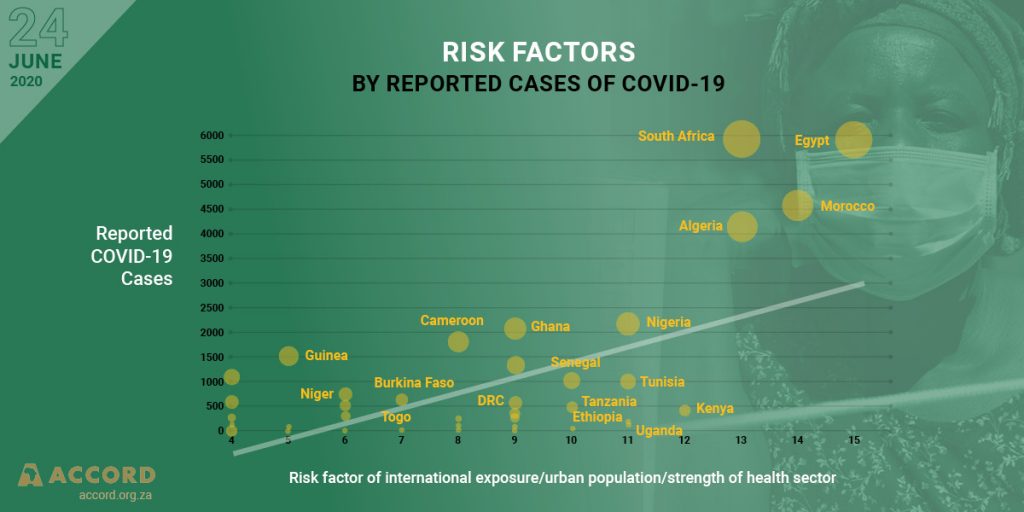
COVID-19 seems to have spread at a slower pace in Africa than in many other parts of the world. In Europe, where the virus peaked in February and March in countries like Italy and Spain, the spread of the virus seems to be mostly under control for the moment (with the exception of Poland and Sweden), but all indications are pointing to the fact that they are bracing for a second wave of infections. Similarly, in Asia, countries such as China – where the virus was thought to be under control, are now experiencing a second wave. In other regions of the world – such as Brazil, India, Russia, the United Kingdom and the United States (US) – the rate of infections is still increasing.
The military value-add in situations of crisis: the case of COVID-19
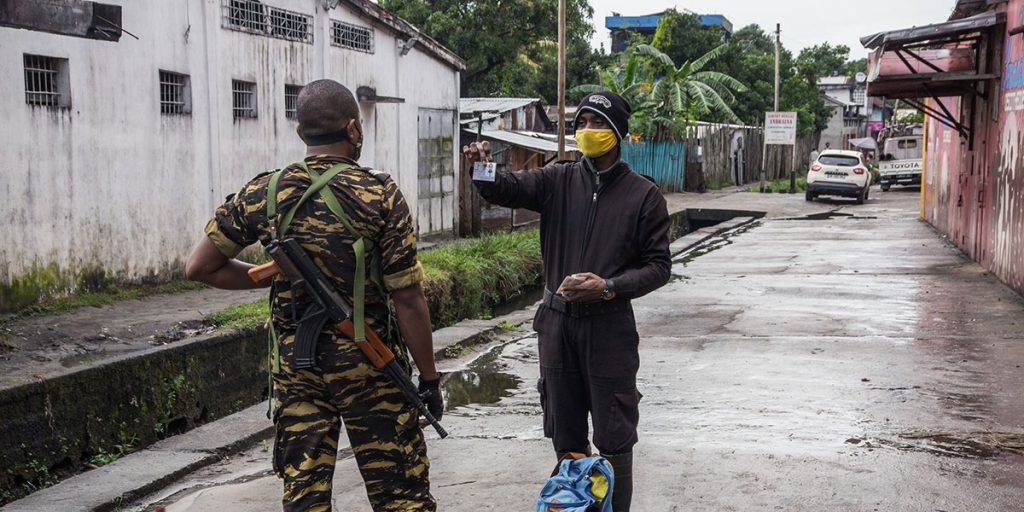
The breakout of the coronavirus (COVID-19) set in motion one of the most devastating global crises of our time. While COVID-19 started as a health crisis, the pandemic quickly morphed into a society-wide strategic, security and social economic crisis of monumental proportions.
Conflict and COVID-19: double tragedy for Cameroon
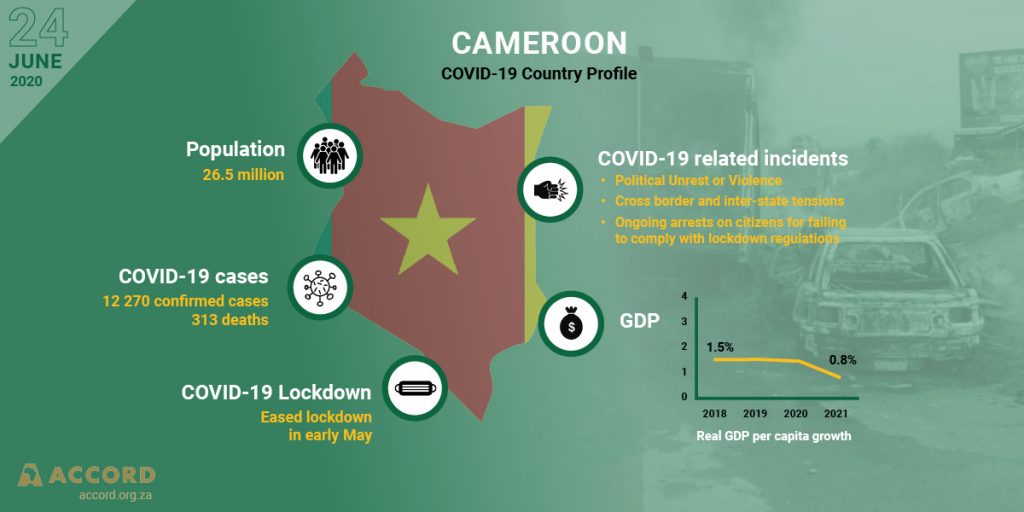
The emergence and spread of COVID-19 in Cameroon have added additional pressure and strain on a civilian population already faced with worsening internal conflict and a man-made humanitarian disaster.
The impact of the COVID-19 pandemic on the elderly in Africa
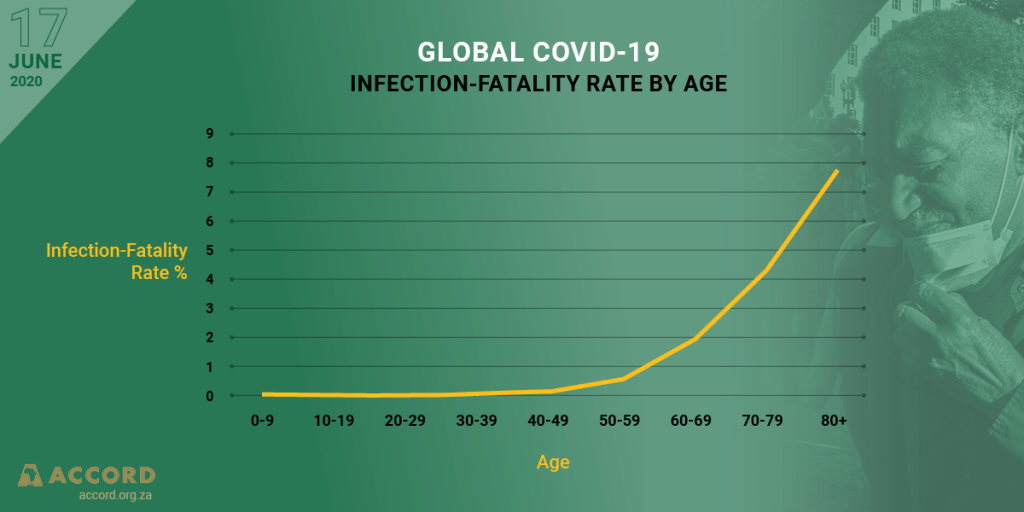
It is now clear that the elderly is the age demographic most vulnerable to COVID-19. It is estimated that the disease kills 13.4% of patients aged 80 and older, 8.6% of those in their 70s, 4% in their 60s and 1.25% of those in their 50s. However, this data comes primarily from developed countries with resilient healthcare systems. In less-developed countries, which have shorter life expectancies, high levels of pre-existing conditions known to worsen outcomes and generally weaker healthcare systems, mortality is likely to rise earlier.
The impact of COVID-19 pandemic on the women, peace and security agenda in Africa
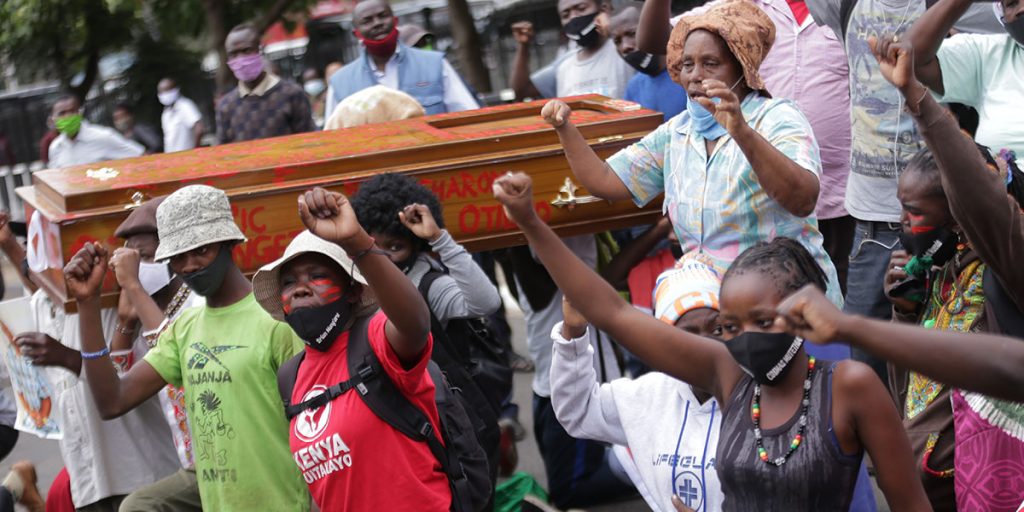
Women-led organisations that are dealing with peace, security and development are playing a key role in developing policies, strategies and guidelines for gender-responsive actions to prevent and combat COVID-19, and in post-COVID-19 recovery.
Country profile: The impact of COVID-19 on on citizens, state and society relations in Kenya
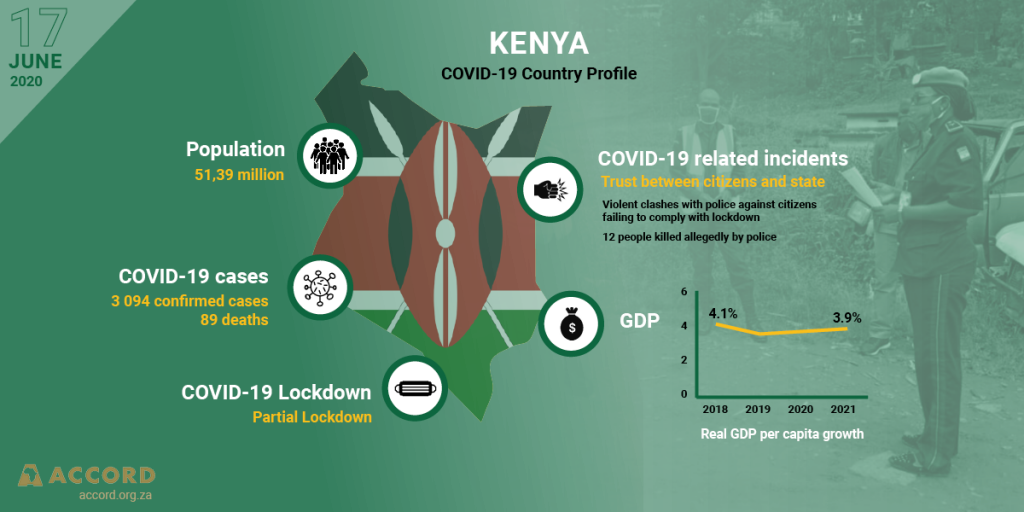
Kenya, like many countries around the world, is undergoing huge political and societal changes as a result of the coronavirus outbreak. The immediate response to this crisis in Kenya was to close down educational and religious institutions and other social places to avoid large gatherings of people, while most employers (where possible) have resorted to their employees working remotely. This article reflects on the conflict and resilience-related incidents and trends emerging out of Kenya due to COVID-19-related measures, by specifically highlighting issues of livelihoods, the economic impact of COVID-19 on gender-based violence, human rights and social unrest.
Country profile: The impact of COVID-19 on stability and the peace process in South Sudan
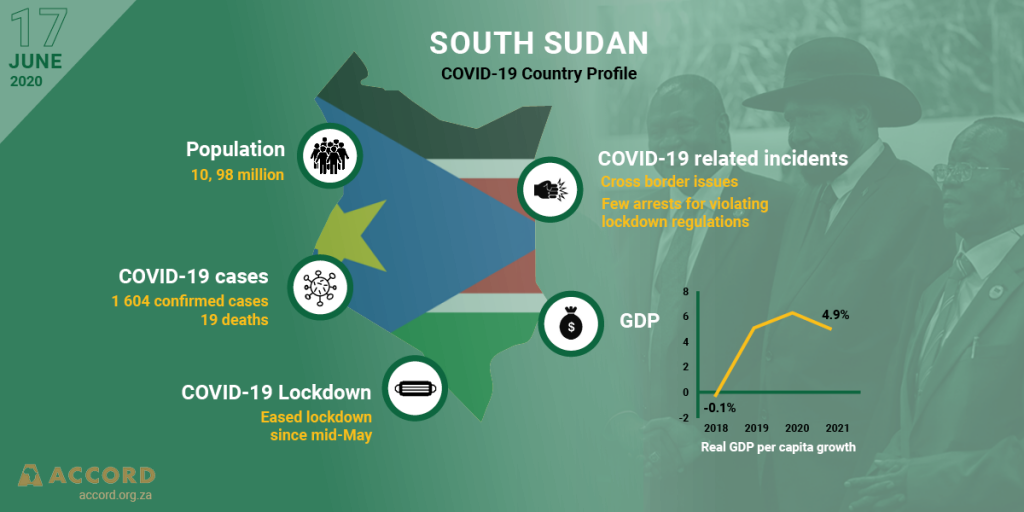
The spread of COVID-19 in South Sudan has had a negative impact on the implementation of the peace process and has placed further stress on an already dire humanitarian situation.
COVID-19: An opportunity to reflect on approaches to and the conducting of elections in Africa
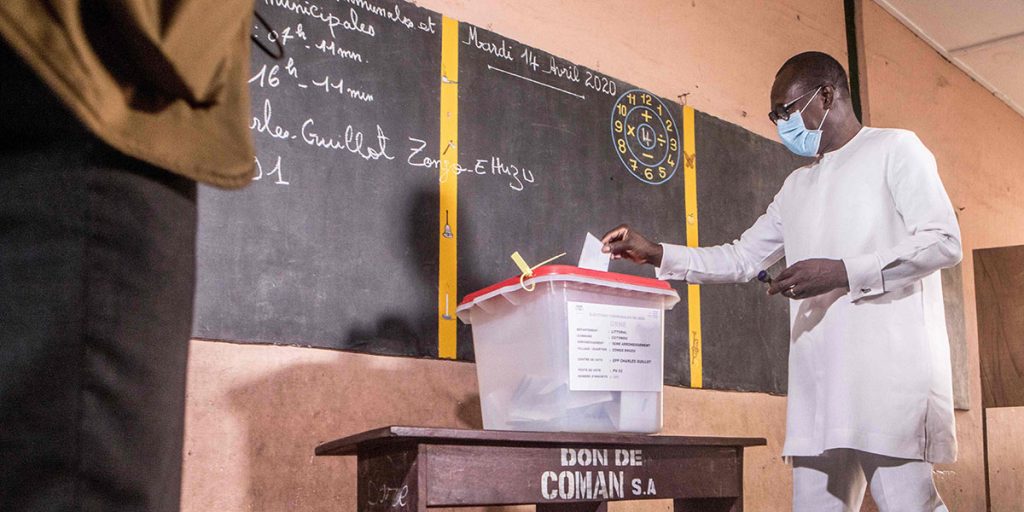
The COVID-19 measures have placed a responsibility on all of us to ensure that the strides that various African countries had made to consolidate their democracies by holding regular, transparent, and free elections are not reversed.
The impact of the insurgency in Cabo Delgado on Mozambique’s response to COVID-19
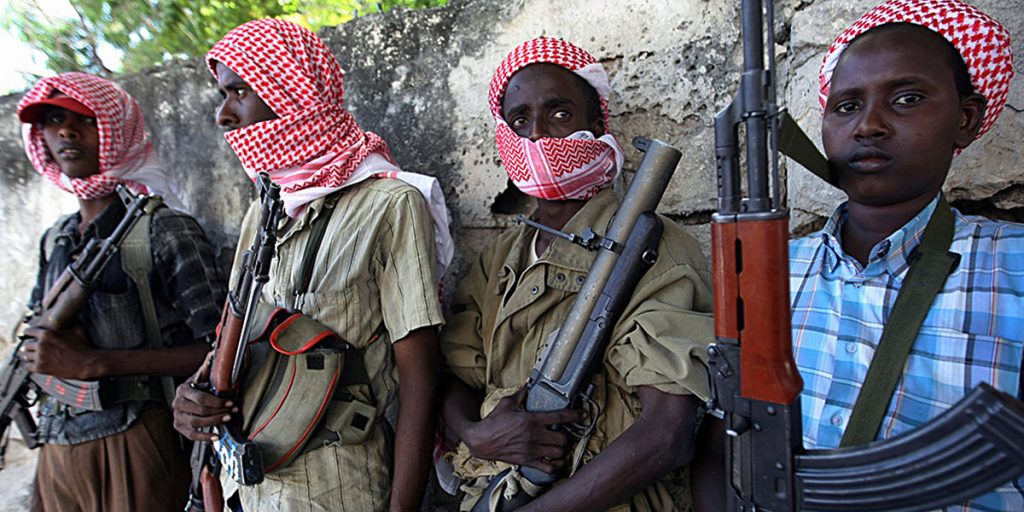
In March 2020, Mozambique registered its first case of COVID-19. Since then, the number of infections has been increasing and is spreading continuously, reaching all provinces in the country. The effect of COVID-19 in Mozambique is most worrying in the northern province of Cabo Delgado, where in addition to being the province with the highest number of infections in the country, is where the population and government institutions are subject to violent armed attacks by terrorists.
Trade under COVID-19 restrictions in Eastern and Southern Africa
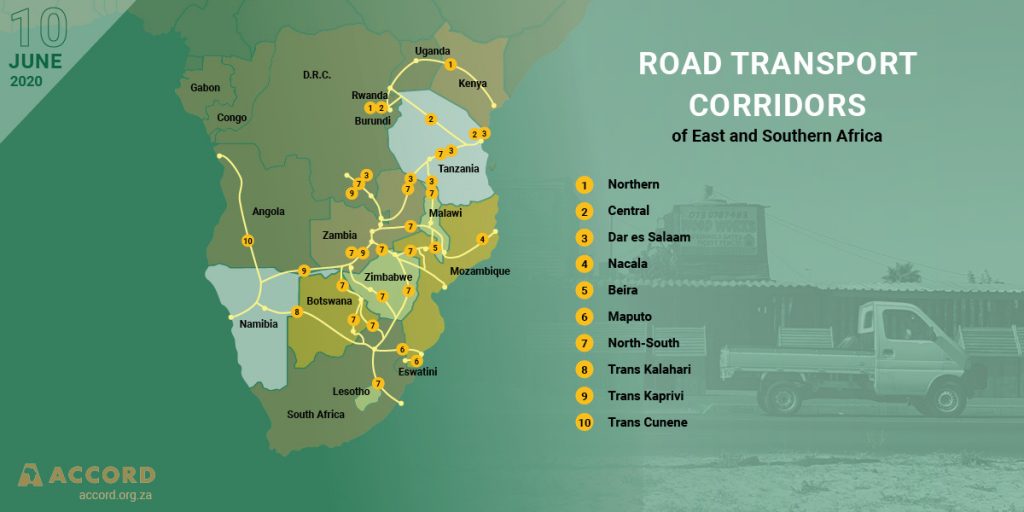
The United Nations Conference on Trade and Development predicted a fall of 27% in global trade in the second quarter of 2020 as a result of the measures imposed to reduce the spread of COVID-19. Whilst the exact impact COVID-19 will have on specific African countries is not yet known, it is already clear that some countries’ trade will be significantly affected, among others due to the disruption of cross-border cargo movement.