
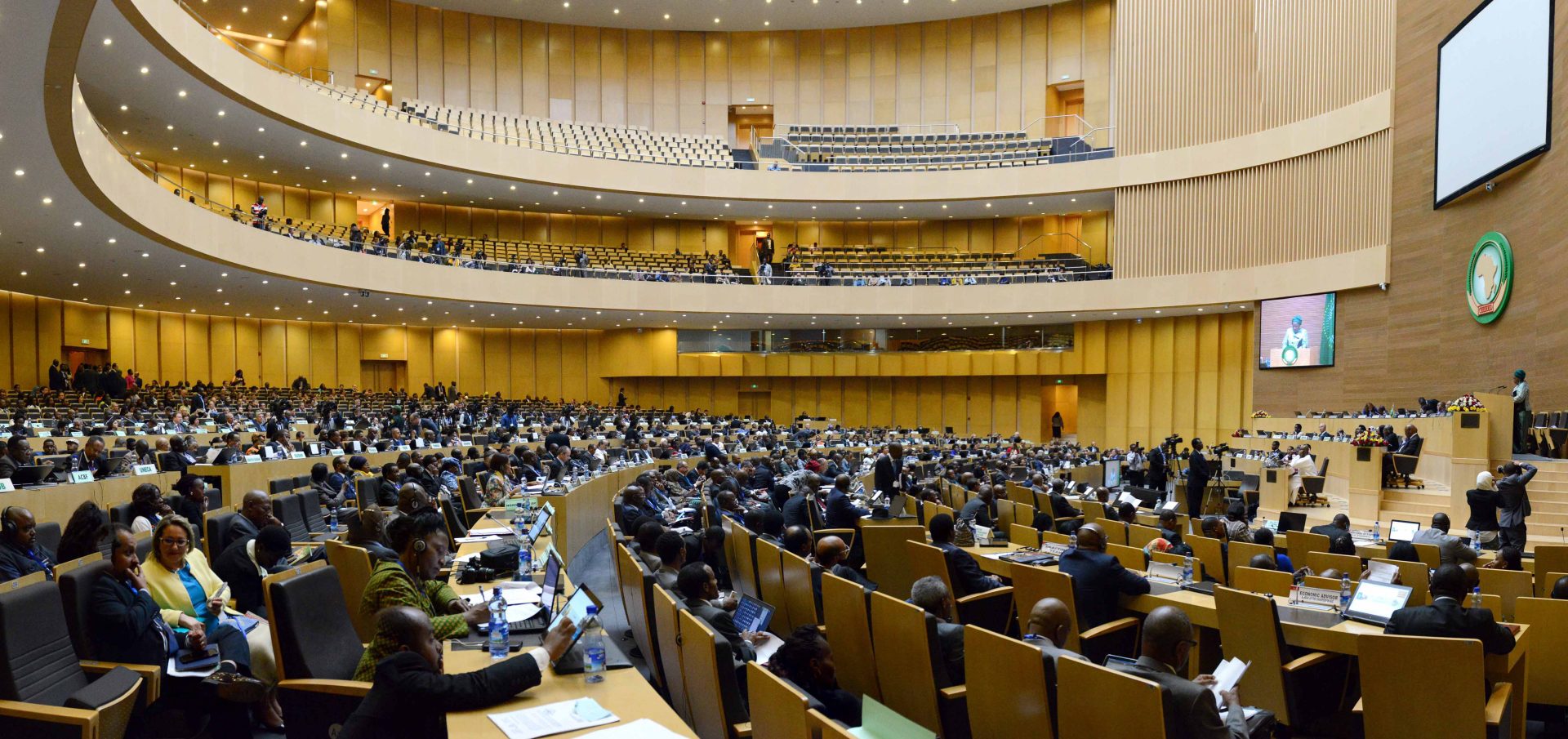
On 12 February 2026, the African Union (AU) Peace and Security Council (PSC), meeting at the ministerial level, adopted its 1330th Communiqué on the situation in Sudan. The document reflects not only the gravity of the crisis but also the AU’s sustained effort to prevent state collapse, respond to one of the world’s most severe humanitarian emergencies, and reassert continental leadership in a conflict increasingly shaped by regional and global dynamics. Read alongside earlier pronouncements in 2025, including the March press statement rejecting the establishment of a parallel government, and the July statement strongly condemning the Rapid Support Forces (RSF)-led ‘parallel government,’ the February 2026 communiqué demonstrates consistency in principle, but a heightened sense of urgency. Sudan is no longer framed as facing only a political impasse. It is confronting a systemic breakdown across governance, security and humanitarian sectors.
Taken together, the 1330th Communiqué represents a comprehensive and principled reaffirmation of the AU’s normative framework. It condemns atrocities, rejects fragmentation, demands humanitarian access, calls for ceasefire and dialogue, addresses external interference, and reinforces continental leadership.
Tweet
The communiqué expresses deep concern over the continued armed conflict and describes an unprecedented humanitarian catastrophe. This language builds on the August 2025 communiqué, which had already raised alarm over famine conditions, particularly in El-Fasher. By February 2026, the PSC’s concern had sharpened further. It explicitly highlights reported famine and starvation, demands unhindered humanitarian access, and calls for the protection of humanitarian workers. The recurrence of El-Fasher in successive decisions suggests that earlier appeals for lifting sieges and allowing safe access corridors have not yielded sufficient compliance. The humanitarian crisis is therefore no longer treated as a by-product of armed confrontation. The communiqué strongly condemns systematic killings, ethnic targeting, mass displacement and destruction of infrastructure by parties to the conflict, particularly the RSF in El-Fasher. By grounding its condemnation in international humanitarian law and international human rights law, the PSC signals that accountability is not optional. It moves the conversation beyond ceasefire appeals to potential legal consequences.
By grounding its condemnation in international humanitarian law and international human rights law, the PSC signals that accountability is not optional. It moves the conversation beyond ceasefire appeals to potential legal consequences.
Tweet
A central and recurring position of the PSC has been that there is no viable and sustainable military solution to the conflict. This formulation appeared in August 2025 and is reiterated again in February 2026. The repetition is deliberate. It reflects frustration with a battlefield logic that continues to dominate the conduct of the warring parties. The PSC once again calls for a humanitarian truce leading to an immediate ceasefire and an inclusive Sudanese-led dialogue addressing both security and political dimensions of the crisis. What distinguishes the 1330th Communiqué, however, is its engagement with the Sudanese National Initiative for Peace presented in December 2025. The PSC welcomes its components, including an immediate ceasefire, protection of civilians, humanitarian access, disarmament, security sector reform, national reconciliation and reconstruction. Crucially, it stresses that these elements must align with the AU Roadmap for the Resolution of the Conflict in Sudan. Support for the initiative is therefore conditional on inclusivity and alignment with continental frameworks, with transitional arrangements that reflect the aspirations of the Sudanese people and enable a smooth return to constitutional order through elections.
The question of a ‘parallel government’ has remained a central concern since mid-2025. In March, the PSC categorically rejected such an entity. In July, it reiterated that AU member states and the international community should not recognise any parallel authority in Sudan. The February 2026 communiqué restates this rejection and calls upon member states and partners not to recognise the so-called parallel government. This consistency reflects a clear normative boundary. The AU will not legitimise fragmentation or unconstitutional political structures emerging from armed groups. The defence of sovereignty and territorial integrity is presented not merely as a legal principle, but as a safeguard against de facto partition and long-term regional instability.
At the same time, the communiqué places increasing emphasis on the issue of external interference. In 2025, the PSC had already condemned external actors fuelling the conflict and called for measures to address such interference. The February 2026 decision goes further by requesting the PSC Sub-committee on Sanctions, in collaboration with the Committee of Intelligence and Security Services in Africa (CISSA) and the AU Mechanism for Police Cooperation (AFRIPOL), to identify all external actors supporting the warring parties militarily, financially and politically, and to propose measures to contain them within three months. This is one of the more operationally significant aspects of the communiqué. If implemented robustly, it could begin to disrupt the transnational networks that sustain the conflict and complicate prospects for peace.
The communiqué also emphasises the centrality of AU leadership in the peace process and welcomes coordination through the Quintet, comprising the AU, Intergovernmental Authority on Development (IGAD), the League of Arab States, the United Nations and the European Union. This reflects recognition that multiple and sometimes competing mediation tracks risk fragmentation. Earlier decisions had already called for consolidation of peace frameworks under AU and IGAD leadership. The February 2026 communiqué reiterates the need to prevent overlap and ensure coherence. The emphasis on Sudanese ownership, combined with coordinated international engagement, illustrates an effort to balance sovereignty with pragmatic diplomacy in an increasingly crowded mediation landscape.
Beyond ceasefire and dialogue, the communiqué includes institutional measures aimed at restoring normative oversight and operational presence. It reiterates the request for a comprehensive human rights report by the AU Commission and the African Commission on Human and Peoples’ Rights, welcomes the deployment of a humanitarian assessment mission, stresses the urgent need to reopen the AU Liaison Office in Sudan, and reiterates the intention to undertake a PSC field mission. These measures are designed to translate political commitments into institutional engagement on the ground, ensuring that AU involvement is not merely declaratory but tangible.
Taken together, the 1330th Communiqué represents a comprehensive and principled reaffirmation of the AU’s normative framework. It condemns atrocities, rejects fragmentation, demands humanitarian access, calls for ceasefire and dialogue, addresses external interference, and reinforces continental leadership. It situates Sudan’s crisis within broader commitments to sovereignty, constitutional governance and collective security. The decisive factor, however, will be implementation. Will sanctions mechanisms effectively identify and constrain external spoilers? Will humanitarian corridors be secured in practice? Will the proposed inter-Sudanese dialogue be genuinely inclusive, reflecting the voices of civilian actors? Will the warring parties accept that military escalation cannot produce sustainable political outcomes?
Sudan stands at a critical juncture. The AU has articulated a clear roadmap rooted in African solutions and collective responsibility. Whether this framework translates into durable peace will depend on political will inside Sudan, coherence among regional actors, and the capacity of continental institutions to move beyond declarations toward enforcement and facilitation.
Jessica Uiras is a Peacebuilder from Namibia
