Issue No: 5/2026

Conflict & Resilience Monitor – June 2026

The Conflict and Resilience Monitor offers monthly blog-size commentary and analysis on the latest conflict-related trends in Africa.

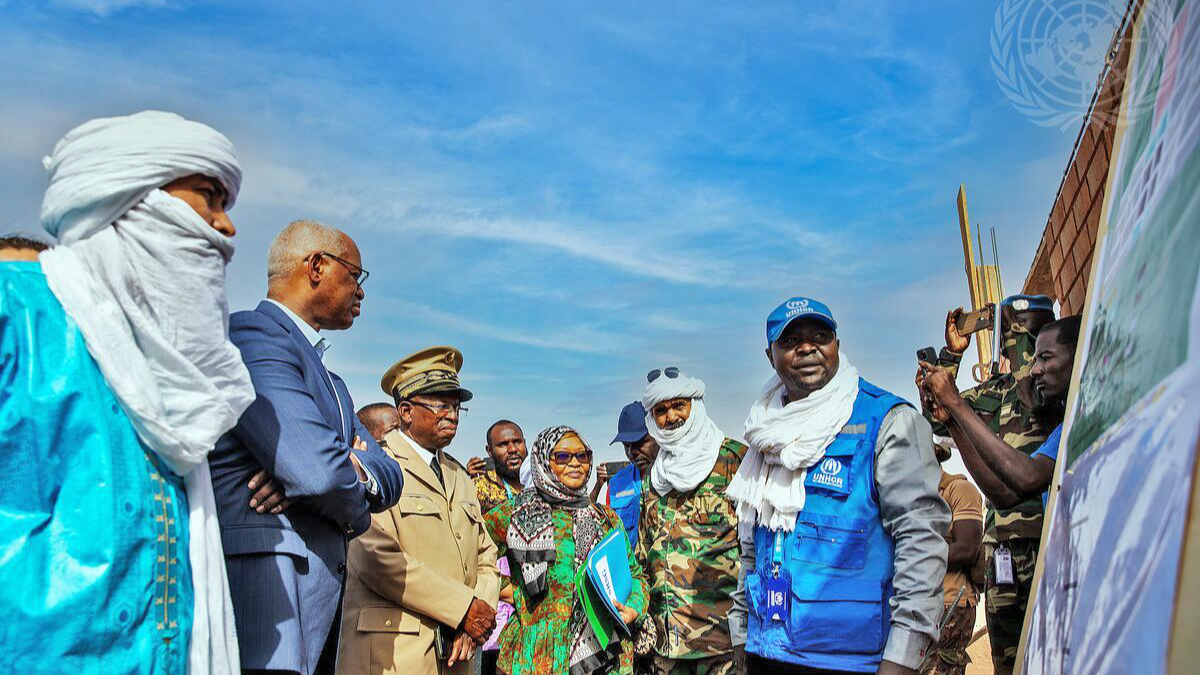
Photo: UN/Harandane Dicko

The first annual Peacebuilding Week took place from 22-26 June 2026, to coincide with the 20th anniversary of the inaugural session of the United Nations (UN) Peacebuilding Commission in June 2006. ACCORD has accompanied and supported the work of the UN’s Peacebuilding Architecture since its inception, and is, amongst others, currently co-chairing the CSO-UN Dialogue on Peacebuilding. In recognition of this Peacebuilding@20 anniversary, the June edition of the Monitor is featuring a number of peacebuilding related articles. 

We begin with an article by Cedric de Coning, Andrew E. Yaw Tchie, Freedom Onuoha, Saibou Issa and Thor Olav Iversen, who write about the Regional Strategy for the Stabilisation, Recovery and Resilience of the Boko Haram-Affected Areas of the Lake Chad Basin Region (RS-SRR). Their article assesses the influence of the regional strategy on preventing and managing climate-related insecurity.

This is followed by Lesley Connolly’s piece on the importance of incorporating upstream prevention efforts in peacebuilding. While the African Union (AU) has developed a number of peace and security frameworks, they tend to focus on downstream efforts, leaving a gap between continental and international peace efforts, and local and nationally driven efforts.

Andreas T. Hirblinger contributes an article on the growing role of artificial intelligence (AI) in peacebuilding. AI can be used in various phases of the peacebuilding process, but questions have arisen over the trustworthiness of AI models. For example, most AI tools have been developed in the West, and may therefor contain biases and lack training data on conflict conditions in Africa. 

The final article in this edition by Shaun Kinnes, discusses the increasing influence of biotechnology, computing and clean energy on geopolitics. The interconnected nature of these three sectors gives them strategic importance for states, particularly in warfare and economic security. Control over various aspects of their production gives states a strategic advantage over others, and the interaction between these sectors should be closely observed.


Chief Editor: Conflict & Resilience Monitor​
Managing Editor: Conflict & Resilience Monitor
Photo: Finalchoice
Peacebuilding

Preventing and Managing Climate-Related Insecurity: Lessons from the Lake Chad Basin Regional Strategy

  • Cedric de Coning
  • Andrew E. Yaw Tchie
  • Saibou Issa
  • Thor Olav Iversen
  • Freedom Onuoha

The lives and livelihoods of local communities in the borderlands of the Lake Chad Basin are disrupted by both climate change and conflict, which are mutually reinforcing. Conflict undermines social cohesion and public trust and degrades the ability of communities to adapt to the effects of climate change. At the same time, climate change adds additional stresses on food, land and water security, reinforcing the political and socioeconomic conditions that drive armed conflict. In the context of a long history of marginalisation, underdevelopment and weak governance in the region, this conflux can drive people to turn to armed groups in search of alternative governance structures, economic incentives and spiritual and social dignity and meaning.

Read More
Photo: Paul Kagame/Flickr
Peacebuilding

Prevention Before the Crisis: Why the African Union Must Invest in Upstream Peace

  • Lesley Connolly

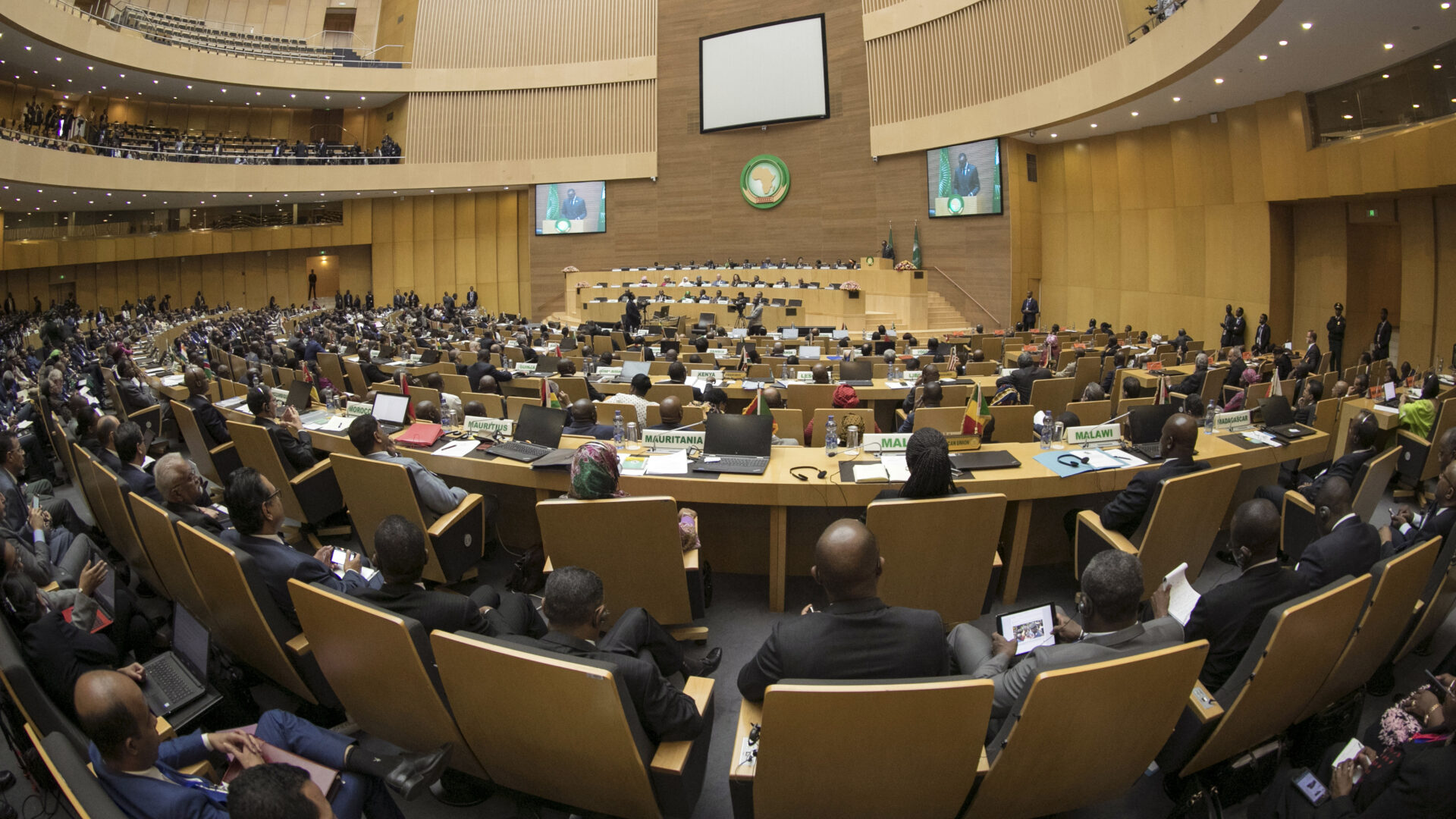
On 1–2 August 2026, Heads of State will gather in Luanda, Angola for an Extraordinary Summit of the African Union (AU) on Strengthening Mechanisms for Conflict Prevention and Resolution in Africa. The convening is itself a signal – a formal acknowledgement by African leaders that the continent’s peace and security architecture has not delivered the level of prevention that Africa urgently needs. As recently noted by El Ghassim Wane in his briefing to the Peace and Security Council (PSC), on the continent ‘we are witnessing the persistence – and in some cases escalation – of conflicts and tensions across Africa.’ Peace support operations are deployed after displacement has begun. Ceasefires are brokered after civilians have been killed. Transitional justice frameworks are designed after institutions have collapsed. The AU’s Peace and Security Architecture (APSA) is sophisticated and increasingly capable, but it remains disproportionately oriented toward managing crises rather than preventing them.

Read More
Photo: Magnific
Peacebuilding

Trustworthy Artificial Intelligence: How does it matter for African Peace and Security?

  • Andreas Hirblinger

Artificial intelligence (AI)-powered applications are increasingly designed and deployed to support international conflict prevention and peacebuilding activities. Some data-intensive activities, such as conflict early warning, have seen steady uptake over several decades. More recently, online communication and social media in conflict dynamics, especially in shaping conflict narratives, spreading misinformation and disinformation and accelerating polarisation, has made it necessary to analyse large amounts of data to detect conflict risks and inform peacebuilding programmes and strategies, which AI now plays an irreplaceable role in.

Read More
Photo: Abdulaziz Hasan
security

The New Trinity of Power: How Biotech, Computing and Clean Energy Rewire Geopolitics

  • Shaun Kinnes

For much of the 20th century, the currency of strategic advantage was simple: oil, steel and an arsenal of nuclear weapons. However, the tectonic plates of national power have shifted. We no longer inhabit a global or political arena where territorial contiguity or the size of a navy dictates the next superpower. Instead, three distinct technological families, advanced computing, biotechnology (biotech) and clean energy, are converging into a single, volatile trinity. Mastery over these domains will not merely determine economic prosperity; it will redefine the nature of warfare, the logic of sanctions and the very architecture of sovereignty. To treat these as mere industrial sectors would be a dangerous error. They are, in fact, the new theatres of conflict; the United States and China understand this all too well.

Read More

Do you have information to share?

Does any of this information look incorrect to you, or do you have anything to share from your experience on the ground in an African country?

If so, please complete our contact form – we would love to hear from you!

ACCORD recognizes its longstanding partnerships with the European Union, and the Governments of Canada, Finland, Ireland, Norway, South Africa, Sweden, UK, and USA.

TRANSLATE THIS PAGE