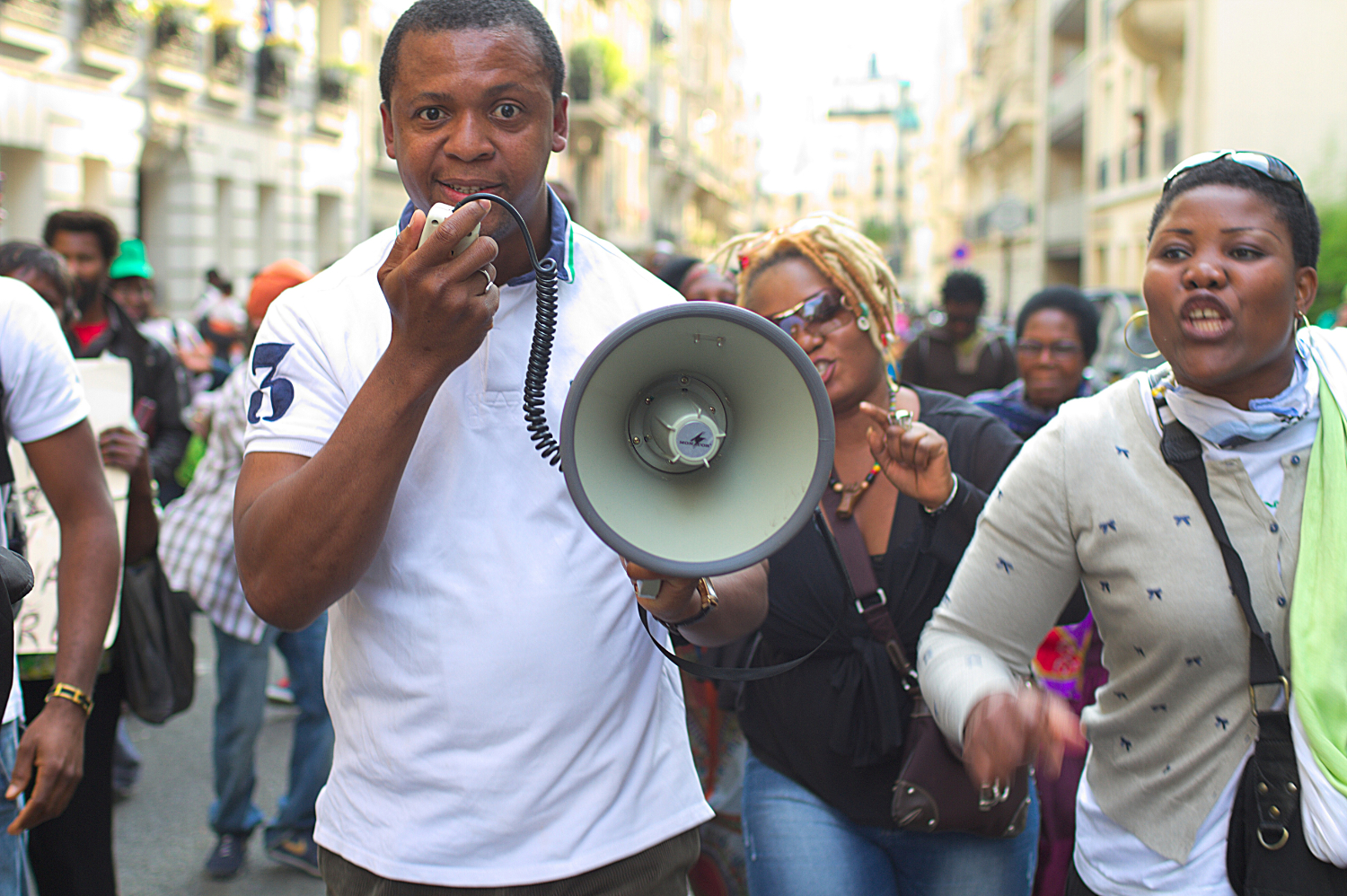
Between 2021 and 2025, Francophone West Africa witnessed a surge in youth-led protest movements that challenged the region’s governance architecture. From Senegal’s Y’en a Marre movement resurgence to citizen uprisings against constitutional manipulation in Guinea and Burkina Faso, young Africans deployed innovative strategies combining digital mobilisation with traditional street activism to demand accountability, democratic consolidation, and economic opportunity.1 These movements represent more than episodic resistance; they signal a generational shift in how political legitimacy is contested and negotiated across the region.2 This article examines the structural drivers, tactical innovations, and governance implications of youth protests in Francophone West Africa, with particular attention to Burkina Faso, Guinea, and Senegal. Drawing on recent protest cycles, it argues that youth movements have created new accountability mechanisms that operate outside and often in tension with formal democratic institutions. Understanding this dynamic is essential for policymakers seeking sustainable pathways towards inclusive governance in a region where 60% of the population is under 25 years old.
The structural architecture of youth discontent
Youth protests in Francophone West Africa emerge from intersecting crises of economic exclusion, political marginalisation, and generational rupture. Unemployment rates among youth aged 15 to 24 years hover between 25% and 40% across the region, with underemployment affecting an even larger proportion.3 In Senegal, university graduates face average waiting periods of seven to ten years before securing formal employment, creating what scholars term a “waithood generation” that is educated, connected, yet systematically excluded from economic participation. This economic precariousness operates within political systems characterised by electoral authoritarianism, regimes that maintain democratic facades while concentrating power through constitutional manipulation, judicial capture, and selective repression.4 Protests erupted in Senegal in 2021 after President Macky Sall’s government arrested opposition leader Ousmane Sonko on charges widely perceived as politically motivated.5 Similarly, demonstrations in Guinea between 2019 and 2020 targeted President Alpha Condé’s successful bid to modify the constitution and secure a controversial third term, ultimately contributing to the military coup of September 2021.
The generational dimension is equally significant as young protesters across the Sahel and in other African countries express grievances that reach far beyond issues of poverty or material deprivation. Their collective outrage stems not only from the lack of economic opportunities but also from the persistent denial of their agency in shaping the political and social future of their societies.6 In cities from Dakar to Bamako, young people take to the streets not simply to demand jobs or resources but to assert their right to be heard, to participate, and to redefine national destinies that have long been controlled by ageing elites. Their movement represents a powerful moral and political awakening that challenges the idea that leadership is the natural preserve of an older generation. This awakening is also a call for generational justice, as young people seek recognition as equal partners in governance and nation-building rather than passive recipients of policy outcomes determined without their input.
The chants and slogans that have emerged from these youth-led movements, such as Ñoo Lank in Senegal and À Bas La Françafrique across the Sahel, reveal the depth of their frustration with systems that appear designed to exclude them. These expressions go beyond mere words of protest; they carry symbolic meaning and reflect a wider discontent with gerontocratic leadership structures that prioritise continuity over reform.7 They also reject the remnants of neo-colonial economic arrangements that continue to tie African economies to external powers, maintaining cycles of dependency, corruption, and inequality. In this sense, the generational struggle is inseparable from the struggle for economic sovereignty and self-determination. Youth are not only contesting local injustices but also questioning international systems that they believe sustain exploitation through debt, aid conditionalities, and unfair trade relations.8 Their opposition to these structures is both a national and transnational form of resistance.
The critique articulated by these young activists, therefore, extends beyond domestic politics to encompass regional and global institutions that they perceive as complicit in their continued marginalisation. They challenge international financial institutions, donor agencies, and foreign governments whose policies often reinforce existing hierarchies under the guise of development assistance. For many young Africans, the current world order seems rigged against their progress, and this realisation intensifies their demand for structural change. Their discontent is not limited to political rhetoric but is increasingly being translated into organised social movements, digital activism, and community-based initiatives that advocate for transparency, accountability, and justice.9 The spread of social media has provided a powerful tool for mobilisation, enabling young people to connect across borders and build solidarity around shared struggles and aspirations.
The intersection of economic exclusion and political alienation thus creates a deeply volatile context in which the youth, who constitute the overwhelming majority of the population, find themselves systematically marginalised. Unemployment, underemployment, and social inequality combine with the lack of political representation to produce feelings of powerlessness and frustration. Yet, within this discontent lies a strong desire for transformation. The younger generation is not only rejecting the legitimacy of outdated governance frameworks but also articulating alternative visions of democracy, leadership, and citizenship. They are demanding not just reforms but a fundamental restructuring of power relations to reflect their demographic weight and intellectual potential. As Guirou observes, this moment of generational confrontation may well determine the future trajectory of governance and stability across the continent, as the youth refuse to remain silent spectators in the shaping of their collective destiny.10
Digital platforms as infrastructure for dissent
The transformation of African youth protest movements is inseparable from the proliferation of digital communication technologies. Mobile phone penetration in West Africa reached 82% in 2024, while social media usage among urban youth exceeds 70% in major cities. These technologies have fundamentally altered the geography and velocity of political mobilisation, creating new public spheres where youth engage with political discourse and coordinate collective action. Platforms such as WhatsApp, Facebook, and X (Twitter) enable protesters to coordinate actions across dispersed locations, disseminate real-time information about police movements, and document state violence for international audiences. During Senegal’s March 2021 protests, activists used encrypted messaging to organise flash demonstrations that overwhelmed security forces accustomed to monitoring predictable union-led marches.11 Digital platforms also serve crucial documentation functions as youth activists systematically record and broadcast police brutality, creating evidence archives that circumvent state media control.
In Guinea, citizen journalists using smartphones documented security forces’ killings of at least 50 protesters during the 2019–2020 constitutional crisis, footage that international organisations later used in accountability efforts.12 This surveillance, watching from below, inverts traditional power dynamics and exposes state violence to domestic and international scrutiny. However, digital activism remains vulnerable to state countermeasures as governments across the region have responded with Internet shutdowns, social media platform restrictions, and sophisticated surveillance. Senegal experienced three major Internet disruptions during the 2021 and 2023 protest cycles, while Burkina Faso’s transitional authorities periodically suspended mobile Internet access. These digital repression tactics reveal states’ recognition of technology’s centrality to contemporary protest movements, creating ongoing struggles over information control and communication infrastructure that shape the possibilities and limitations of youth-led activism.13
Tactical repertoires and strategic innovation
Youth movements in Francophone West Africa have developed sophisticated tactical repertoires that blend established protest methods with innovative approaches adapted to authoritarian contexts. Three strategic innovations merit particular attention.14 First, movements have adopted decentralised organisational structures that resist co-optation and repression. Unlike traditional opposition parties with hierarchical leadership, groups such as Senegal’s Y’en a Marre and Burkina Faso’s Balai Citoyen operate as loose coalitions of activists, artists, and civil society organisations.15 This horizontal structure enables rapid mobilisation while complicating government efforts to thwart movements through targeted arrests. The lack of single leadership figures means that removing one activist does not collapse the entire network, creating resilience that sustains movements through cycles of repression. Second, protesters have weaponised cultural production, particularly hip-hop music, as vehicles for political messaging. Senegalese rappers like Kilifeu and Thiat transformed concerts into political rallies, using vernacular languages and local idioms to articulate critiques that resonate across educational and class divides.16 Music videos criticising corruption and police violence accumulate millions of views, creating alternative public spheres beyond state control where youth articulate visions of political transformation.
Third, movements have strategically internationalised their struggles, leveraging diaspora networks and international media to pressure governments.17 During Senegal’s 2023 protests, activists coordinated simultaneous demonstrations in Dakar, Paris, New York, and Brussels, framing local grievances within global human rights discourse.18 This multi-scalar approach generates international pressure that constrains, though rarely prevents, state repression. The combination of these tactical innovations creates protest ecosystems that are simultaneously local and transnational, cultural and political, organisational and spontaneous. This complexity makes youth movements difficult for states to suppress through conventional means, as repressing one dimension often strengthens others, creating resilient networks of resistance that adapt continuously to changing political conditions.19
State responses and governance implications
Government responses to youth protests reveal consistent patterns of escalating repression punctuated by tactical concessions. Across Francophone West Africa, states deployed similar repertoires, including preventive arrests of movement leaders, Internet shutdowns, deployment of paramilitary forces, and judicial harassment through charges ranging from disturbing public order to threatening state security. However, repression frequently produces counterproductive escalation, where violence intended to demobilise movements instead amplifies resistance.20 In Senegal, the government’s violent crackdown on March 2021 protests, which killed at least 14 people, transformed a localised demonstration into a nationwide uprising. Similarly, Guinea’s brutal suppression of constitutional protests delegitimised Condé’s government and created conditions that facilitated the September 2021 military coup.21 This escalation paradox has become a defining feature of contemporary Francophone West African politics.
Some governments have attempted co-optation strategies, such as creating youth employment programmes or appointing token young ministers. However, these initiatives typically failed to address protesters’ core demands for systemic change. Burkina Faso’s creation of a Ministry of Youth Employment following the 2014 uprising that toppled Blaise Compaoré did little to resolve structural unemployment, contributing to renewed protests that preceded the January 2022 coup.22 The military’s role presents additional complexity as coup leaders in Guinea, Burkina Faso, and Mali justified interventions partly by invoking popular protests against civilian governments.23 While some youth initially welcomed military takeovers as disrupting discredited regimes, subsequent experience under juntas demonstrated the limitations of militarised governance. This creates dilemmas for youth movements as their protests weaken civilian governments but may inadvertently enable military authoritarianism rather than democratic deepening.
Youth protests in Francophone West Africa have generated profound governance effects that extend far beyond momentary disruptions. Most tangibly, these movements have established a de facto veto power over attempts at authoritarian consolidation by raising the political and social costs of undemocratic practices. Presidential bids for unconstitutional term extensions, which were once executed with minimal opposition, now face credible and sustained popular resistance.24 The case of Senegal’s President Macky Sall illustrates this transformation vividly. His ultimate decision in 2024 to abandon a controversial third-term ambition was influenced in part by the persistent mobilisation of youth movements, widespread public criticism, and the collective memory of the violent protests that erupted in 2021.25 Such developments signal a new era in which political leaders must account for the vigilance and organisational capacity of young citizens who refuse to accept manipulations of constitutional order.
Beyond resisting authoritarian drift, youth movements have created innovative accountability mechanisms that function outside traditional institutional frameworks. In societies where parliaments are weak and judicial systems often compromised, young activists have turned to social media and community networks as instruments of oversight. Online campaigns exposing corruption, digital documentation of police brutality, and the viral circulation of evidence against abusive officials have become informal but powerful tools for enforcing public accountability. These methods operate in real time, mobilising public opinion and compelling authorities to respond to citizens’ grievances. In Senegal, activist groups such as Y’en a Marre and other grassroots coalitions have successfully organised protests that pressured the government to reconsider unpopular decisions, ranging from proposed constitutional amendments to opaque extractive industry contracts. By combining street-level activism with digital advocacy, these groups have expanded the frontiers of civic participation, redefining how accountability and governance are practised in Francophone West Africa.
Conclusion
Youth-led protests in Francophone West Africa represent emerging forms of political participation that have evolved in contexts where formal democratic institutions function poorly. These movements reflect the determination of young Africans to claim agency over their political futures, using digital technologies and innovative strategies to challenge authoritarian tendencies and demand accountability. However, achieving sustainable governance transformation requires moving beyond recurring cycles of protest toward institutional reforms that address the root causes of discontent. This calls for comprehensive economic restructuring that generates dignified employment, political reforms that expand youth participation in decision-making, and security sector changes that end impunity for violence against civilians. Regional organisations such as the Economic Community of West African States and the African Union must also strengthen their mechanisms for defending constitutional order while supporting governance reforms that include and empower youth. The central challenge facing Francophone West Africa is whether political systems can adapt to incorporate the demands of young people before legitimacy crises deepen further. Youth movements have already demonstrated their ability to disrupt authoritarian consolidation; the pressing question now is whether this disruption can evolve into constructive transformation – building governance systems that embody the aspirations, energy, and capabilities of Africa’s youngest and largest generation.
Chefor Ngwenyi Meungwe is a doctoral researcher in Development and Institutional Economics at the University of Yaoundé II in Cameroon, specialising in Conflicts analysis, youth politics, gender inclusive governance, and conflict resolution across Sub-Saharan Africa.
Endnotes
1 Khalafallah, H., Ojewale, O. and Oosterom, M. (2024) ‘Youth #Protests and Political Imaginaries: Insights from Nigeria, Senegal, and Sudan’, IDS Bulletin, 55(2).
2 Ndiaye, B. (2025) ‘Youth Mobilization and Democracy in Senegal’, Current History, 124(862): 181–186.
3 Tanankem Voufo, B., Efobi Uchenna, R. and Ada, P. (2026) ‘Non-standard forms of employment among youths in West African Countries: Prevalence, Characteristics and Impacts on Wages’, ILPC 2026. Available at: https://ewds4.strath.ac.uk/ilpc/Previous-Conferences/View-Abstract/aid/2042
4 Lajada, I. A.; Galadima, A. A.; and Martins, E. A. (2024) ‘Democratic Backsliding in West Africa: A Comparative Analysis of Historical Legacies and Institutional Fragility in Burkina Faso, Gabon, and Niger’, International Journal of Scholarly Resources, 18(1): 120–140.
5 Ojo, S. O. and Afolaranmi, A. O. (2024) ‘From Protests to Progress: Unlocking the Potential of the Nigerian Youth for Political Reform’, British Journal of Multidisciplinary and Advanced Studies, 5(4): 100–115.
6 Omotayo, J. O. (2025) ‘Youth’, In: Bangura, A. and Ifedi, J. P. (Eds), Conceptualizations of Africa: Perspectives from Sciences and Humanities, Cham: Springer Nature, pp. 391–411.
7 Keelson, S. R. (2025) ‘Revolution without Reform: The Semiotics of Sovereignty in Burkina Faso’, African Arguments. Available at: https://africanarguments.org/2025/06/revolution-without-reform-the-semiotics-of-sovereignty-in-burkina-faso/
8 Review of African Political Economy (2024) ‘Workers, protests and trade unions in Africa’, Review of African Political Economy, 51(181): 1–10. https://doi.org/10.62191/ROAPE-2024-0042
9 Chebbi, A. (2025) ‘What the world needs to learn from African movements’, D+C – Development and Cooperation. Available at: https://www.dandc.eu/en/article/ousting-dictators-challenging-global-systems-african-youth-movements-are-setting-standards
10 Guirou, S. (2024) Youth and the Postcolonial Public Sphere: Protest, Performance, and Political Imagination in Francophone West Africa, Buffalo: State University of New York at Buffalo.
11 Chebbi, A. (2025) ‘What the world needs to learn from African movements’, op. cit.
12 Amnesty International (2020) ‘Guinea: Crackdown on protesters must be investigated as 50 killed in less than a year’, Amnesty International. Available at: https://www.amnesty.org/en/latest/news/2020/10/guinea-crackdown-on-protesters-must-be-investigated/
13 Omweri, F. S. (2024) ‘Youth Led Policy Advocacy in Africa: A Qualitative Analysis of Generation Z’s Mobilization Efforts against Fiscal Legislation in Kenya’, International Journal of Innovative Scientific Research, 2(3): 1–22.
14 Bangura, I. (2022) ‘Moving from Contentious to Collaborative Relationships’, In: Bangura, I. (Ed.), Youth Led Social Movements and Peacebuilding in Africa, London: Routledge, p. 233.
15 Ibid.
16 Sow, N. (2017) ‘Encyclopédie de kër gi : entre récréation et re-création d’une identité linguistique’, Revue des Sciences Sociales de l’Université Gaston Berger. Available at: https://www9.ugb.sn/revues-lsh/index.php?option=com_content&view=article&id=377
17 Omweri, F. S. (2024) ‘Youth Led Policy Advocacy in Africa’, op. cit.
18 Democracy Digest (2023) ‘Senegal’s “beacon of stability and democracy” at stake’, Democracy Digest. Available at: https://www.demdigest.org/senegals-democracy-at-stake/
19 Ojo, S. O. and Afolaranmi, A. O. (2024) ‘From Protests to Progress’, op. cit.
20 Fominaya, C. F. (2019) ‘European Anti-Austerity and Pro Democracy Protests in the Wake of the Global Financial Crisis’, In: Fominaya, C. F. and Hayes, G. (Eds), Resisting Austerity: Collective Action in Europe in the wake of the Global Financial Crisis, London: Routledge, pp. 6–25.
21 Amnesty International (2022) ‘Senegal will never forget March 2021’, Amnesty International, 1 March. Available at: https://www.amnesty.org/en/latest/campaigns/2022/03/senegal-will-never-forget-march-2021/
22 Mura, V. (2022) ‘Citizens’ discontent: a rising force in West Africa’, Africa Portal. Available at: https://policycommons.net/artifacts/2268782/citizens-discontent/3028599/
23 Lajada, I. A. et al. (2024) ‘Democratic Backsliding’, op. cit.
24 Ndiaye, B. (2025) ‘Youth Mobilization’, op. cit.[1] Equal Times (2024) ‘Senegal’s crisis-tested democracy faces growing social demands’, Equal Times, 18 June. Available at: https://www.equaltimes.org/senegal-s-crisis-tested-democracy
25 Equal Times (2024) ‘Senegal’s crisis-tested democracy faces growing social demands’, Equal Times, 18 June. Available at: https://www.equaltimes.org/senegal-s-crisis-tested-democracy