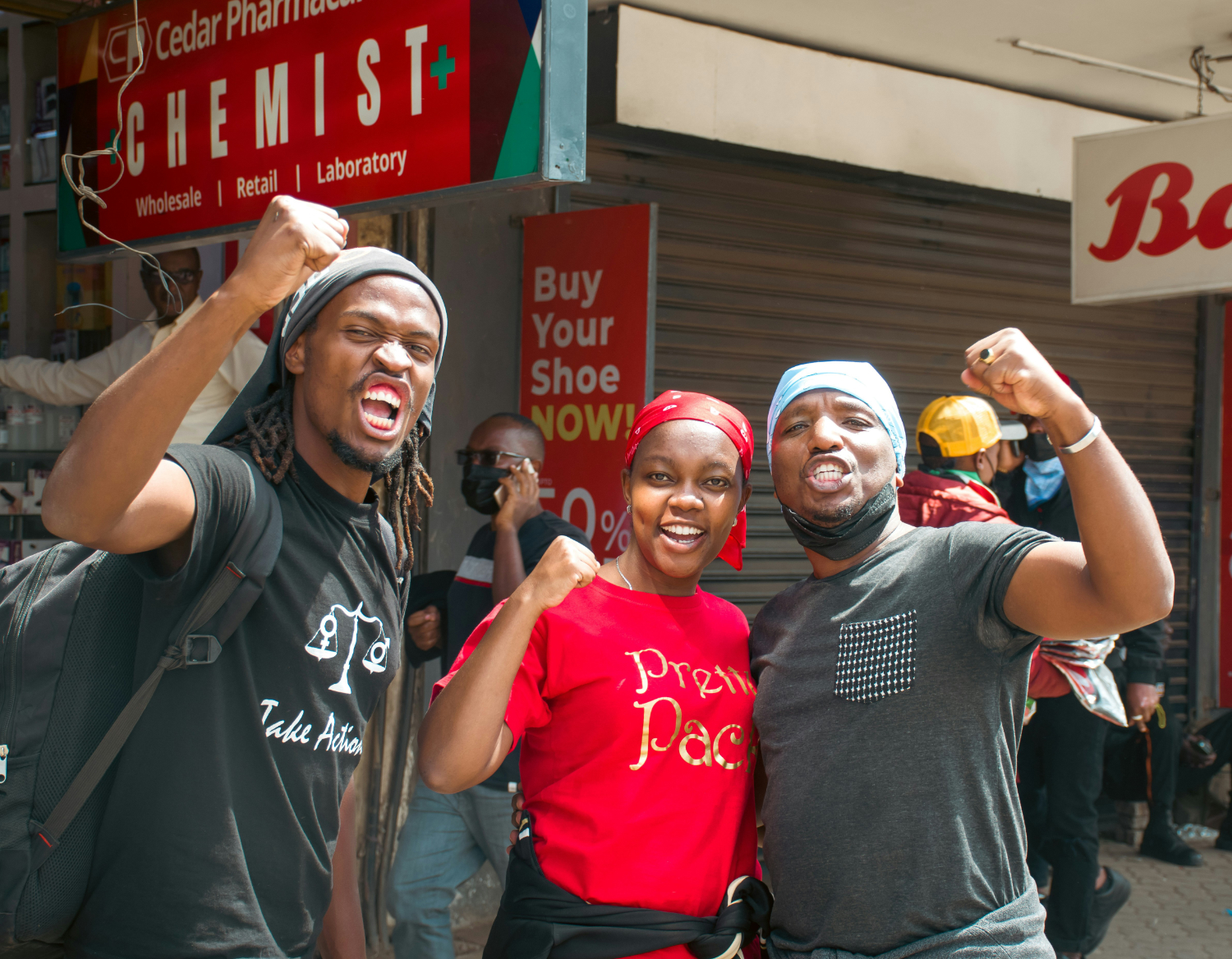
In the period 2023–2024, Kenya witnessed an upsurge in youth-led protests that significantly challenged state legitimacy and governance. This article explores the dilemma in which the state is split between viewing the protests as legitimate expressions of peaceful dissent and perceiving them as threats to national security that necessitate the use of significant force to deter. Using the human security and bottom-up peacebuilding frameworks, it analyses the Kenyan state’s response to recent youth-led protests, examining the impact of securitisation of the protests on peace and stability, and recommending actions that may engender the re-imagining of state-youth engagement for a better Kenya. Through identified practice and policy recommendations, it aims to balance the civic rights of the youth with the security needs of the state.
Introducing youth-led protests: Peaceful dissent or security threat?
Youth-led protests are important for assessing citizen engagement, particularly in the context of developing countries with volatile environments, characterised by the economic exclusion and marginalisation of young people from the centre of governance. Their agitation is often elevated by the evolved nature of mobilisation across diverse digital platforms. However, it is common for African governments to interpret such waves of protest through the prism of security and public order, especially when such demonstrations escalate. In such scenarios, the political establishment often labels protests as security threats fuelled by subversive elements that are anti-establishment, leading to the securitisation of youth-led protests. The aftermath is a scenario where youth protests are viewed, on the one hand, as legitimate expressions of peaceful dissent and, on the other, as a threat to the security of the state.
Such tensions were illustrated in Kenya (2023–2024) when youth-led protests grew in magnitude, becoming overly disruptive and destabilising to the status quo. This scenario begs the question: should youth-led protests be understood as a legitimate expression of peaceful dissent, which underscores an important hallmark of democratic participation, or viewed as an outright security threat that warrants suppressive government intervention? It follows that the way states frame and react to such protests wields profound consequences for peace, trust, legitimacy and stability.
In Kenya, in 2023–2024, the Africa Report identified how youth mobilisations were politicised as funded and orchestrated by covert anti-government forces, including civil society organisations and non-governmental organisations.1 Various media and civil society reports disclosed that recent waves of youth mobilisation have fundamentally disrupted conventional party politics in Kenya due to their tendency to operate beyond formal structures of leadership.2 State reactions include incessant waves of abductions, arbitrary arrests and killings.3 When considered through a securitisation lens, this raises questions about upholding democratic principles and maintaining public order. This article examines this tension around youth-led protests by exploring it within the context of bottom-up peacebuilding and human security perspectives.
Human security and bottom-up peacebuilding perspectives
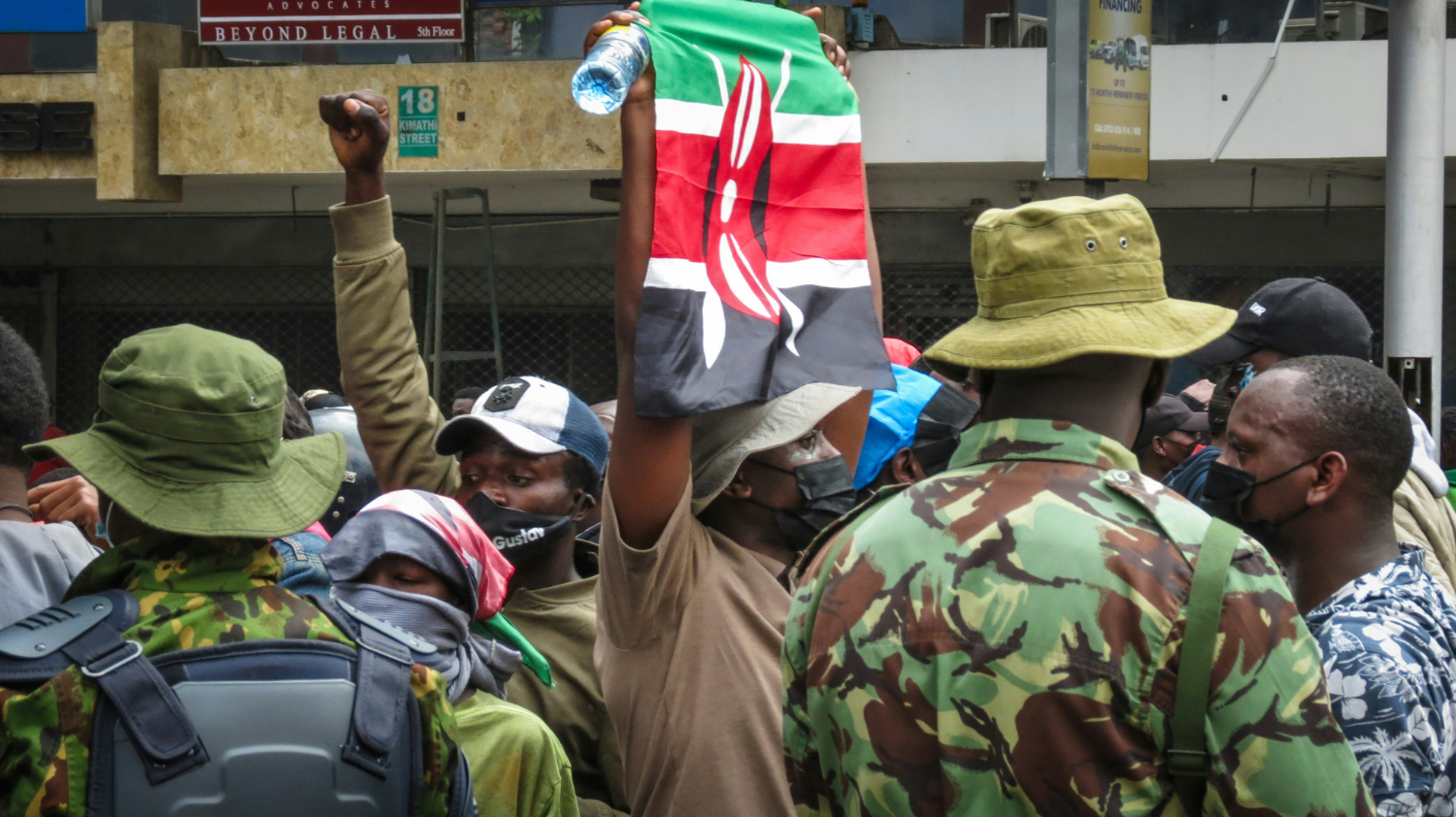
Two theoretical frameworks are particularly suitable for explaining state reactions to youth-led protests in Kenya: human security and peacebuilding perspectives. From the human security perspective, Horban and Martych emphasise the shift in focus from state-centric security, which revolved around the protection of state actors, borders and institutions, to human-centred security that concerns the security of communities, individuals, and social groups in terms of the ability to secure the future, development opportunities, rights, ideals and culture.4 Whenever youth resort to protests, human security concerns are often cited as the root cause for their dissent. These concerns include shrinking pathways to attaining sustainable livelihoods, lack of employment, dwindling opportunities for civic participation, unsafe digital spaces, rising costs of living, disenfranchisement and political exclusion.5 In this regard, the human security perspective perceives youth-led protests as a collective expression of grievances as well as an essential demand for youth inclusion in governance and not merely an act of destabilisation.
On the other hand, the bottom-up peacebuilding perspective reveals processes of peacebuilding that emphasise local agency and legitimacy, trust-building, inclusive governance, and restorative and non-violent approaches to conflict resolution, particularly within societies riddled with recurrent conflicts.6 As MacGinty postulates, elite-level peace approaches that are top-down are unable to achieve stability within deeply-divided societies suffering from ongoing intergroup conflict due to the absence of people-centred reconciliation that incorporates often-neglected voices, including those of the disenfranchised youth.7 From this perspective, a coercive state response to youth protests through securitisation may entrench distrust and fuel dissent. However, a cooperative response through dialogue, reconciliation, inclusion and accountability may lessen dissent and strengthen civic bonds. A cooperative response emphasises the prevention of violence while requiring the redress of underlying exclusion and structures of grievances among the youth for fostering durable peace.
These frameworks together imply that youth protests exhibit a pertinent human security deficit, while providing the opportunity for forestalling peace through bottom-up approaches that foster youth engagement, inclusion and participation. To the contrary, whenever a state decides to respond to youth-led protests through the security-threat perspective, trust is eroded, exclusion levels increase and the civic space available for the youth shrinks, further deepening the vulnerabilities that have frustrated the youth. The situation in Kenya (2023–2024) epitomises these dynamics, as explained below.
The case of the 2023–2024 protests in Kenya: State responses, rhetoric and public narratives
Youth-led protests were at their height in Kenya between 2023 and 2024. Data from ACLED indicates that Kenya witnessed 840 demonstrations, 26% of which culminated in government intervention through security forces, an increase from the 15% reported in 2022. The ACLED dataset shows that most of these protests emanated from diverse economic grievances, including the high costs of living, tax hikes and high rates of unemployment, coupled with broader accountability and governance issues that also include mistrust in the political elite.8 Reinvent Kenya and the Civil Freedom Forum highlight the focal point as the controversial Finance Bill, first introduced in 2024, which sparked nationwide youth mobilisation.9 The controversial bill caused widespread public upset due to the burden it would place on tax payers.
The demonstrations are largely branded as Generation Z (Gen-Z) protests due to the predominant engagement of individuals under the age of 35, whose mobilisation was primarily organised through digital platforms against the controversial Finance Bill.10 Digital activism on social media platforms played an important role in amplifying the protests through hashtags such as #RejectFinanceBill2024 on Instagram, while X (Twitter) and TikTok served as platforms for digital mobilisation of young Kenyans.11 The protests took place from 18 to 28 June 2024 and were centred in Nairobi, albeit with spill-over into at least 35 counties across Kenya. Reinvent Kenya states that these digitally organised protests were formless, leaderless, spontaneous, and largely driven by a disgruntled youth population reeling from a heavy tax burden, corruption, economic hardship, a shrinking employment space, and exclusion from the governance and political spheres.12
State responses and the attendant rhetoric: Protest as a national security threat
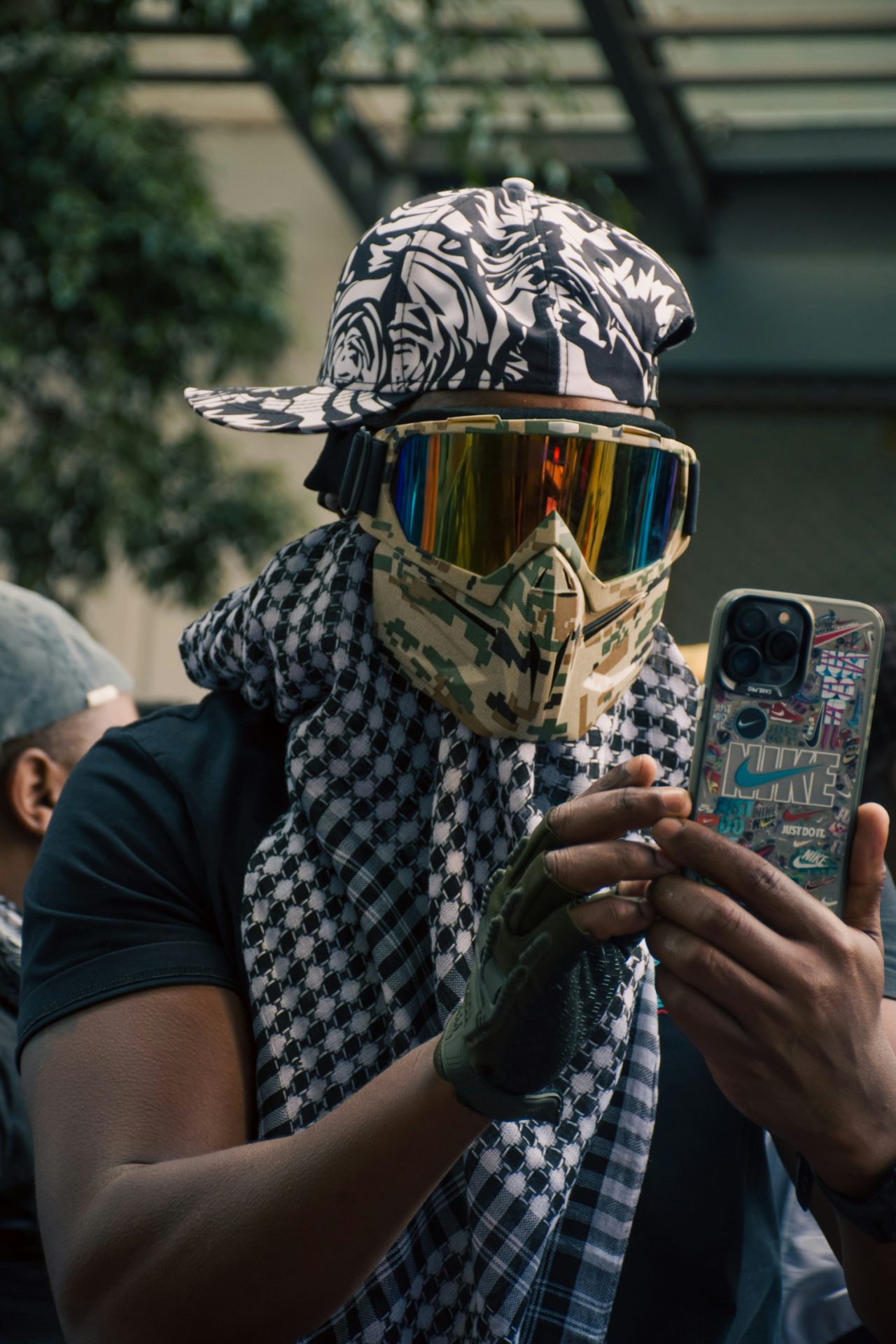
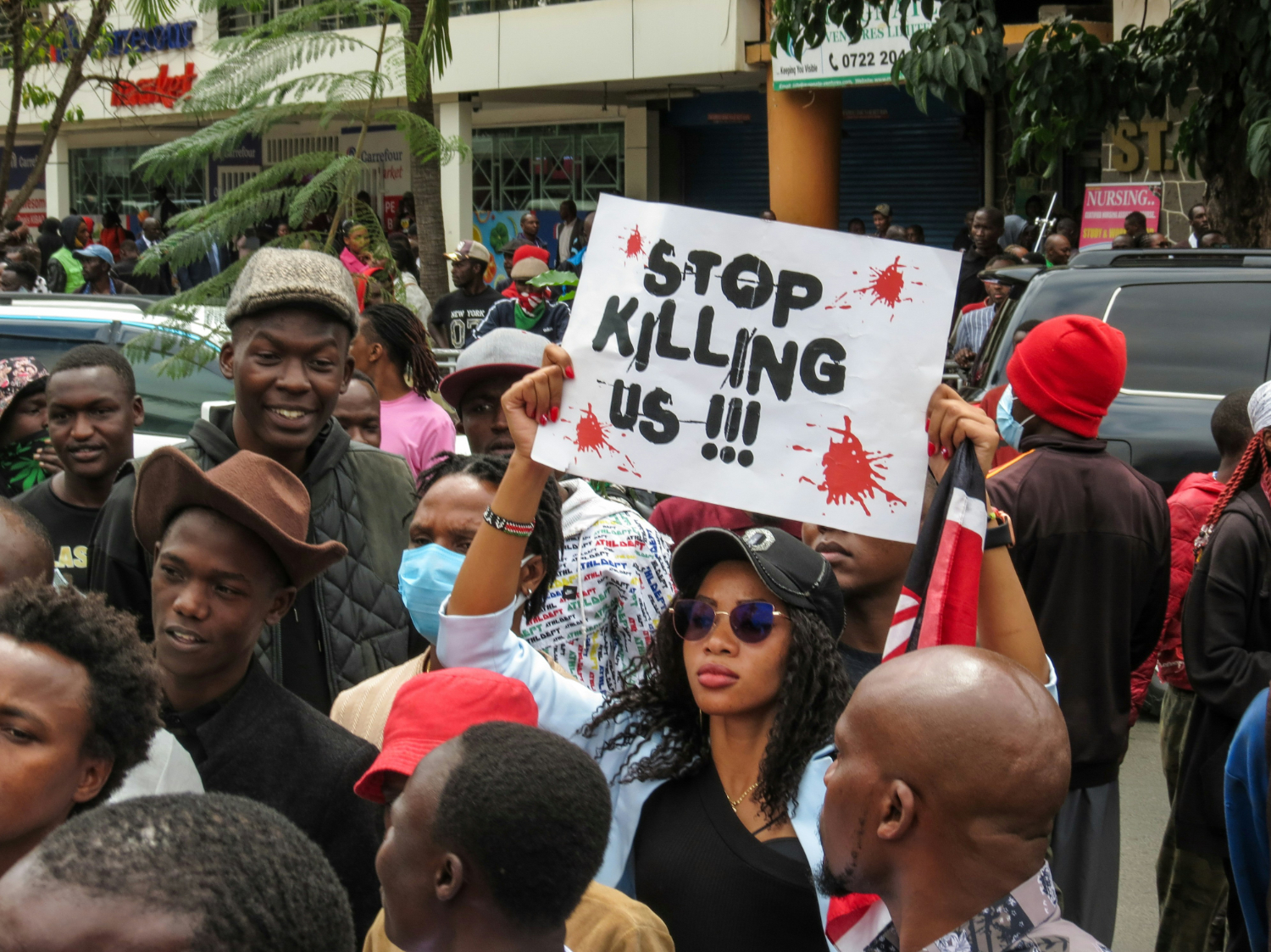
The Kenyan state’s response to the youth-led protests suggests it primarily viewed the protests as a security threat that required coercive deterrence. The protesters were thus confronted by force from the state that sought to restrict the protest space. Gen-Z protest organisers were profiled across digital spaces. Abductions and disappearances of protesters and alleged state-sponsored killings were reported. These approaches were intended to instil fear among protesters and weaken their resolve to advocate for good governance and accountability. In March 2023, the Ministry of Interior and National Administration issued directives that enhanced security strategies on the eve of the demonstrations, which included the opening up of criminal proceedings against those accused of looting and committing property damage as well as the rolling out of round-the-clock security within perceived sensitive neighbourhoods identified as protest hotspots.13
The state rhetoric during the Gen-Z protests in June 2024 was harsh at the time. Ross, Obulutsa and Paravicini report that President Ruto branded the storming of parliament as ‘treasonous,’ while the government alleged that the protests had been ‘hijacked by criminals’.14 State agencies were also on record pronouncing peaceful protests as a threat to national security.15
Human Rights Watch highlighted the significant use of force by security and police forces, which included the use of water cannons, teargas, rubber bullets and live ammunition, and abductions and arrests of protesters.16 The Independent Medico-Legal Unit (IMLU) documented 63 abductions, 63 deaths, over 600 injuries, and the disappearance of 26 persons due to the 2024 youth-led protests.17 In June 2025, a warning was issued by the Political Parties Liaison Committee (PPLC). The PPLC expressed regret that the ‘space for alternative or dissenting views is shrinking quickly,’ and called for the nation’s security agencies to respect protesters’ constitutional rights instead of characterising youth protests as a national security threat.18
Media framing and public narratives: Protest as a peaceful expression of dissent
Reinvent Kenya suggests that before progressing to demands to fight corruption, improve youth inclusion and enforce accountability, the June 2024 protests began as the expression of economic grievances around tax hikes, high unemployment, and the spiralling cost of living in Kenya.19 Whereas state narratives relied on the need to preserve national security by maintaining order, preventing chaos, and protecting infrastructure and public property as justification for their use of coercive force, the general public, activists, particular media outlets, and the larger civil society framed the youth-led protests as peaceful dissent.
Public narratives and the media portrayed the protests as an honest quest for youth inclusion, a call for enlarging the democratic space and increasing good governance, accountability and the entrenchment of economic justice, particularly for the marginalised and largely unemployed youth population. For instance, Mbaka reports that various commentaries from civil society framed the youth protests as a genuine expression of entrenched frustration with continuous governance failures, an ever-shrinking civic space, and youth exclusion, including from matters affecting their future and wellbeing.20 Youth activists branded the overly securitised state response as outright human rights violations that were meant to suppress dissent, which culminated in the undermining of public trust in the country’s institutions of governance.21 Hence, Kenya’s case presents a dilemma in which youth protests are, on the one hand, perceived as expressions of legitimate dissent that create room for deeper democratisation, while on the other, the state treats them as security threats with implications for stability and peace in the country.
The impact of the securitisation of youth-led protests on peace and stability
State response to civic protests via securitisation by criminalising protests, abductions, detentions, heavy policing and the employment of threat-filled rhetoric wields significant implications for peace, civic participation and stability. These implications are diverse and profound.
Firstly, it leads to the erosion of trust in state institutions, such as the judiciary, the police and other security organs, which constitute an important anchor for a stable, peaceful and well-governed country that permits civic participation and inclusivity in important national matters.22 The widely-documented abductions, extrajudicial killings, arbitrary arrests, torture and unlawful detentions of youth protesters in Kenya (2023–2024) eroded public trust in key institutions. Kipchumba reports how the legitimacy of the government and police was significantly undermined, particularly in the eyes of young Kenyans, which reinforces their view that the government is intentionally pushing them to the periphery instead of fostering their integration into the centre.23 This decline in trust can amplify informal conflict dynamics, creating cycles of confrontation and violence and complicating peacebuilding efforts.
Secondly, meeting protests with brute force, abductions, arrests and disappearances substantially shrinks the civic space and undermines democratic participation in matters directly related to the wellbeing and future of citizens. Peacebuilding calls for an expanded civic space that paves the way for inclusive governance, voicing of dissenting opinions and the utilisation of non-violent channels of peacefully resolving conflicts. When the state reacts with threats and force towards protests, the result is detrimental. The PPLC thus warned about the shrinking space for dissenting opinions in June 2025, emphasising that this approach risks radicalising and polarising youth who might have otherwise engaged with the state through dialogue and peaceful conflict-resolution channels. 24
In conclusion, the Kenyan state’s inherent focus on securitising youth protests risks undermining the democratic dividend the country fought for. Its actions are largely perceived as misplaced, as many in the country believe the state should instead prioritise governance reform instead of forceful confrontation with youth protesters calling for good governance, accountability and people-centred leadership. By prioritising the securitisation of youth protests over governance reform, the state arguably misses the opportunity of ushering in youth inclusion and an expanded civic space that could pave the way for non-violent political alternatives, including dialogue.
Conclusion and recommendations
Youth-led protests in Kenya constitute a defining moment in Kenya’s democracy. They are a critical juncture in which young Kenyans, largely Gen-Z, have moved to the forefront of the agitation for change, good governance, accountability, better living standards and inclusion as opposed to the traditional formal political party-based mobilisations. The phenomenon underscores a new democratic trajectory, in which the often disenfranchised and marginalised Kenyan youth are coming to the fore to agitate for change without ethnic-based mobilisations, seeking a voice in determining the future of Kenya. However, while young Kenyans demanded a voice, inclusion and fairness through the 2023–2024 youth-led protests, the state viewed this as a major security threat as it grappled with the challenges of having to maintain public order, ensure national stability and the protection of citizen property. The danger with this inherently securitised, state-centric intervention is that while it may potentially culminate in short-term control, it risks significantly eroding public trust in state institutions, shrinking the space for civic participation and undermining the prospects for dialogue and the utilisation of non-violent political alternatives.
Acknowledging youth-led protests is a healthy practice, creates room for a tolerant society, and allows for responsive engagement, stability, peace and inclusion. This paper thus makes the following recommendations:
- The state should establish formal but sustainable platforms for youth-government engagement to ensure proactive engagement as opposed to reactive responses in policy design, accountability and governance review.
- The state should recognise and redress underlying human security-related youth grievances, since youth-led protests often reflect deeper unresolved issues, including high unemployment, governance failures, spiralling inflation, tax hikes, pessimism about the future, and a high cost of living. Embedding these perspectives in political, social and economic policy would be an essential step.
- State actors should institutionally and publicly reframe and treat youth protests as genuine and legitimate forms of civic expression meant to advance civic participation and not view them solely as threats to national security and confront them with excessive force.
End Notes
1 Abuso, Victor (2024) ‘Kenya investigates 16 civil society groups over alleged protest funding’, The Africa Report, 26 July, Available at: https://www.theafricareport.com/356550/kenya-investigates-16-civil-society-groups-over-alleged-protest-funding (Accessed 24 October 2025).
2 Akoko, Brian Ochieng (2025) ‘Kenya’s Youth Uprising: A Nation on the Brink’, REUC Guest Journalist Report, 11 October, Available at: https://reuc.snm.rs/guest-journalists/reports/kenyas-youth-uprising-a-nation-on-the-brink (Accessed 24 October 2025).
3 Akoko, Brian Ochieng (2025) ‘Kenya’s Youth Uprising: A Nation on the Brink’, REUC Guest Journalist Report, 11 October, Available at: https://reuc.snm.rs/guest-journalists/reports/kenyas-youth-uprising-a-nation-on-the-brink (Accessed 24 October 2025).
4 Horban, Oleksandr and Martych, Ruslana (2024) ‘Bioethical discourse of humanitarian security’, Studia Warmińskie, 61, 113–114, https://doi.org/10.31648/sw.10788
5 Lauren, Jennifer (Ed.) (2025) Global Youth Protest, Climate and Education, London: Routledge.
6 Tonui, Faith Chelangat (2025) Bottom-up Peacebuilding in Action: Institutionalization of Indigenous Conflict Resolution Mechanisms, Master’s thesis, Uppsala University, Available at: https://www.diva-portal.org/smash/get/diva2:1968045/FULLTEXT01.pdf (Accessed 24 October 2025).
7 MacGinty, Roger (2014) ‘Everyday peace: Bottom-up and local agency in conflict-affected societies’, Security Dialogue, 45(6), 549–555, https://doi.org/10.1177/0967010614550899
8 ACLED (Armed Conflict Location & Event Data) (2023) ‘Kenya Situation Update: September 2023. Police Use Excessive Force in Response to Anti-Government Demonstrations’, Available at: https://acleddata.com/update/kenya-situation-update-september-2023-police-use-excessive-force-response-anti-government (Accessed 24 October 2025).
9 Reinvent Kenya (2024) ‘Analysis: Peacebuilding – Turning Point Report’, November, Available at: https://reinvent-kenya.com/wp-content/uploads/2024/11/Analysis-Peacebuilding-turning-point-report-FINAL-FINAL.pdf (Accessed 24 October 2025); Civic Freedom Forum (Kenya) (2024) ‘Police Brutality Heighten as Kenyans Protest Against the Finance Bill 2024–2025’, 2 July, Available at: https://cff.or.ke/police-brutality-heighten-as-kenyans-protest-against-the-finance-bill-2024-2025 (Accessed 24 October 2025).
10 Akoko, Brian Ochieng (2025) ‘Kenya’s Youth Uprising: A Nation on the Brink’, REUC Guest Journalist Report, 11 October, Available at: https://reuc.snm.rs/guest-journalists/reports/kenyas-youth-uprising-a-nation-on-the-brink (Accessed 24 October 2025).
11 Civic Freedom Forum (Kenya) (2024) ‘Police Brutality Heighten’, op. cit.
12 Reinvent Kenya (2024) ‘Analysis: Peacebuilding’, op. cit.
13 Ministry of Interior and National Administration (2023) ‘Interior Ministry Directive on Violence, Looting, Arson and Invasion of Private Property – Kenya’, Government of Kenya Directive, 29 March, Available at: https://interior.go.ke/sites/default/files/2024-05/CS-Kindiki-29th-March-2023-on-Violence-Looting-Arson-and-Invasion-of-Private-Property.pdf (Accessed 24 October 2025).
14 Ross, Aaron; Obulutsa, George; and Paravicini, Giulia (2024) ‘Police fire on demonstrators trying to storm Kenya parliament, several dead’, Reuters, 26 June, Available at: https://www.reuters.com/world/africa/young-kenyan-tax-protesters-plan-nationwide-demonstrations-2024-06-25 (Accessed 24 October 2025).
15 Kiforo, Frank (2025) ‘Kenya Police Warn: Hiring Private Youths for Protest “Protection” is Against the Law’, Switch TV, 23 June, Available at: https://news.switchtv.ke/2025/06/kenya-police-warn-hiring-private-youths-for-protest-protection-is-against-the-law (Accessed 24 October 2025).
16 Human Rights Watch (2024) ‘Kenya: Security Forces Abducted, Killed Protesters’, 6 November, Available at: https://www.hrw.org/news/2024/11/06/kenya-security-forces-abducted-killed-protesters (Accessed 24 October 2025).
17 Kipchumba, Emmanuel (2025) ‘Report exposes systemic police abuses in 2024 youth protests’, The Standard, 24 June, Available at: https://standardmedia.co.ke/article/2001522539/report-exposes-systemic-police-abuses-in-2024-youth-protests (Accessed 24 October 2025).
18 Mbaka, James (2025) ‘Youth protests are national outcry, not threat – Political Parties Liaison Committee tells state’, The Star, 24 June, Available at: https://www.the-star.co.ke/news/2025-06-24-youth-protests-are-national-outcry-not-threat-agency (Accessed 24 October 2025).
19 Reinvent Kenya (2024) ‘Analysis: Peacebuilding’, op. cit.
20 Mbaka, James (2025) ‘Youth protests are national outcry’, op. cit.
21 Kituo Cha Sheria and Open Government Kenya (2024) ‘Open Government Partnership Statement Release’, June, Available at: https://kituochasheria.or.ke/wp-content/uploads/2024/06/Open-Government-Partnership-Statement-Release.-.pdf (Accessed 24 October 2025).
22 Palma, Maurício (2020) ‘The Securitization of Protests as a Challenge to Democracy’, World Society’s Law: Rethinking Systems Theory and Socio-Legal Studies, 1, 510–514.
23 Kipchumba, Emmanuel (2025) ‘Report exposes systemic police abuses in 2024 youth protests’, op. cit.
24 Mbaka, James (2025) ‘Youth protests are national outcry’, op. cit.